
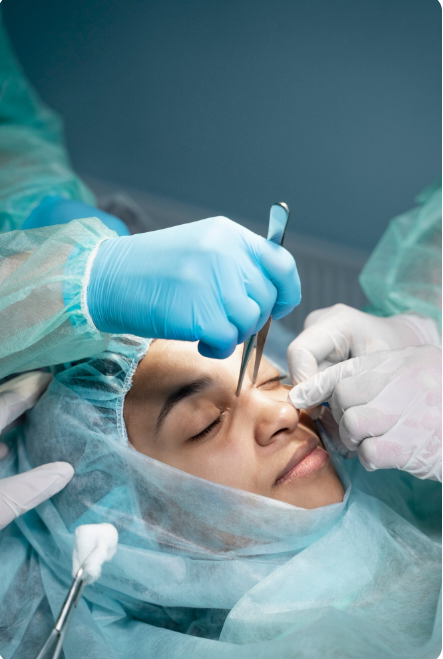
Treatment Overview
A Mini Facelift, also known as a “short-scar” or “weekend” facelift, is a minimally invasive surgical procedure designed to lift and tighten the lower face and jawline with shorter incisions and less recovery time than a traditional full facelift. This procedure is ideal for individuals with mild to moderate sagging or early signs of aging. In Korea, mini facelifts are performed using advanced techniques that focus on precise lifting of the SMAS (Superficial Musculoaponeurotic System) and skin, ensuring natural-looking results with minimal scarring and quicker recovery.
Purpose & Benefits
The mini facelift is designed to provide a subtle yet noticeable rejuvenation for the lower face and jawline.
Benefits include:
- Reduction of jowls and sagging along the jawline.
- Smoother, firmer skin with a lifted appearance.
- Natural-looking results without a “pulled” appearance.
- Shorter downtime compared to traditional facelifts.
- Can be combined with other procedures, such as neck lift or eyelid surgery, for enhanced results.
Ideal Candidates
Mini facelifts are suitable for individuals who:
- Are in their 30s to 50s with mild to moderate sagging.
- Have good skin elasticity but want to address early signs of aging.
- Prefer a less invasive option with faster recovery than a full facelift.
- Seek subtle rejuvenation without extensive surgery.
Possible Risks & Complications
Though considered safe, mini facelifts carry some potential risks including swelling, bruising, temporary numbness, minor asymmetry, hematoma, or infection. Korean clinics minimize these risks through experienced surgeons, advanced surgical techniques, and structured post-operative care programs.
Surgical Techniques Used
Korean surgeons utilize several advanced methods for mini facelifts:
- Short-Scar SMAS Lifting: Repositions underlying facial tissues with minimal incisions.
- Thread or Endoscopic Assistance: Provides additional lift while keeping surgery minimally invasive.
- Fat Grafting or Contouring: Optional procedure to restore volume and enhance lower face harmony.
- Micro-Incision Placement: Incisions are discreetly placed around the hairline and near the ears to minimize visible scars.
Recovery & Aftercare
Recovery from a mini facelift is generally faster than traditional facelifts. Most swelling and bruising subside within 1–2 weeks, and patients can often return to light daily activities in 5–7 days. Strenuous activities should be avoided for 3–4 weeks. Korean clinics offer comprehensive aftercare programs, including lymphatic drainage massage, scar management, and LED therapy to optimize healing and maintain results.
Results & Longevity
Visible improvement appears within 1–2 weeks, with final results emerging over 2–3 months as swelling resolves. With proper care and maintenance, mini facelift results can last 5–8 years, offering a refreshed and youthful lower face with minimal downtime.
Treatment Process in Korea
Korea is globally recognized for its expertise in minimally invasive facial rejuvenation procedures, making it a popular destination for mini facelifts. The process typically includes:
- Comprehensive Consultation: High-resolution 3D imaging and simulation software are used to analyze facial structure and predict surgical outcomes.
- Personalized Surgical Planning: The procedure is tailored to the patient’s facial anatomy, skin quality, and aesthetic goals.
- Advanced Surgical Techniques: Accredited hospitals and clinics use precision tools and minimally invasive methods to lift and tighten facial tissues.
- Optional Combination Procedures: Neck lift, thread lifting, or fat grafting may be combined to achieve a harmonious, youthful appearance.
- Luxury Recovery & Aftercare: Private suites, 24-hour nursing care, lymphatic drainage, and LED therapy ensure quick recovery and minimal swelling.
- Follow-Up Maintenance: Non-invasive treatments may be offered to prolong and enhance the results.
Korea’s combination of surgical precision, advanced technology, and high-quality post-operative care makes it a top destination for mini facelift surgery among international patients.
Cost Range in Korea
The cost of a mini facelift in Korea depends on the surgeon, clinic, and any additional procedures performed.
- Typical Price Range: ₩5,000,000 – ₩12,000,000 KRW (approximately $3,800 – $9,000 USD).
- Factors Influencing Cost:
- Surgeon’s experience and reputation.
- Complexity of the procedure and areas treated.
- Inclusion of combination procedures such as thread lifting, neck lift, or fat grafting.
- Type of anesthesia and duration of surgery.
- Post-operative care packages and recovery services.
Korean clinics are known for offering high-quality minimally invasive procedures, advanced technology, and comprehensive aftercare, providing excellent value for international patients.
Popular Clinics in Korea for Mini Facelift Surgery
- Banobagi Plastic Surgery Clinic (Seoul) – Known for facial contouring and minimally invasive facelifts.
- JW Plastic Surgery Korea – Offers customized mini facelift techniques.
- View Plastic Surgery – Popular among international patients seeking natural, minimally invasive results.
- ID Hospital – Specializes in facial contouring and lower face rejuvenation procedures.
- Wonjin Beauty Medical Group – Renowned for luxury recovery and high patient satisfaction.


