
Treatment Overview
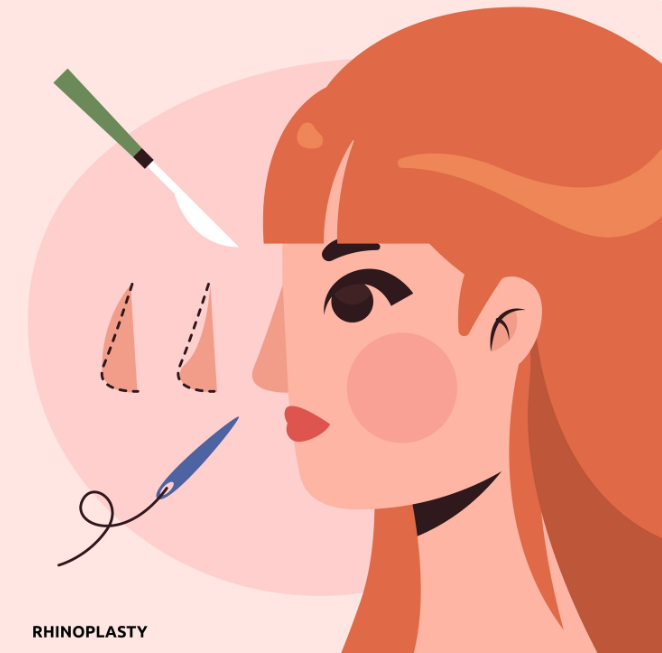
Closed Rhinoplasty, also known as endonasal rhinoplasty, is a surgical technique where all incisions are made inside the nostrils, leaving no visible external scars. Unlike open rhinoplasty, which requires a small incision along the columella (the tissue between the nostrils), the closed approach provides access through hidden internal incisions.
In Korea, closed rhinoplasty is highly popular among patients who seek subtle nasal refinements with minimal downtime and scarring. Korean surgeons are internationally recognized for their precision, artistry, and ability to achieve natural, balanced, and scar-free results, making closed rhinoplasty a top choice for patients prioritizing discretion.
Purpose & Benefits
The primary purpose of closed rhinoplasty is to improve nasal aesthetics while ensuring invisible scarring and quicker recovery. Benefits include:
- No visible scars (all incisions are internal).
- Shorter recovery time compared to open rhinoplasty.
- Reduced swelling and bruising post-surgery.
- Preserves natural nasal structure with minimal disruption.
- Ideal for small to moderate reshaping needs (tip refinement, dorsal hump reduction, nostril narrowing, or bridge adjustments).
- Creates natural-looking results while maintaining nasal function.
Ideal Candidates
Closed Rhinoplasty in Korea is suitable for individuals who:
- Require minor to moderate nasal adjustments.
- Want a scar-free rhinoplasty technique.
- Have concerns like a small dorsal hump, bulbous tip, or minor asymmetry.
- Prefer a faster recovery and less postoperative swelling.
- Are in good general health with realistic expectations.
Possible Risks & Complications
While closed rhinoplasty is considered a safe and refined technique, potential risks include:
- Swelling and bruising (usually milder than open rhinoplasty).
- Breathing difficulties if excessive tissue is removed.
- Over- or under-correction of nasal features.
- Asymmetry in healing.
- Need for revision surgery in rare cases.
Surgical Techniques Used
Korean surgeons use advanced endonasal techniques to refine the nose with minimal disruption. Methods include:
- Cartilage Shaping & Trimming: Reshaping nasal cartilage internally for smoother contours.
- Dorsal Hump Reduction: Removing or rasping excess bone/cartilage for a straighter nasal bridge.
- Tip Refinement: Using internal sutures or cartilage reshaping for a slimmer, more defined tip.
- Septoplasty (if needed): Correcting a deviated septum to improve breathing while enhancing appearance.
- Hidden Incisions: Placed entirely inside the nostrils to ensure no external scarring.
Recovery & Aftercare
- Swelling & Bruising: Typically subsides within 1–2 weeks, less severe than open rhinoplasty.
- Stitches & Splint: Stitches may dissolve naturally or be removed within 5–7 days; external splints are worn for a week.
- Downtime: Most patients return to work or daily life within 7–10 days.
- Final Results: Nasal shape refines over 2–3 months, with subtle improvements continuing up to 6 months.
- Aftercare in Korea: Clinics provide scar prevention care, anti-swelling therapy, and follow-up imaging to track progress.
Results & Longevity
Closed rhinoplasty provides natural and subtle improvements that are long-lasting. Since the structural framework is preserved more than in open surgery, results are stable and maintain nasal functionality. With Korea’s refined techniques, patients achieve a balanced, scar-free outcome that enhances overall facial harmony.
Treatment Process in Korea
Korea has become a global hub for closed rhinoplasty, thanks to its precise surgical methods and comprehensive patient care.
1. Consultation
- Surgeons perform 3D facial scanning and digital morphing to visualize expected results.
- Patients discuss their goals, and surgeons recommend suitable closed techniques.
2. Pre-Surgery Care
- Full medical evaluation including nasal examination and blood tests.
- Personalized surgical planning based on facial ratios and patient preference.
3. Surgery
- Usually performed under local anesthesia with sedation or general anesthesia.
- Takes 1–2 hours, depending on the complexity.
- Internal incisions ensure no visible scars.
4. Immediate Post-Surgery Care
- Patients are monitored in recovery rooms for a few hours.
- External nasal splint applied for protection.
5. Follow-Up & Aftercare
- Clinics in Korea provide LED light therapy, lymphatic massage, anti-swelling injections, and scar-minimization treatments.
- International patients are often given medical tourism packages with interpreters, airport transfers, and aftercare programs.
Why Korea?
- Korean surgeons are globally recognized for their ability to achieve natural results with subtle precision.
- State-of-the-art clinics and medical tourism support make Korea one of the most trusted destinations for rhinoplasty.
Cost Range
The cost of Closed Rhinoplasty in Korea varies depending on the surgeon’s expertise, clinic reputation, and the complexity of the procedure.
- General Price Range: ₩4,000,000 – ₩9,000,000 KRW (approx. $3,200 – $7,200 USD).
- Basic Packages Include: Surgeon’s fee, anesthesia, operation, and standard follow-up care.
- Premium Packages May Include:
- VIP recovery suites
- 3D imaging consultations
- Translator services for foreigners
- Extended postoperative therapies (LED, swelling reduction, scar care)
- Medical tourism support (hotel, transfers, and concierge services)
Compared to Western countries, Korea provides more affordable pricing with higher expertise, making it a preferred choice for patients worldwide.
Popular Clinics
- Banobagi Plastic Surgery (Seoul): Known for advanced closed rhinoplasty techniques and natural outcomes.
- ID Hospital (Seoul): One of Asia’s largest cosmetic hospitals, specializing in minimally invasive rhinoplasty.
- JW Plastic Surgery Clinic: Offers refined closed techniques with a focus on quick recovery.
- View Plastic Surgery Clinic: Popular for international patients due to specialized aftercare services.
- MINE Plastic Surgery Clinic: Provides scar-free, subtle results with strong support for medical tourists.


