
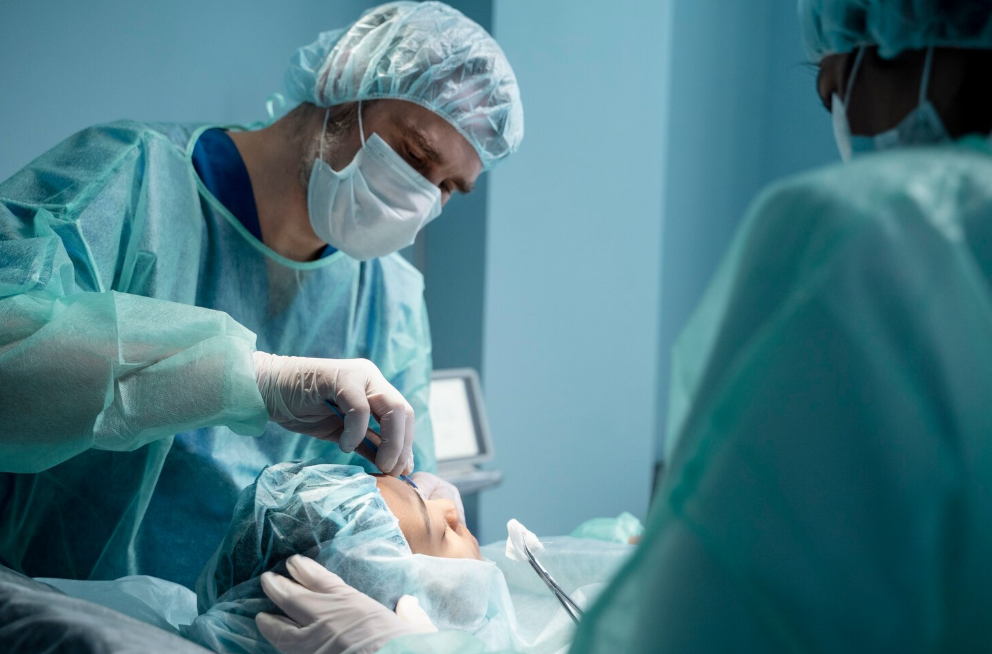
Treatment Overview
Septal Cartilage Graft African Rhinoplasty involves harvesting cartilage from the nasal septum to enhance nasal structure, projection, and definition. In African rhinoplasty, septal cartilage grafting is often used to improve nasal tip support, refine the bridge, and correct weak nasal structures, while maintaining natural ethnic harmony. Korean surgeons are highly skilled at using autologous cartilage grafts for safe, long-lasting, and natural-looking results.
Purpose & Benefits
- Strengthens and supports the nasal tip for improved projection.
- Refines flat or weak nasal bridges.
- Corrects structural issues or deformities.
- Uses the patient’s own tissue, minimizing rejection risk.
- Enhances balance while preserving African ethnic features.
Ideal Candidates
- African patients with low nasal bridges or weak cartilage support.
- Individuals needing structural reinforcement for tip projection.
- Patients undergoing revision rhinoplasty who require added support.
- Those preferring natural cartilage grafts over implants.
- Healthy candidates with realistic expectations.
Possible Risks & Complications
- Swelling, bruising, or temporary nasal congestion.
- Septal perforation (rare with skilled surgeons).
- Cartilage warping or resorption (low risk in Korea due to refined techniques).
- Mild asymmetry that can be corrected with revision if necessary.
Surgical Techniques Used
- Septal Cartilage Harvesting: Careful removal of cartilage from inside the nose without affecting nasal function.
- Tip Grafting: Adding support and projection to the nasal tip.
- Bridge Augmentation: Using cartilage grafts to raise and refine a low nasal bridge.
- Shield Graft Technique: Enhances tip definition and stability.
- Combined Cartilage Use: Septal cartilage may be combined with ear or rib cartilage if additional support is required.
Recovery & Aftercare
- Downtime: 7–10 days for major swelling to subside.
- Stitch Removal: 5–7 days post-surgery.
- Bruising & Swelling: Improves within 1–2 weeks.
- Scar Healing: Minimal, as most incisions are hidden inside the nose.
- Return to Normal Activities: Within 1 week for light tasks; 2–3 weeks for full recovery.
Korean clinics provide scar treatment, anti-swelling injections, and dedicated aftercare programs for international patients.
Results & Longevity
- Permanent structural improvement using natural cartilage.
- Stable and lasting nasal tip projection.
- Natural refinement that maintains African ethnic identity.
- Long-term results without risk of implant-related complications.
Treatment Process in Korea
Patients begin with a comprehensive consultation and 3D simulation to plan the graft placement and desired shape. Korean surgeons evaluate septal cartilage availability and design a custom approach.
The surgery is performed under local anesthesia with sedation or general anesthesia, depending on complexity. Septal cartilage is harvested internally, shaped, and grafted to the tip or bridge.
After surgery, patients receive advanced aftercare services, including translator assistance, regular follow-ups, swelling management treatments, and customized healing support.
Why Korea?
- Expert Cartilage Techniques: Korean surgeons excel in septal cartilage grafting for ethnic rhinoplasty.
- Natural Results: Focus on enhancement while respecting African features.
- High Safety Standards: Advanced techniques reduce risk of resorption or warping.
- Specialized Care for International Patients: Translation, VIP services, and aftercare.
Cost Range
The price of Septal Cartilage Graft African Rhinoplasty in Korea varies based on complexity and whether it is a standalone or combined procedure:
- Simple Septal Cartilage Graft: ₩4,500,000 – ₩6,000,000 KRW ($3,400 – $4,600 USD)
- Cartilage Graft with Full Rhinoplasty: ₩7,000,000 – ₩10,000,000 KRW ($5,400 – $7,700 USD)
- Revision Septal Cartilage Graft Rhinoplasty: ₩9,000,000 – ₩13,000,000 KRW ($7,000 – $10,000 USD)
Popular Clinics in Korea for Septal Cartilage Graft Rhinoplasty
- ID Hospital (Seoul): Specialized in cartilage grafting for ethnic rhinoplasty.
- JW Plastic Surgery: Experts in functional and cosmetic cartilage grafting.
- Banobagi Plastic Surgery: Known for precise septal cartilage reshaping.
- View Plastic Surgery: Offers advanced structural rhinoplasty for African patients.
- MINE Plastic Surgery: Focuses on natural and durable cartilage graft techniques.


