
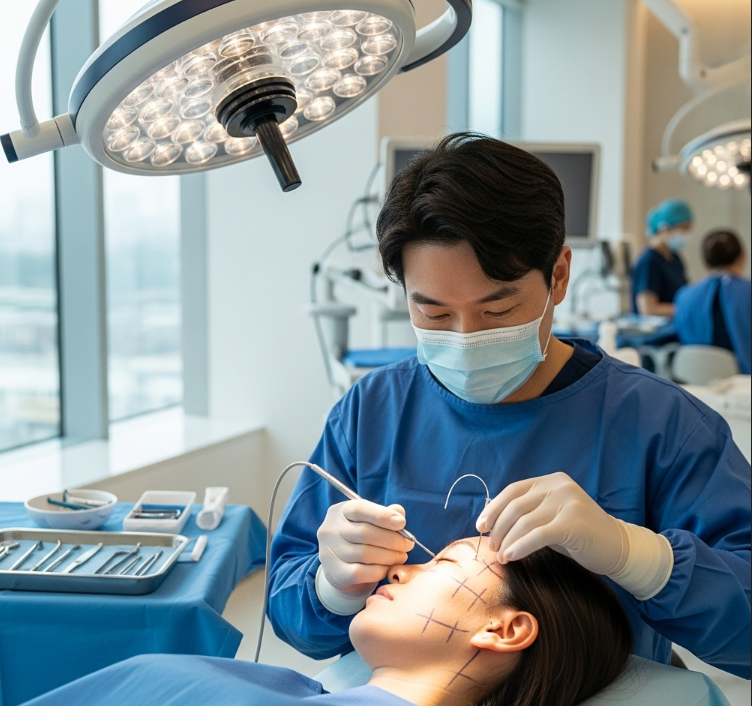
Treatment Overview
Bridge Contouring with Fillers in Korea is a non-surgical nose enhancement procedure aimed at improving the shape, height, and symmetry of the nasal bridge. Using injectable dermal fillers, skilled Korean aesthetic specialists can smooth irregularities, lift a flat bridge, and create a balanced, natural-looking nasal profile. This minimally invasive procedure has become popular for its quick results, minimal downtime, and reversibility.
Purpose & Benefits
- Smooths bumps, dips, or asymmetries along the nasal bridge.
- Enhances bridge height for a more harmonious facial profile.
- Non-surgical and scarless, requiring no incisions or anesthesia.
- Quick procedure with immediate visible results.
- Reversible and adjustable depending on patient preferences.
- Can be combined with tip refinement or Botox-assisted lift for complete nose shaping.
- Ideal for patients who want temporary or trial enhancement before surgical rhinoplasty.
Ideal Candidates
- Individuals with flat or low nasal bridges.
- Patients with minor dorsal irregularities or asymmetries.
- Men and women seeking non-invasive, scarless nasal enhancement.
- Those who want to test a new nasal shape before opting for surgical rhinoplasty.
- Suitable for first-time rhinoplasty patients or those who prefer temporary solutions.
Possible Risks & Complications
- Temporary swelling, redness, or mild bruising at the injection site.
- Minor asymmetry or overcorrection, usually adjustable.
- Rare risk of infection or vascular compromise if improperly injected.
- Temporary results, requiring maintenance every 6–18 months.
- Mild discomfort during or immediately after injections.
Techniques Used
- Hyaluronic Acid Fillers: Most common, safe, and reversible.
- Calcium Hydroxylapatite Fillers: Longer-lasting alternative for bridge elevation.
- Precise Injection Techniques: Performed with fine needles or cannulas for minimal trauma.
- Customized Contouring: Tailored to the patient’s facial proportions for natural results.
- Combination Approaches: Can be paired with Botox-assisted tip lift for a full non-surgical rhinoplasty effect.
Recovery & Aftercare
- Downtime: Minimal; most patients resume daily activities immediately.
- Care Instructions: Avoid touching or massaging the treated area for 24–48 hours.
- Follow-Up: Short check-up within 1–2 weeks to ensure symmetry and desired outcome.
- Maintenance: Results typically last 6–18 months, depending on filler type and metabolism.
- Ice packs and gentle cleaning may help reduce mild swelling or redness.
Results & Longevity
- Immediate improvement in bridge height and contour.
- Smooth, natural-looking nasal profile.
- Subtle enhancement without an artificial or overdone appearance.
- Effects last 6–18 months, with touch-ups recommended for sustained results.
- Reversible and adjustable for long-term flexibility.
Treatment Process in Korea
- Consultation & Assessment:
- Evaluation of nasal bridge structure and facial proportions.
- Customized plan for filler placement and dosage.
- Pre-Procedure Preparation:
- Cleansing and sterilization of injection sites.
- Optional topical numbing for patient comfort.
- Filler Injection:
- Precise placement of filler along the nasal bridge.
- Gentle molding to ensure smooth contour and symmetry.
- Immediate Post-Care:
- Minor redness or swelling may occur, usually resolving quickly.
- Patients can resume daily activities immediately.
- Follow-Up & Maintenance:
- Reassessment within 1–2 weeks to adjust or refine results if needed.
- Regular touch-ups recommended every 6–18 months depending on filler type.
Why Korea is a Top Destination:
- Korean aesthetic clinics have highly experienced injector specialists.
- Use of FDA-approved or Korean-certified fillers ensures safety and high-quality results.
- Convenient, short procedures ideal for international patients seeking non-surgical aesthetic enhancements.
Cost Range
- Standard hyaluronic acid filler: ₩400,000 – ₩900,000 KRW ($300 – $700 USD) per syringe
- Premium or long-lasting fillers: ₩900,000 – ₩1,500,000 KRW ($700 – $1,150 USD) per syringe
- Combination treatment packages (bridge + tip + refinement): ₩1,500,000 – ₩3,000,000 KRW ($1,150 – $2,300 USD)
- Costs typically include:
- Consultation and assessment
- High-quality filler material
- Procedure performed by a certified specialist
- Post-procedure check-up and guidance
Popular Clinics in Korea
- ID Hospital (Seoul): Expert in non-surgical nose contouring and bridge augmentation.
- Banobagi Plastic Surgery (Seoul): Known for precise and natural bridge shaping.
- JW Plastic Surgery (Seoul): Skilled in filler-based bridge enhancement with natural results.
- View Plastic Surgery (Seoul): Popular for minimally invasive nose aesthetic treatments.
- The PLUS Plastic Surgery (Seoul): Recommended for international patients seeking non-surgical rhinoplasty solutions.


