
Treatment Overview
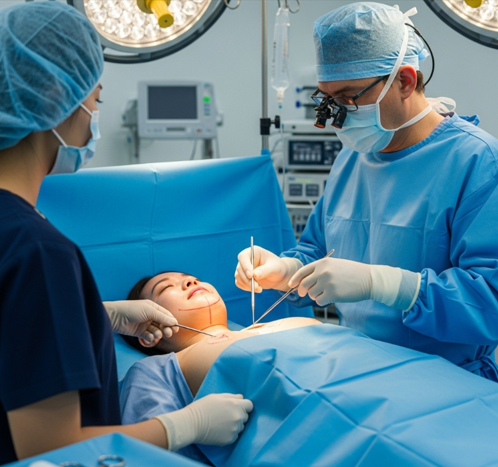
Y-Flap Breast Reconstruction in Korea is an advanced surgical technique used to reconstruct the breast using a Y-shaped tissue flap, often harvested from the patient’s own body. This procedure is commonly applied in autologous breast reconstruction following mastectomy, providing a natural breast shape and contour while minimizing donor site complications.
Korean plastic surgeons are internationally recognized for their precision, aesthetic expertise, and innovative flap techniques, making Korea a leading destination for Y-Flap breast reconstruction.
Purpose & Benefits
The primary goal of Y-Flap reconstruction is to restore breast volume and shape using the patient’s tissue with minimal scarring.
Key Benefits:
- Recreates natural breast contour and symmetry
- Uses patient’s tissue, reducing reliance on implants
- Minimizes visible scarring through Y-shaped flap design
- Can be combined with fat grafting for enhanced softness and volume
- Reduces donor site morbidity compared to traditional flap techniques
- Long-lasting, natural results with high patient satisfaction
Ideal Candidates
Y-Flap breast reconstruction is suitable for patients who:
- Have undergone mastectomy or breast tissue removal
- Prefer autologous tissue reconstruction over implants
- Desire natural breast aesthetics with minimal scarring
- Have sufficient donor tissue at the abdomen, back, or other suitable areas
- Are healthy and able to undergo microsurgery
Possible Risks & Complications
Although generally safe in Korea, potential risks include:
- Flap loss or partial tissue necrosis (rare with experienced surgeons)
- Swelling, bruising, or tenderness at the donor or breast site
- Infection or delayed wound healing
- Minor asymmetry or contour irregularities
- Temporary changes in sensation at the donor or breast site
- Rare complications related to anesthesia
Surgical Techniques Used
Korean surgeons utilize cutting-edge techniques to maximize outcomes:
- Y-Flap Design: Harvests a Y-shaped flap of skin and fat to recreate breast contour while minimizing scars
- Combination with Fat Grafting: Softens edges and enhances natural breast volume
- Microvascular Techniques: Ensures flap viability and proper integration when needed
- Scar Minimization: Strategic incision placement and meticulous suturing
- Optional Implant Integration: In select cases, an implant may be combined with the flap for additional volume
Recovery & Aftercare
- Hospital stay typically 3–5 days for monitoring flap viability
- Light activities can resume in 1–2 weeks
- Avoid strenuous exercise or heavy lifting for 6–8 weeks
- Compression garments are recommended for donor and breast sites
- Regular follow-up visits ensure flap integration, symmetry, and proper healing
Results & Longevity
- Immediate improvement in breast shape and symmetry
- Long-lasting, natural results with minimal risk of implant-related complications
- Can be refined with secondary fat grafting for optimal aesthetics
- Korean surgeons emphasize soft, natural contour and minimal visible scarring
- Highly durable reconstruction with patient tissue
Treatment Process in Korea
Korea is a top destination for Y-Flap reconstruction due to advanced microsurgical skills, innovative flap techniques, and comprehensive patient care:
- Consultation & Assessment: Evaluate chest wall, donor site, and reconstruction goals
- Customized Surgical Plan: Determine flap size, donor site, and optional combination with fat grafting or implant
- Surgical Procedure: Harvest Y-shaped tissue flap and transfer to breast; secure flap under anesthesia
- Post-Operative Monitoring: Ensure flap perfusion, wound care, and early complication management
- Rehabilitation & Aftercare: Compression garments, gradual activity resumption, and donor site exercises
- Follow-Up Visits: Assess flap integration, symmetry, and aesthetic outcomes
- Medical Tourism Support: English-speaking coordinators, recovery accommodations, and guidance for international patients
Cost Range
The cost of Y-Flap breast reconstruction in Korea varies depending on complexity, donor site, and combination procedures:
- Standard Y-Flap Reconstruction: ₩15,000,000 – ₩25,000,000 KRW
(Approx. $11,500 – $19,000 USD) - Combination with Fat Grafting or Implant: ₩20,000,000 – ₩35,000,000 KRW
(Approx. $15,200 – $26,600 USD) - Optional Nipple Reconstruction or Secondary Touch-Ups: ₩3,000,000 – ₩6,000,000 KRW
(Approx. $2,300 – $4,500 USD)
Additional Costs:
- Pre-operative consultation and imaging: ₩200,000 – ₩500,000 KRW ($150 – $380 USD)
- Hospital stay and medications: ₩2,000,000 – ₩5,000,000 KRW ($1,500 – $3,800 USD)
- Follow-up visits and secondary procedures: ₩200,000 – ₩800,000 KRW ($150 – $610 USD)
Popular Clinics
Top Korean clinics for Y-Flap breast reconstruction include:
- Banobagi Plastic Surgery Clinic – advanced flap techniques with aesthetic expertise
- JK Plastic Surgery Center – internationally accredited, skilled in autologous flap reconstruction
- ID Hospital Seoul – precision Y-flap design and natural breast shaping
- View Plastic Surgery Hospital – emphasizes symmetry and soft, natural contour
- Regen Plastic Surgery – combines Y-flap reconstruction with fat grafting and nipple reconstruction for optimal results


