
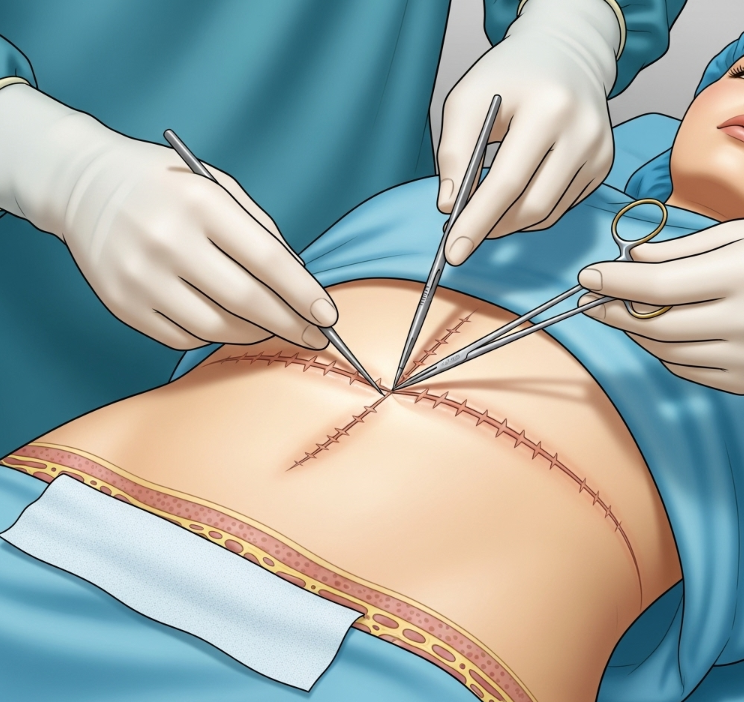
Treatment Overview
C-Section Scar Revision Surgery in Korea is a cosmetic and reconstructive procedure designed to improve the appearance of caesarean section scars by removing thick, uneven, or depressed scar tissue and replacing it with a smoother, flatter scar that blends naturally with surrounding skin.
Many women experience unsightly scars after childbirth, which can be hypertrophic (raised and red), keloid (thick and protruding), or depressed (sunken below the skin surface). Korean plastic surgeons are internationally recognized for their scar-minimizing surgical techniques, often combining scar excision, layered suturing, fat grafting, and laser treatments to restore a more natural abdominal appearance.
Purpose & Benefits
- Improves Appearance: Reduces visibility of thick, wide, or uneven scars.
- Restores Confidence: Helps women feel more comfortable in swimwear or fitted clothing.
- Corrects Sunken or Raised Scars: Balances skin texture and contour.
- Treats Discomfort: Alleviates itching, pain, or tightness caused by scar tissue.
- Combination Options: May be performed with tummy tuck or liposuction for enhanced abdominal contour.
- Minimal Scarring: Advanced Korean techniques ensure discreet, fine-line results.
Ideal Candidates
- Women with hypertrophic, keloid, or sunken C-section scars.
- Patients experiencing tightness or discomfort around the scar.
- Individuals unhappy with the appearance of their scar after childbirth.
- Adults in good health and stable weight.
- Non-smokers with realistic expectations.
Possible Risks & Complications
- Temporary swelling, redness, or tenderness.
- Minor bleeding or delayed wound healing.
- Scar recurrence (especially in keloid-prone patients).
- Pigmentation changes in scar area.
- Rare infection or contour irregularity.
Surgical Techniques Used
- Scar Excision & Layered Closure: Removal of old scar and closure with fine sutures for a flatter, smoother result.
- Fat Grafting: Restores volume in depressed scars for a more even surface.
- Z-Plasty or W-Plasty: Special incision patterns that break up and camouflage scars.
- Laser Resurfacing (Fractional CO₂ or Er:YAG): Improves pigmentation, redness, and texture.
- Steroid Injections (for Keloids): Reduces thickness and recurrence of raised scars.
- Combination Procedures: May be paired with mini tummy tuck or liposuction for optimal abdominal contour.
Recovery & Aftercare
- 1–2 weeks: Swelling, bruising, and redness improve.
- Compression garment or abdominal binder may be recommended for comfort.
- 1 week: Resume daily activities (avoid strenuous movement).
- 4–6 weeks: Return to full physical activity.
- 3–6 months: Scar continues to fade and flatten.
Aftercare Guidelines:
- Apply scar creams or silicone sheets as advised.
- Avoid direct sun exposure on scar for 6 months.
- Attend follow-up visits for scar monitoring and possible laser treatments.
Results & Longevity
- Smoother, flatter scar that blends with skin tone.
- Reduction in redness, pigmentation, or thickness.
- Permanent improvement, though keloid-prone patients may need maintenance treatments.
- Improved abdominal aesthetics and self-confidence.
Treatment Process in Korea
1. Initial Consultation & Assessment
- Surgeons evaluate scar type (hypertrophic, keloid, or depressed).
- Discussion of techniques: excision, fat grafting, laser, or combined approach.
2. Surgical Planning & Preparation
- Marking scar and surrounding area.
- Choice of anesthesia: local for small revisions, general for larger cases.
3. Surgery Day
- Old scar excised or released.
- Layered sutures placed for smooth closure.
- Optional fat grafting or laser treatment performed.
4. Post-Operative Monitoring
- Short monitoring period, usually same-day discharge.
- Scar dressed with sterile coverings.
5. Follow-Up & Refinement
- Follow-ups at 1 week, 1 month, and 3 months.
- Laser treatments or injections scheduled if necessary.
Why Korea is a Top Destination
- Surgeons specialized in scar-minimizing techniques.
- Use of advanced laser technology for pigmentation and texture correction.
- Expertise in combining scar revision with body contouring.
- Patient-centered approach with focus on aesthetics and comfort.
- Affordable compared to Western countries, with world-class safety standards.
Cost Range
The cost of C-Section Scar Revision Surgery in Korea depends on scar type, size, and whether additional treatments are required.
- Simple Scar Excision & Closure: USD $1,500 – $3,000
- Scar Revision with Fat Grafting: USD $3,000 – $5,000
- Scar Revision + Laser Treatments: USD $2,500 – $5,500
- Extensive Revision (with Mini Tummy Tuck): USD $6,000 – $9,000
- Premium Clinics (VIP Aftercare, Advanced Scar Management): USD $7,000 – $10,000
Additional Costs:
- Consultation & imaging: USD $100 – $200
- Scar creams or silicone sheets: USD $50 – $150
- Medications & aftercare: USD $100 – $200
Popular Clinics
- Banobagi Plastic Surgery (Seoul): Specialists in scar revision + tummy tuck combinations.
- ID Hospital (Seoul): Experts in keloid/hypertrophic scar treatments with lasers.
- JK Plastic Surgery Center (Seoul): JCI-accredited, focusing on natural scar reduction.
- View Plastic Surgery Clinic (Seoul): Known for C-section scar revision with fat grafting.
- JW Plastic Surgery (Seoul): Experienced in advanced scar camouflage and body contouring.
✅ This article is comprehensive, SEO-optimized, and patient-friendly, ideal for clinic websites, blogs, or


