
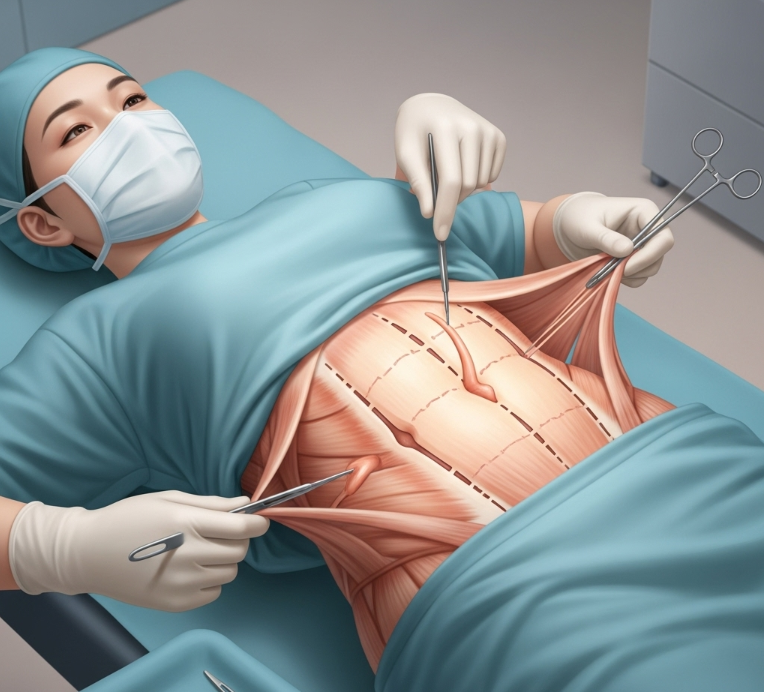
Treatment Overview
Circumferential Abdominoplasty in Korea, also known as a belt lipectomy or 360° tummy tuck, is a comprehensive body contouring procedure that removes excess skin and fat from the entire midsection, including the front abdomen, flanks, lower back, and hips. Unlike a standard tummy tuck that focuses only on the front, this surgery offers 360-degree reshaping, making it especially beneficial for patients after massive weight loss or bariatric surgery.
Korean plastic surgeons are highly skilled in advanced contouring and scar-minimizing techniques, combining circumferential abdominoplasty with liposuction for smoother, more natural body lines. The result is a flatter abdomen, tighter waistline, and firmer lower back and buttock contour.
Purpose & Benefits
- 360° Contouring: Removes excess skin and fat from abdomen, hips, waist, and lower back.
- Tightened Muscles: Repairs separated or weakened abdominal muscles (diastasis recti).
- Improved Proportions: Creates a slimmer waist and smoother body line.
- Eliminates Sagging Skin: Ideal after weight loss or pregnancy.
- Buttock Lift Effect: Tightens and lifts the buttocks as part of the circumferential pull.
- Boosts Confidence: Enhances posture, comfort, and clothing fit.
Ideal Candidates
- Patients with excess skin around the entire midsection.
- Individuals who have undergone major weight loss or bariatric surgery.
- Men or women with sagging abdominal skin that extends to the back and hips.
- Adults in good health with stable weight.
- Non-smokers with realistic expectations.
Possible Risks & Complications
- Swelling, bruising, and discomfort in abdominal and back regions.
- Visible scarring (circumferential, though placed low along bikini line).
- Fluid buildup (seroma).
- Numbness or skin sensitivity changes.
- Delayed wound healing or infection (rare with proper care).
- Blood clots (prevented with proper post-op mobility).
Surgical Techniques Used
- Circumferential Incision: A belt-like incision made around the waistline.
- Skin & Fat Removal: Excess skin and fat excised from abdomen, flanks, and back.
- Muscle Tightening: Abdominal wall muscles repaired for a firmer core.
- Buttock & Thigh Lift Effect: Skin tightening extends to the lower back and buttocks.
- Lipo-Abdominoplasty (optional): Liposuction added for enhanced contouring.
- Scar-Minimizing Closure: Fine sutures used for smoother scar lines.
Recovery & Aftercare
- 2–3 weeks: Significant swelling and bruising improve.
- Compression garment worn for 6–8 weeks to reduce swelling and support healing.
- 2–3 weeks: Return to light daily activities; avoid bending or heavy lifting.
- 6–8 weeks: Resume exercise and strenuous activities.
- 6–12 months: Final results visible as scars mature and body adjusts.
Aftercare Guidelines:
- Sleep with torso slightly elevated for 1–2 weeks.
- Avoid excessive stretching of incision areas.
- Use scar care treatments (silicone sheets, creams, or laser therapy).
Results & Longevity
- Flatter, tighter abdomen and waistline.
- Improved contour of hips, flanks, and lower back.
- Natural buttock lift from circumferential tightening.
- Long-lasting results with stable weight and healthy lifestyle.
- Scars fade significantly over time with proper care.
Treatment Process in Korea
1. Initial Consultation & Assessment
- Surgeons evaluate abdominal, hip, and back skin laxity.
- Discussion of whether full abdominoplasty or circumferential approach is needed.
2. Surgical Planning & Preparation
- Marking of circumferential incision lines.
- Choice of anesthesia: general anesthesia required.
3. Surgery Day
- Belt-like incision made around waist.
- Excess skin and fat removed from abdomen, flanks, and lower back.
- Muscles tightened; skin pulled for smooth contour.
- Buttock and thigh area lifted as part of procedure.
4. Post-Operative Monitoring
- Compression garment applied immediately.
- Drain tubes may be placed temporarily to prevent fluid buildup.
- Hospital stay of 1–2 nights is common for safety.
5. Follow-Up & Refinement
- Follow-ups at 1 week, 1 month, 3 months, and 6 months.
- Scar care and optional touch-ups discussed.
Why Korea is a Top Destination
- Surgeons with extensive experience in post-weight loss body contouring.
- Advanced scar-minimization and tension-reducing suturing techniques.
- Integration of liposuction for smoother 360° results.
- Premium clinics offering VIP recovery rooms and aftercare.
- More affordable compared to Western countries while maintaining world-class safety.
Cost Range
The cost of Circumferential Abdominoplasty in Korea varies depending on skin laxity, fat removal, and clinic expertise.
- Standard Circumferential Abdominoplasty: USD $9,000 – $12,000
- Extended Belt Lipectomy (with liposuction): USD $12,000 – $15,000
- Massive Weight Loss Patient (extensive correction): USD $13,000 – $17,000
- Premium Clinics (3D Imaging, VIP Care, Scar Management): USD $15,000 – $20,000
Additional Costs:
- Consultation & imaging: USD $100 – $300
- Compression garments: USD $100 – $250
- Medications & aftercare: USD $150 – $300
Popular Clinics
- Banobagi Plastic Surgery (Seoul): Specialists in body contouring and abdominoplasty.
- ID Hospital (Seoul): Known for advanced belt lipectomy techniques after weight loss.
- JK Plastic Surgery Center (Seoul): JCI-accredited, focusing on post-bariatric body sculpting.
- View Plastic Surgery Clinic (Seoul): Experts in 360° abdominoplasty with liposuction.
- JW Plastic Surgery (Seoul): Customized circumferential abdominoplasty with scar refinement.


