
Treatment Overview
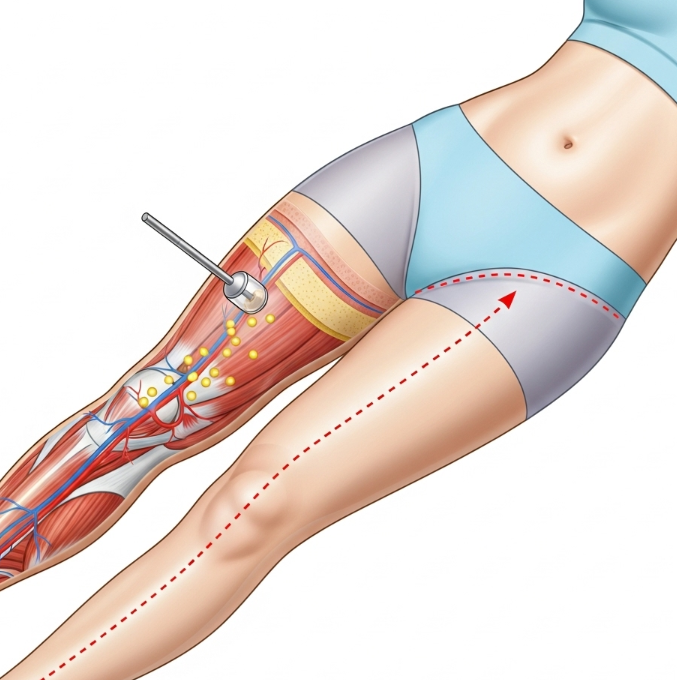
Liposuction-Assisted Thigh Lift in Korea is a surgical body contouring procedure that combines liposuction with skin excision to reshape and tighten the thighs. Unlike standard thigh lifts, which primarily focus on removing sagging skin, this technique first uses liposuction to gently remove stubborn fat deposits, followed by precise skin tightening. This dual approach allows surgeons to create smoother, slimmer, and more natural-looking thighs with reduced trauma and enhanced results.
Korean plastic surgeons are internationally recognized for their expertise in advanced liposuction technologies such as VASER (ultrasound-assisted liposuction), PAL (power-assisted liposuction), and laser-assisted lipo. These methods reduce recovery time, preserve important tissues, and improve contour refinement.
Purpose & Benefits
- Dual Approach: Removes both excess fat and sagging skin.
- Enhanced Contouring: Produces smoother, more proportionate thighs.
- Less Trauma: Liposuction loosens fat before skin removal, minimizing tension.
- Customizable: Can address inner, outer, or circumferential thigh regions.
- Improved Comfort: Reduces skin folds that cause chafing and irritation.
- Confidence Boost: Restores toned leg appearance in clothing and swimwear.
Ideal Candidates
- Patients with excess fat and loose skin in the thighs.
- Individuals after weight loss or aging-related skin laxity.
- Adults with good health and stable weight.
- Non-smokers with realistic expectations.
- Patients wanting better contour than liposuction or thigh lift alone can achieve.
Possible Risks & Complications
- Swelling, bruising, and soreness in thighs.
- Scarring (hidden in groin or thigh folds).
- Numbness or sensitivity changes in the thigh area.
- Fluid buildup (seroma).
- Delayed wound healing or scar thickening.
- Rare risks: infection, asymmetry, or blood clots.
Surgical Techniques Used
- VASER or PAL Liposuction: Breaks down fat for smoother removal.
- Laser-Assisted Liposuction (Optional): Melts fat and tightens skin.
- Skin Excision: Removes sagging skin for a tighter contour.
- Scar-Minimizing Sutures: Fine closure techniques reduce visibility of scars.
- Customized Incision Placement: Along groin, inner thigh, or circumferential, depending on laxity.
Recovery & Aftercare
- 2–3 weeks: Most swelling and bruising subside.
- Compression garments worn for 4–6 weeks.
- 1–2 weeks: Return to work and daily activities.
- 6–8 weeks: Resume strenuous exercise and sports.
- 6–12 months: Final results visible as scars fade and tissues settle.
Aftercare Guidelines:
- Keep legs elevated to minimize swelling.
- Avoid wide leg movements in early recovery.
- Use silicone sheets or creams for scar care.
- Follow scheduled check-ups for progress monitoring.
Results & Longevity
- Slimmer, firmer, and more proportionate thighs.
- Permanent fat removal and long-lasting skin tightening.
- Improved mobility and comfort during walking or exercise.
- Scars fade significantly over time with proper care.
- Results last many years when maintaining a stable weight.
Treatment Process in Korea
1. Initial Consultation & Assessment
- Surgeons assess fat deposits and skin laxity.
- Determine whether liposuction-assisted, standard, or extended thigh lift is most suitable.
2. Surgical Planning & Preparation
- Fat removal zones mapped before incision planning.
- Choice of anesthesia: usually general anesthesia.
3. Surgery Day
- Liposuction performed to remove stubborn fat.
- Skin excision tailored to patient’s degree of laxity.
- Closure with scar-minimizing sutures.
4. Post-Operative Monitoring
- Compression garments applied.
- Patients may stay in clinic or go home same day.
5. Follow-Up & Refinement
- Follow-ups at 1 week, 1 month, 3 months, and 6 months.
- Scar refinement treatments available if needed.
Why Korea is a Top Destination
- Surgeons skilled in combining advanced liposuction with thigh lifts.
- Use of cutting-edge devices (VASER, PAL, laser-assisted liposuction).
- Scar-minimizing and tissue-preserving methods for natural outcomes.
- Clinics with 3D body contouring simulations and VIP aftercare.
- More affordable compared to Western countries, with equally high standards of care.
Cost Range
The cost of Liposuction-Assisted Thigh Lift in Korea varies depending on fat volume, skin laxity, and clinic reputation.
- Standard Liposuction-Assisted Thigh Lift: USD $7,000 – $9,500
- Thigh Lift + VASER/Laser Liposuction: USD $9,000 – $12,000
- Extensive Post-Weight Loss Correction: USD $11,000 – $15,000
- Premium Clinics (3D Imaging, VIP Aftercare, Scar Management): USD $12,000 – $16,000
Additional Costs:
- Consultation & imaging: USD $100 – $300
- Compression garments: USD $150 – $250
- Medications & aftercare: USD $100 – $300
Popular Clinics
- Banobagi Plastic Surgery (Seoul): Experts in liposuction-assisted thigh contouring.
- ID Hospital (Seoul): Known for advanced post-weight loss thigh lifts.
- JK Plastic Surgery Center (Seoul): JCI-accredited, focusing on scar refinement.
- View Plastic Surgery Clinic (Seoul): Leaders in thigh lift with VASER liposuction.
- JW Plastic Surgery (Seoul): Customized liposuction-assisted thigh lifts with natural outcomes.


