
Treatment Overview
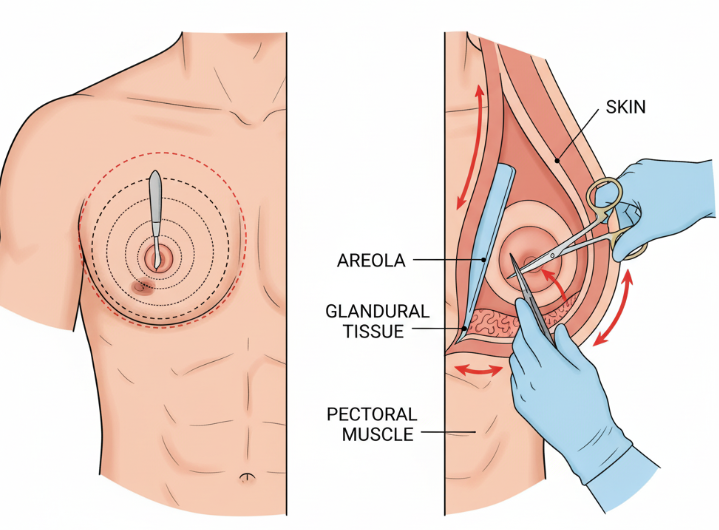
Minimal-Scar Periareolar Top Surgery (sometimes called concentric circle or donut incision top surgery) is a gender-affirming chest masculinization technique ideal for patients with small-to-moderate chest sizes and good skin elasticity. Unlike double-incision methods, this approach uses incisions around the areola only, allowing surgeons to remove breast tissue while minimizing visible scarring.
In Korea, surgeons are highly skilled at precise tissue removal and nipple-areola resizing, often combining the procedure with liposuction or skin-tightening technologies to achieve smoother, natural-looking masculine results. This makes it a popular choice among patients who want a flatter chest with minimal scarring and preserved nipple sensation.
Purpose & Benefits
- Chest Masculinization: Removes breast tissue to create a flatter chest.
- Minimal Scarring: Incisions limited to the edge of the areola.
- Natural Results: Nipples remain attached with preserved sensation.
- Areola Resizing: Areolas can be reduced for a more masculine proportion.
- Faster Recovery: Less invasive than double-incision or inverted-T.
- Confidence Boost: Provides subtle, natural masculine chest contouring.
Ideal Candidates
- Trans men, non-binary, and gender-diverse patients with small-to-moderate chest size (A–small C cup).
- Individuals with good skin elasticity and minimal sagging.
- Patients seeking discreet, minimal scarring.
- Adults in good health and stable weight.
- Non-smokers with realistic expectations (may not achieve the same flatness as double-incision).
Possible Risks & Complications
- Temporary swelling, bruising, or soreness.
- Circular scars around areolas (though they fade over time).
- Risk of skin laxity or residual tissue if chest is larger.
- Possible “puckering” or slight wrinkling around the areola during healing.
- Rare risks: infection, hematoma, or contour irregularities.
Techniques Used
- Periareolar Incision: Circular incision made around the areola.
- Breast Tissue Removal: Tissue excised through incision.
- Liposuction (Optional): Removes fat around chest and underarms for better contour.
- Areola Reduction: Resizes and shapes nipples for masculine proportions.
- Minimal-Scar Closure: Fine sutures placed along areola border for discreet scarring.
Recovery & Aftercare
- 1–2 weeks: Swelling and bruising begin to fade.
- 2 weeks: Return to light daily activities and desk work.
- 3–4 weeks: Resume light exercise (avoid chest-heavy workouts early).
- 3–6 months: Chest contour improves as scars fade and tissue settles.
Aftercare Guidelines:
- Wear a compression vest for 3–4 weeks to support healing.
- Avoid heavy lifting and overhead arm movements during recovery.
- Keep incision areas clean and follow scar-care protocols (silicone sheets/creams).
- Protect scars from direct sun exposure to prevent discoloration.
- Attend follow-up visits for contour evaluation and scar care.
Results & Longevity
- Flat, masculine chest with subtle scarring limited to areola borders.
- Preserved nipple sensation in most cases.
- Permanent removal of breast tissue.
- Natural masculine chest shape with reduced areola size.
- Results last long-term, especially with stable weight.
Treatment Process in Korea
1. Consultation & Planning
- Surgeon evaluates chest size, skin elasticity, and patient goals.
- 3D imaging may be used to plan contour and areola size adjustments.
2. Surgery Day
- Performed under general anesthesia or local with sedation.
- Circular incision made around areola, breast tissue removed.
- Liposuction may be performed for contour refinement.
- Areolas resized and closed with fine sutures.
3. Post-Operative Monitoring
- Compression garment applied immediately.
- Patients typically discharged the same day.
4. Follow-Up & Refinement
- Check-ups at 1 week, 1 month, and 3–6 months.
- Scar-care programs offered (lasers, silicone therapy, microneedling).
Why Korea is a Top Destination
- Surgeons with extensive experience in scar-minimizing top surgery techniques.
- Use of advanced liposuction and skin-tightening devices for refined contouring.
- Clinics provide personalized treatment planning with 3D simulation.
- Affordable pricing compared to Western countries.
- International-friendly services with multilingual staff and discreet care.
Cost Range
The cost of Minimal-Scar Periareolar Top Surgery in Korea varies by chest size, use of liposuction, and clinic reputation.
Estimated Pricing:
- Standard Periareolar Top Surgery: USD $7,000 – $9,500
- With Liposuction Refinement: USD $8,500 – $11,000
- Premium Clinics (scar-care + VIP aftercare): USD $10,000 – $13,000
Additional Costs:
- Consultation & imaging: USD $150 – $300
- Compression garments: USD $150 – $300
- Scar management (lasers, creams): USD $300 – $800
- Medications & aftercare: USD $200 – $400
Popular Clinics
- Banobagi Plastic Surgery (Seoul): Known for subtle chest masculinization with minimal scars.
- ID Hospital (Seoul): Experts in periareolar surgery with contour refinement.
- JK Plastic Surgery Center (Seoul): JCI-accredited, offering premium aftercare.
- View Plastic Surgery Clinic (Seoul): Specialists in scar minimization and natural areola resizing.
- JW Plastic Surgery (Seoul): Leaders in periareolar techniques combined with liposuction.


