
Treatment Overview
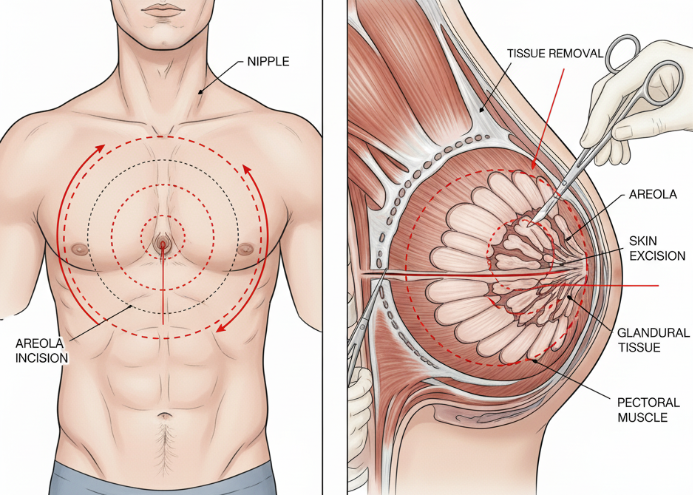
The Modified Keyhole with Areola Resizing is a specialized variation of the keyhole top surgery technique, designed for FTM and non-binary patients who have small-to-moderate chest sizes but also require areola reduction for a more masculine appearance. Unlike standard keyhole, which removes breast tissue through a small incision under the areola, the modified approach also allows surgeons to resize and reshape the areolas, making them smaller and more proportionate to a masculine chest.
In Korea, surgeons are highly skilled in combining precise tissue removal, liposuction contouring, and fine areola resizing techniques. Many clinics also use 3D imaging, scar-minimizing sutures, and advanced aftercare to deliver natural-looking results with minimal scarring. This procedure is ideal for patients who want a masculine chest with discreet incisions and improved nipple proportion.
Purpose & Benefits
- Chest Masculinization: Removes breast tissue to flatten the chest.
- Areola Resizing: Reduces large areolas to a masculine proportion.
- Minimal Scarring: Incisions placed along areola borders for discretion.
- Preserved Sensation: Nipples remain attached, maintaining blood supply and sensitivity.
- Natural Results: Creates a masculine contour with refined areola size.
- Faster Recovery: Less invasive than double-incision or inverted-T surgery.
Ideal Candidates
- Trans men, non-binary, and gender-diverse patients with small-to-moderate chest size (A–B cup).
- Individuals with good skin elasticity and minimal sagging.
- Patients who require areola resizing or repositioning in addition to chest flattening.
- Adults in good health and stable weight.
- Non-smokers with realistic expectations (not suited for very large chests).
Possible Risks & Complications
- Temporary swelling, bruising, or soreness.
- Small scars around areola edges.
- Risk of “puckering” or wrinkling around resized areolas during healing.
- Contour irregularities or residual tissue (rare with expert surgeons).
- Rare risks: infection, hematoma, asymmetry.
Techniques Used
- Modified Keyhole Incision: A small incision along the areola border.
- Breast Tissue Removal: Tissue removed through the incision for chest flattening.
- Areola Resizing: Circular skin excision around the areola to reduce size.
- Liposuction (Optional): Used to contour chest and underarm for smoother definition.
- Scar-Minimizing Closure: Fine sutures placed along areola borders to hide scars.
Recovery & Aftercare
- 1–2 weeks: Swelling and bruising peak, then fade.
- 2 weeks: Resume desk work and light daily activity.
- 3–4 weeks: Light exercise allowed (avoid chest strain).
- 3–6 months: Chest contour settles, scars fade around areolas.
Aftercare Guidelines:
- Wear a compression vest for 3–4 weeks to support healing.
- Avoid chest-intensive exercise until cleared by surgeon.
- Follow scar-care regimen (silicone sheets, creams, laser if needed).
- Protect scars from sun to prevent pigmentation.
- Attend follow-ups to check healing and areola resizing results.
Results & Longevity
- Flat, masculine chest contour with smaller, proportional areolas.
- Minimal scarring hidden along areola borders.
- Preserved nipple sensation in most cases.
- Permanent tissue removal with long-lasting results.
- Natural, subtle outcome enhancing body confidence and gender alignment.
Treatment Process in Korea
1. Consultation & Planning
- Surgeons assess chest size, skin elasticity, and areola dimensions.
- 3D simulations used to preview chest contour and resized areola proportion.
2. Surgery Day
- Performed under general anesthesia or local with sedation.
- Breast tissue removed via incision along areola border.
- Areolas reduced and reshaped for a masculine appearance.
- Liposuction may be performed for contour refinement.
3. Post-Operative Monitoring
- Compression garment applied immediately.
- Same-day discharge or overnight hospital stay.
4. Follow-Up & Refinement
- Follow-ups at 1 week, 1 month, and 3–6 months.
- Scar-care treatments and possible refinements available if needed.
Why Korea is a Top Destination
- Surgeons with extensive experience in modified keyhole and areola techniques.
- Advanced scar-minimization protocols (microneedling, silicone sheets, laser).
- Affordable compared to Western countries while maintaining world-class standards.
- Clinics offer personalized treatment plans, 3D body imaging, and VIP aftercare.
- LGBTQ+ friendly clinics with discreet, multilingual staff for international patients.
Cost Range
The cost of Modified Keyhole with Areola Resizing in Korea varies depending on clinic reputation, surgeon’s experience, and whether liposuction is included.
Estimated Pricing:
- Standard Modified Keyhole with Areola Resizing: USD $7,500 – $9,500
- With Liposuction Refinement: USD $8,500 – $11,000
- Premium Clinics (3D imaging + scar-care + VIP aftercare): USD $10,000 – $13,000
Additional Costs:
- Consultation & imaging: USD $150 – $300
- Compression garments: USD $150 – $300
- Scar management programs: USD $300 – $800
- Medications & aftercare: USD $200 – $400
Popular Clinics
- Banobagi Plastic Surgery (Seoul): Specialists in modified keyhole with natural areola resizing.
- ID Hospital (Seoul): Experts in chest contouring with liposuction enhancement.
- JK Plastic Surgery Center (Seoul): JCI-accredited, premium top surgery and aftercare.
- View Plastic Surgery Clinic (Seoul): Known for scar-minimized areola procedures.
- JW Plastic Surgery (Seoul): Leaders in modified keyhole with precision areola reshaping.


