
Treatment Overview
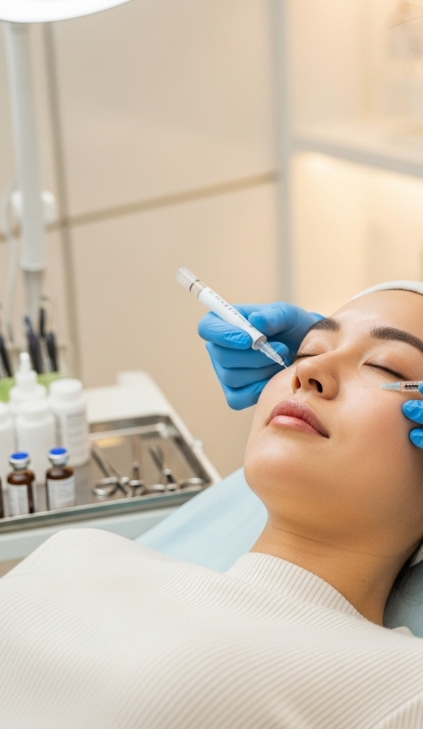
Rejuvenation Sculptra is a leading anti-aging treatment in Korea, designed to restore youthful radiance and firmness by stimulating the skin’s own collagen production. Unlike traditional fillers that provide instant but short-term results, Sculptra uses poly-L-lactic acid (PLLA)—a biocompatible material that gradually rebuilds collagen and elastin fibers in the skin’s deeper layers.
This makes Rejuvenation Sculptra ideal for patients who want subtle, progressive, and long-lasting improvements in skin quality, firmness, and contour. Korean dermatology clinics are globally recognized for their expertise in collagen regeneration therapies, making this treatment one of the most sought-after for natural anti-aging and skin rejuvenation.
Purpose and Benefits
- Collagen Regeneration: Stimulates fibroblasts for new collagen production.
- Wrinkle Softening: Reduces fine lines and deep folds naturally.
- Skin Firmness: Improves elasticity and dermal density.
- Volume Renewal: Restores fullness to hollow cheeks and temples.
- Radiance Boost: Revitalizes skin for a youthful glow.
- Long-Lasting Effect: Results last up to 18–24 months.
- Natural Rejuvenation: Enhancements appear gradually for subtle, balanced results.
Ideal Candidates
Rejuvenation Sculptra is recommended for:
- Adults in their 30s–60s experiencing skin aging and laxity.
- Patients with wrinkles, sagging, or hollow areas.
- Men and women who want natural anti-aging results without surgery.
- Younger individuals looking for preventive collagen stimulation.
- Patients seeking longer-lasting results compared to traditional fillers.
Possible Risks and Complications
Sculptra is FDA-approved and safe when performed by expert dermatologists. Minor, temporary side effects may include:
- Redness or Swelling: Fades within days.
- Tenderness or Bruising: Common, especially at injection points.
- Small Lumps: Rare, minimized with proper injection technique and massage.
- Very Rare Risks: Nodules or uneven rejuvenation (avoided with Korean protocols).
Surgical Techniques Used
While Rejuvenation Sculptra is a non-surgical procedure, it works on the skin’s deeper foundation in ways similar to surgical rejuvenation:
- Deep Dermal Injection: PLLA delivered into collagen-depleted zones.
- Collagen Remodeling: Gradual thickening of dermal structure for rejuvenation.
- Injection Mapping: Customized placement in cheeks, jawline, and temples.
- Layered Stimulation: Ensures even skin firming and wrinkle reduction.
- Combination Care: Often paired with Shurink HIFU, Thermage FLX, or exosome boosters.
Recovery and Aftercare
- Immediately After: Mild redness, swelling, or tenderness.
- 1–3 Days: Temporary bruising may occur but resolves quickly.
- 1–4 Weeks: Early improvements in texture and firmness.
- 2–6 Months: Maximum rejuvenation results as collagen production peaks.
- Downtime: Minimal—patients can return to daily life right away.
Aftercare Tips:
- Follow the “5-5-5 massage rule”: Massage for 5 minutes, 5 times daily, for 5 days.
- Avoid saunas, alcohol, and intense workouts for 48 hours.
- Use hydrating serums and rejuvenation creams.
- Apply SPF sunscreen daily to protect new collagen.
Results and Longevity
- Immediate: Temporary fullness from injection fluid (subsides within days).
- Short-Term (1–2 Months): Wrinkle softening and skin firmness.
- Medium-Term (3–6 Months): Maximum rejuvenation with natural lift.
- Long-Term (18–24 Months): Results last up to 2 years; maintenance suggested.
Treatment Process in Korea
- Consultation & Skin Assessment
- Dermatologist examines wrinkles, sagging, and rejuvenation needs.
- Customized treatment plan created.
- Preparation
- Skin cleansing and optional numbing cream.
- Sculptra solution prepared.
- Rejuvenation Procedure
- Injections applied to cheeks, temples, jawline, and folds.
- Layered injection method ensures balanced rejuvenation.
- Massage & Soothing Care
- Gentle massage spreads product evenly.
- Cooling or hydrating mask applied.
- Finishing Care
- Application of moisturizer and SPF sunscreen.
- Follow-Up
- Typically requires 2–3 sessions, spaced 4–6 weeks apart.
- Maintenance recommended every 18–24 months.
Why Korea is the Best Destination
- Global Leaders in Collagen Stimulation: Korean dermatologists are pioneers in Sculptra techniques.
- Advanced Injection Protocols: Ensure smooth, natural results with minimal risks.
- K-Beauty Integration: Often combined with HIFU, Thermage, or boosters.
- Affordable Yet Premium: Costs are lower than in Western clinics, with superior care.
- Medical Tourism Hub: Seoul is internationally known for skin rejuvenation and anti-aging care.
Cost Range
The cost of Rejuvenation Sculptra in Korea depends on the number of vials and treatment scope:
- Single Vial (Small Area): USD 400 – 700
- Full-Face Rejuvenation (2–3 Vials): USD 1,000 – 1,800
- Advanced Lift (3–4 Vials for Cheeks + Jawline): USD 1,800 – 2,800
- Full Face + Neck Package: USD 2,500 – 3,800
- Luxury Anti-Aging Programs (Sculptra + Shurink HIFU / Thermage FLX / Exosome Boosters): USD 4,000 – 6,500
Additional Costs in Korea:
- Consultation Fee: USD 30 – 100
- Numbing Cream (optional): USD 20 – 50
- Aftercare Skincare (rejuvenation serums, collagen creams, SPF): USD 50 – 200
💡 Many clinics in Seoul recommend multi-session Sculptra packages, since 2–3 sessions are usually required for full rejuvenation.
Popular Clinics in Korea for Rejuvenation Sculptra
- Banobagi Dermatology (Seoul): Leaders in rejuvenation and collagen regeneration.
- Oracle Skin Clinic (Nationwide): Accessible anti-aging programs across Korea.
- View Clinic (Seoul): Known for Sculptra + HIFU rejuvenation packages.
- ID Dermatology (Seoul): Experts in anti-aging and natural volumization.
- Chaum Wellness Center (Seoul): Luxury holistic rejuvenation with Sculptra collagen care.


