
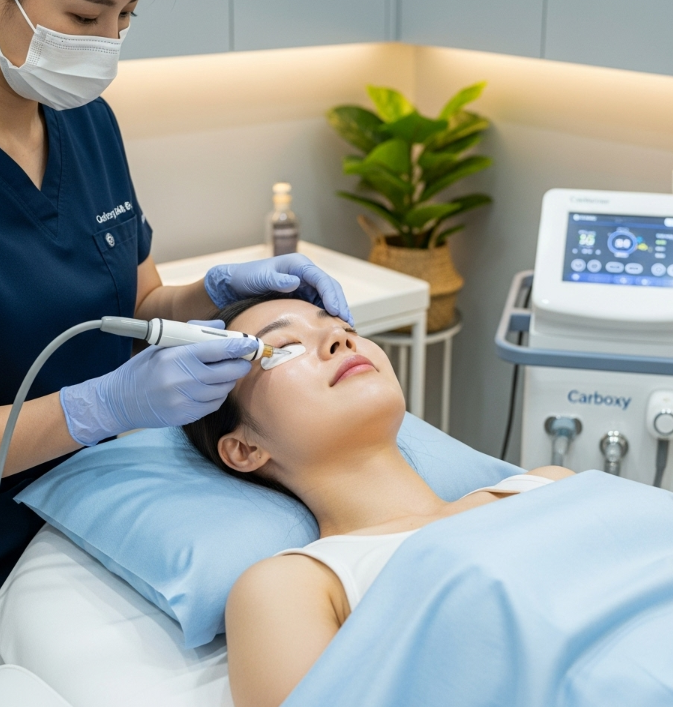
Treatment Overview
Carboxy Therapy (Carbon Dioxide Therapy) is a minimally invasive dermatological procedure widely practiced in Korea for skin rejuvenation, fat reduction, and scar improvement. The treatment involves controlled micro-injections of medical-grade carbon dioxide gas (CO₂) beneath the skin, which increases blood circulation, enhances oxygen delivery, and stimulates collagen production.
In Korea, carboxy therapy is often integrated into multi-modality anti-aging programs, paired with laser resurfacing, microneedling, or skin boosters for synergistic results. It is used not only for wrinkle reduction and skin tightening but also for treating dark under-eye circles, cellulite, and localized fat deposits, making it a versatile rejuvenation tool.
Purpose & Benefits
- Skin Rejuvenation: Improves elasticity, tone, and hydration.
- Wrinkle Reduction: Smooths fine lines and mild creases.
- Under-Eye Dark Circle Care: Increases microcirculation to reduce darkness.
- Collagen Stimulation: Firms sagging skin and improves texture.
- Fat Reduction: Helps break down small fat deposits (chin, arms, thighs).
- Scar & Stretch Mark Improvement: Enhances healing and skin regeneration.
- Non-Surgical & Safe: Minimal downtime compared to surgical options.
Ideal Candidates
Carboxy Therapy is recommended for:
- Adults in their 20s–60s seeking mild to moderate anti-aging improvements.
- Patients with under-eye dark circles or tired-looking eyes.
- Individuals with mild sagging or early signs of skin aging.
- Men and women seeking non-surgical fat reduction in small areas.
- Patients with acne scars, stretch marks, or post-surgical scars.
- Those preferring a natural collagen-stimulating treatment without fillers.
Possible Risks & Complications
Carboxy Therapy is generally safe when performed in Korea’s dermatology clinics, but possible risks include:
- Mild Swelling/Redness: Temporary, subsides within hours.
- Slight Bruising: Can occur at injection sites.
- Tingling or Warm Sensation: Common and short-lived.
- Rare Risks: Infection or prolonged pain (extremely rare with proper technique).
Techniques Used in Korea
Korean dermatologists use advanced CO₂ delivery systems for precision and comfort:
- Subcutaneous Injections: To stimulate collagen and elasticity.
- Periorbital Technique: Gentle injections for under-eye dark circles.
- Localized Fat Reduction: CO₂ applied to chin, arms, or abdomen.
- Combination Care: Carboxy therapy combined with mesotherapy, PRP, or lasers.
- Skin Booster Integration: Enhances glow when paired with hyaluronic acid or exosome boosters.
- Customized Protocols: Number of sessions tailored to wrinkle depth, skin laxity, or fat deposits.
Recovery & Aftercare
- Immediately After: Mild swelling, pressure sensation, or redness.
- Few Hours: Symptoms usually resolve completely.
- 1–2 Days: Skin looks refreshed and firmer.
- 4–6 Sessions: Often recommended for optimal results.
Aftercare Tips:
- Avoid vigorous exercise for 24 hours.
- Keep treated areas hydrated.
- Use sunscreen to protect regenerating skin.
- Follow doctor’s schedule for repeated sessions.
Results & Longevity
- Immediate: Brighter, refreshed skin appearance.
- Short-Term (1–2 Weeks): Under-eye circles lighten, skin texture improves.
- Medium-Term (4–6 Sessions): Noticeable wrinkle reduction, elasticity increase.
- Long-Term: Collagen stimulation maintains results 6–12 months, requiring maintenance.
Treatment Process in Korea
- Consultation & Planning – Doctor analyzes skin condition, dark circles, or fat deposits.
- Preparation – Numbing cream applied for comfort.
- Injection Session – Controlled CO₂ micro-injections in targeted areas.
- Post-Care – Cooling packs or soothing serums applied.
- Follow-Up – Regular sessions scheduled every 1–2 weeks.
Why Korea is a Top Destination
- Expertise in integrating carboxy therapy with advanced dermatological programs.
- Specialization in under-eye rejuvenation, a leading use case in Korea.
- Safe, FDA/KFDA-approved CO₂ devices used in top clinics.
- Affordable multi-session treatment packages compared to Western clinics.
- Seoul’s reputation as a hub for non-surgical rejuvenation and skin science innovation.
Cost Range
Carboxy Therapy pricing in Korea depends on area treated and number of sessions:
- Under-Eye Dark Circle Therapy: USD 80 – 150 per session
- Full Face Rejuvenation: USD 150 – 300 per session
- Localized Fat Reduction (chin/arms/abdomen): USD 200 – 400 per session
- Package Deals (5–10 sessions): USD 600 – 2,000
Additional Costs in Korea:
- Consultation: USD 20 – 50
- Add-ons (PRP, mesotherapy, laser): USD 100 – 500 per session
💡 Many patients describe carboxy therapy as a “circulation boost for the skin,” providing both rejuvenation and fat reduction without downtime.
Popular Clinics
- Banobagi Dermatology (Seoul): Specialists in under-eye carboxy + PRP combinations.
- Oracle Dermatology (Seoul): Offers multi-session skin & fat reduction packages.
- Renewme Skin Clinic (Seoul): Known for scar and stretch mark improvement.
- ID Dermatology (Seoul): Integrates carboxy therapy with facial contouring.
- Chaum Wellness Center (Seoul): Luxury anti-aging programs including CO₂ therapy.


