
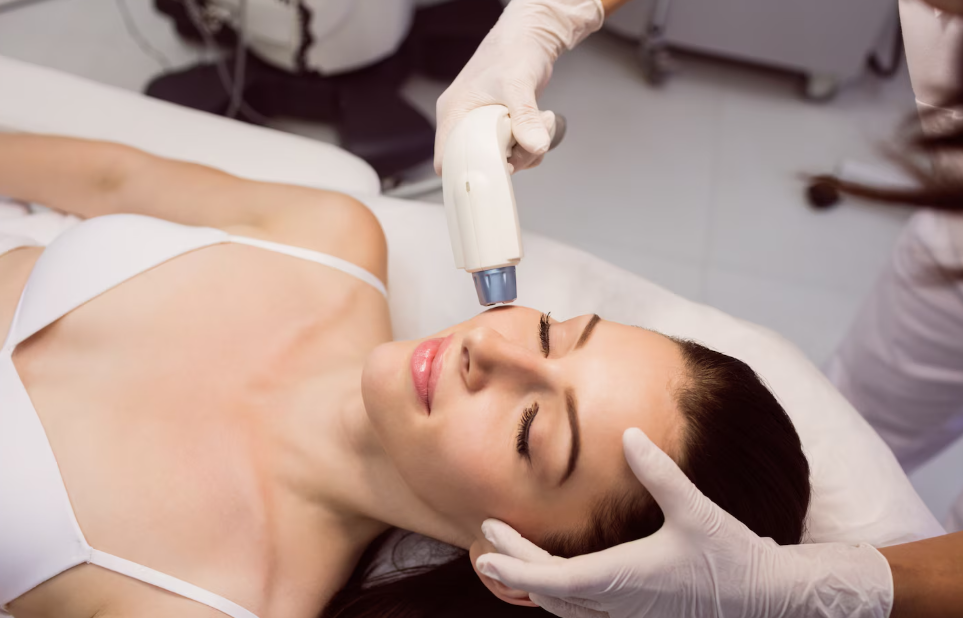
Treatment Overview
Pico Laser is an advanced non-ablative laser that delivers ultra-short picosecond pulses into the skin. Instead of relying on heat, it creates a photoacoustic effect that stimulates skin remodeling, collagen regeneration, and pigment correction with minimal thermal damage.
For stretch marks (striae), Pico Laser works by breaking down scar-like tissue, stimulating collagen and elastin production, improving skin tone, and reducing discoloration. In Korea, Pico Lasers are often used for fading both new red and old white stretch marks, especially in patients seeking faster recovery compared to ablative lasers like CO₂.
Purpose & Benefits
- Collagen Remodeling: Repairs and strengthens the dermis.
- Texture Improvement: Softens rough or depressed stretch mark areas.
- Pigment Correction: Fades red (new) and whitish (old) striae for more even tone.
- Gentle Alternative: Safer for sensitive or darker skin types than CO₂ laser.
- Minimal Downtime: Little to no peeling or extended redness.
- Synergy: Works well when combined with Dermapen, PRP, or Exosome Therapy.
Ideal Candidates
Pico Laser in Korea for stretch marks is recommended for:
- Adults with mild to moderate striae (both red and white).
- Patients who want improvement without aggressive downtime.
- Those with sensitive skin or who cannot undergo strong resurfacing lasers.
Comparison with other treatments:
- Pico Laser: Best for pigmentation + gentle collagen stimulation.
- Fractional CO₂ Laser: Best for deep remodeling of severe or older stretch marks.
- Er:YAG Laser: Best for gentler resurfacing with faster healing.
- Dermapen Microneedling: Best for collagen induction + serum absorption.
- Exosome/PRP Therapy: Best for regenerative healing and support.
Possible Risks & Complications
Pico Laser is very safe, but minor side effects may include:
- Redness or Warmth: Usually fades within 24 hours.
- Mild Swelling: Temporary, resolves quickly.
- Rare Risks: Slight pigmentation changes if overtreated (rare with Korean protocols).
Surgical Techniques Used
- Fractional Pico Mode: Creates microzones for dermal regeneration.
- Photoacoustic Effect: Stimulates collagen without significant heat damage.
- Treatment Areas: Abdomen, thighs, hips, breasts, arms.
- Combination Therapy: Often paired with microneedling, PRP, or exosomes.
- Protocol: 3–5 sessions every 4–6 weeks; maintenance every 6–12 months.
Recovery & Aftercare
- Immediately: Mild redness, warmth, or slight swelling.
- 1–2 Days: Skin calms quickly with minimal downtime.
- 2–4 Weeks: Visible fading of stretch marks and smoother texture.
Aftercare Tips:
- Use SPF 50+ daily to prevent pigmentation.
- Apply hydrating creams and barrier-repair serums.
- Avoid harsh exfoliants and retinol for 3–5 days.
- Stay hydrated to support collagen repair.
Results & Longevity
- Short-Term (2–4 Weeks): Stretch marks begin to fade, skin feels smoother.
- Medium-Term (2–3 Months): Collagen remodeling thickens and repairs the dermis.
- Long-Term: Results last 9–12 months; ongoing sessions maintain results.
Treatment Process in Korea
- Consultation & Skin Analysis – Doctor evaluates type and depth of stretch marks.
- Preparation – Cleansing and protective eye shields applied.
- Pico Laser Session – Fractional pulses delivered to target striae.
- Optional Add-Ons – PRP, exosomes, or microneedling for enhanced outcomes.
- Post-Care – Cooling masks or antioxidant serums applied.
- Follow-Up – Multi-session plan ensures progressive improvement.
Why Korea is a Top Destination
- Korea is a leader in pico-laser protocols for scars and pigmentation.
- Clinics use KFDA-approved advanced Pico devices tailored for sensitive areas.
- Dermatologists often combine Pico with PRP, exosomes, or boosters for better results.
- More affordable compared to Western clinics with similar technologies.
- Seoul is globally recognized for scar and stretch mark revision expertise.
Cost Range (Detailed Breakdown)
Pricing for Pico Laser in Korea for stretch marks:
- Single Session: USD 250 – 500
- 3–5 Session Package (recommended): USD 800 – 1,800
- Pico + PRP/Exosome Combo: USD 400 – 900 per session
- Premium Stretch Mark Package (Pico + Dermapen + PN Boosters + Exosomes): USD 2,500 – 4,000
Additional Costs in Korea:
- Consultation: USD 20 – 40
- Add-ons (PRP, PN, Exosomes, Microneedling): USD 100 – 500
💡 Patients often call Pico Laser the “gentle resurfacing laser”, since it helps fade stretch marks with less downtime while stimulating long-term collagen repair.
Popular Clinics in Seoul
- Banobagi Dermatology – Pico Laser + PRP for striae reduction.
- Oracle Dermatology – Pico + exosome protocols for regenerative repair.
- Renewme Skin Clinic – Pico + PN boosters for collagen stimulation.
- View Plastic & Dermatology – Pico + Dermapen for enhanced absorption.
- Chaum Anti-Aging Center – Premium Pico + multi-step anti-stretch mark programs.


