
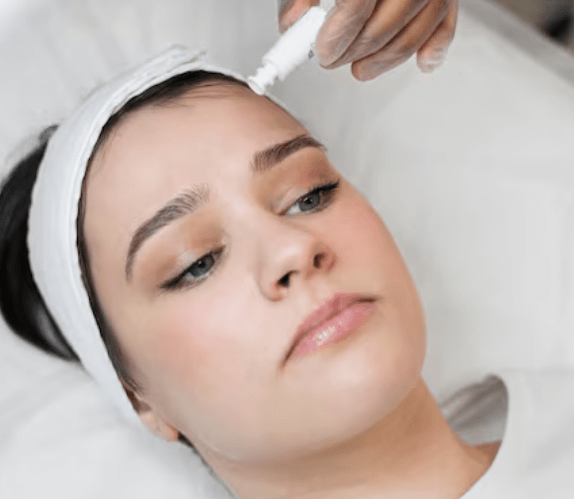
Treatment Overview
Spectra Laser Toning, also known as Spectra Peel or Hollywood Laser Peel, is a popular Korean dermatology treatment that uses the Q-switched Nd:YAG laser (1064 nm) with special settings designed for melasma, pigmentation, acne, and enlarged pores. The laser gently breaks down excess melanin while stimulating collagen, making it highly effective for diffuse pigmentation, uneven skin tone, and pore refinement.
In some protocols, a carbon lotion mask is applied before the laser (Spectra Peel), allowing the device to exfoliate, deep-clean pores, and control oil. This makes Spectra Toning suitable for both pigment and acne-prone skin.
It belongs to the Skin Concerns: Melasma, Pigmentation, Pores, Acne, Tone family (Pico Toning, Ruby Laser, Carbon Peel, Aqua Toning, Genesis):
- Spectra Laser Toning: Best for melasma + pigmentation + pores.
- Pico Toning: Best for stubborn pigment and rejuvenation.
- Ruby Laser: Best for freckles, age spots, and resistant pigmentation.
- Carbon Laser Peel (Spectra Peel mode): Best for acne, oily skin, and pore cleansing.
- Genesis Laser: Best for redness + pores + fine lines.
Purpose & Benefits
- Melasma Management: Reduces stubborn melasma with low-fluence settings.
- Pigmentation Reduction: Fades sunspots, freckles, and uneven tone.
- Pore Refinement: Tightens enlarged pores via collagen remodeling.
- Acne & Oil Control: Spectra Peel mode reduces sebaceous activity.
- Texture Smoothing: Improves roughness and early aging signs.
- Safe for Asian Skin: Gentle and effective with low risk of PIH.
- Synergy: Works well with Pico, Aqua Toning, or Exosome boosters.
Ideal Candidates
Spectra Laser Toning in Korea is recommended for:
- Adults with melasma or diffuse pigmentation.
- Patients with uneven tone, freckles, or dull skin.
- Individuals with enlarged pores or oily, acne-prone skin.
- Men and women looking for a safe and effective pigment + pore treatment.
Comparison with other treatments:
- Spectra Laser Toning: Best for melasma + pigmentation + pores.
- Pico Toning: Best for resistant pigment and overall rejuvenation.
- Ruby Laser: Best for localized spots and freckles.
- Carbon Laser Peel: Best for oily skin + pore cleansing.
- Genesis Laser: Best for redness and subtle rejuvenation.
Possible Risks & Complications
Spectra Toning is safe in Korean dermatology clinics, but mild side effects may include:
- Redness or Warmth: Temporary, fades in hours.
- Dryness or Flaking: As skin renews.
- Rare Risks: Over-treatment can lead to hypo- or hyperpigmentation (minimized with expert technique).
Surgical Techniques Used
Spectra Laser Toning uses a Q-switched Nd:YAG laser with multiple modes:
- Laser Device: Spectra Q-switched Nd:YAG 1064 nm.
- Low-Fluence Toning: Breaks down melanin gradually for melasma.
- Carbon Peel Option: Carbon lotion applied before laser for acne/oil control.
- Collagen Remodeling: Stimulates dermis to tighten pores.
- Protocol: 5–10 sessions every 1–2 weeks, maintenance every 3–6 months.
Recovery & Aftercare
- Immediately: Mild warmth or redness.
- 1–2 Days: Skin feels smoother and fresher.
- 2–4 Weeks: Pigmentation gradually fades, pores refined.
Aftercare Tips:
- Apply SPF 50+ daily to prevent pigment recurrence.
- Use hydrating and soothing skincare.
- Avoid exfoliants, acids, or retinoids for 3–5 days.
- Maintain multiple sessions for cumulative results.
Results & Longevity
- Immediate: Brighter and cleaner skin after first session.
- Short-Term (2–4 Weeks): Visible pigment reduction and refined pores.
- Medium-Term (2–3 Months): Melasma lightened, acne controlled.
- Long-Term: Results last 6–12 months with maintenance.
Treatment Process in Korea
- Consultation & Skin Analysis – Doctor evaluates pigmentation, pores, and acne.
- Preparation – Cleansing, numbing cream optional.
- Laser Session – Q-switched Nd:YAG applied with or without carbon peel.
- Optional Add-Ons – Pico Toning, Aqua Toning, or Exosome boosters.
- Post-Care – Cooling mask or hydrating serum.
- Follow-Up – Multi-session plan for progressive melasma and pore improvement.
Why Korea is a Top Destination
- Korea is renowned for melasma and pigmentation treatment expertise.
- Dermatologists use authentic KFDA-approved Spectra devices.
- Clinics specialize in custom melasma protocols (Spectra + Pico + Aqua Toning).
- Treatments are affordable compared to Western medspas.
- Seoul is known for melasma-focused laser programs with high safety.
Cost Range (Detailed Breakdown)
Pricing for Spectra Laser Toning in Korea varies by clinic and package:
- Single Session (full face): USD 150 – 300
- 5–10 Session Package: USD 600 – 1,500
- Spectra Toning + Carbon Peel Combo: USD 200 – 400 per session
- Premium Melasma Package (Spectra + Pico + Exosomes): USD 1,200 – 2,400
Additional Costs in Korea:
- Consultation: USD 10 – 30
- Add-ons (Exosomes, PN boosters, serums): USD 100 – 400
💡 Patients often call Spectra Laser Toning the “melasma laser”, since it’s one of the safest and most effective options for diffuse pigmentation in Asian skin.
Popular Clinics
- Banobagi Dermatology (Seoul): Spectra for melasma + pores.
- Oracle Dermatology (Seoul): Combines Spectra + Pico for stubborn pigmentation.
- Renewme Skin Clinic (Seoul): Offers Spectra Peel for acne + pigmentation.
- View Plastic & Dermatology (Seoul): Spectra + Carbon Peel + Aqua Toning.
- Chaum Anti-Aging Center (Seoul): Premium Spectra with exosome boosters.


