
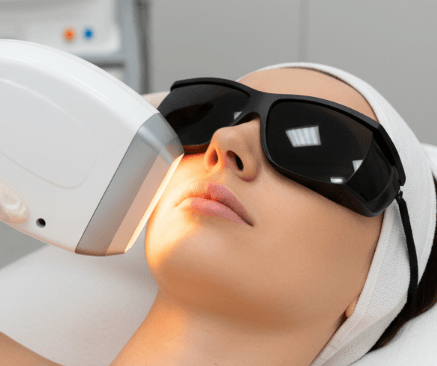
Treatment Overview
The Q-Switched Alexandrite Laser operates at a 755 nm wavelength, making it highly effective for targeting pigmented lesions, freckles, sunspots, and tattoo removal. Using Q-Switched technology, the laser delivers short, high-intensity pulses that selectively break down melanin clusters without significantly damaging surrounding tissue.
In Korea, the Q-Switched Alexandrite Laser is widely used for patients with fair to medium skin tones who want safe and effective treatment of superficial pigmentation and colored tattoos. It is also a trusted option for brown spots, birthmarks, and certain pigmentary disorders.
It belongs to the Pigmentation & Tattoo Laser family (Q-Switched Alexandrite, Q-Switched Nd:YAG, Q-Switched Ruby, Pico Lasers):
- Q-Switched Alexandrite (755 nm): Best for superficial pigmentation + colored tattoos.
- Q-Switched Nd:YAG (1064/532 nm): Best for melasma + deep dermal pigment.
- Q-Switched Ruby (694 nm): Best for resistant pigment and tattoos.
- Pico Lasers (PicoSure, PicoPlus, PicoCare): Best for stubborn pigmentation + scars.
Purpose & Benefits
- Pigmentation Clearance: Effective for freckles, lentigines, and sunspots.
- Tattoo Removal: Removes multicolor tattoos (green, blue, black, and more).
- Birthmark Treatment: Treats certain pigmented birthmarks (Ota nevus, café-au-lait).
- Safe for Lighter Skin: Best suited for fair to medium Asian skin tones.
- Non-Invasive: Minimal damage to surrounding skin tissue.
- Fast Recovery: Little downtime compared to ablative resurfacing.
Ideal Candidates
Q-Switched Alexandrite Laser in Korea is recommended for:
- Adults with freckles, sunspots, or superficial pigmentation.
- Patients with colored tattoos seeking removal.
- Individuals with pigmented birthmarks or age spots.
- Men and women comparing treatments:
- Q-Switched Alexandrite: Best for surface pigment + tattoos.
- Q-Switched Nd:YAG: Best for deeper pigment + melasma.
- Q-Switched Ruby: Best for resistant pigment + tattoos.
- Pico Lasers: Best for stubborn pigment + scars.
Possible Risks & Complications
The Q-Switched Alexandrite Laser is safe, but possible effects may include:
- Redness or Warmth: Temporary, subsides within 24–48 hours.
- Crusting or Flaking: As pigment or tattoo ink fragments clear.
- Rare Risks: Hypopigmentation, hyperpigmentation, or scarring (rare in skilled Korean clinics).
Surgical Techniques Used
Q-Switched Alexandrite Laser uses selective photothermolysis with short pulses:
- 755 nm Wavelength: Targets melanin and tattoo pigments.
- Q-Switched Mode: Breaks pigment into tiny fragments for natural clearance.
- Protocol:
- Pigmentation: 2–5 sessions spaced 3–4 weeks apart.
- Tattoo removal: 6–10 sessions depending on ink depth and color.
Recovery & Aftercare
- Immediately: Redness, mild swelling, or darkening of pigment.
- 1–2 Days: Crusting may appear as pigment rises to the surface.
- 1–2 Weeks: Treated pigment flakes off; tattoo ink lightens.
Aftercare Tips:
- Apply soothing ointments or aloe vera.
- Avoid sun exposure; use SPF 50+ daily.
- Do not pick scabs or crusts.
- Avoid harsh skincare (retinoids, acids) for 5–7 days.
Results & Longevity
- Pigmentation: Spots fade within a few weeks after each session.
- Tattoo Removal: Ink gradually clears with multiple sessions.
- Long-Term: Results are permanent for pigmentation spots and tattoos once cleared.
Treatment Process in Korea
- Consultation & Skin Analysis – Doctor evaluates pigmentation or tattoo type.
- Preparation – Cleansing, numbing cream if necessary, protective eyewear.
- Q-Switched Alexandrite Session – Laser pulses applied to targeted areas.
- Post-Care: Cooling gel, healing cream, or antioxidant infusion.
- Follow-Up: Multiple sessions scheduled for complete clearance.
Why Korea is a Top Destination
- Korea uses latest Q-Switched Alexandrite devices optimized for pigmentation and tattoo removal.
- Dermatologists specialize in safe pigment correction for Asian skin.
- Affordable compared to Western clinics.
- Clinics often combine Alexandrite with Pico or Nd:YAG lasers for best outcomes.
- Seoul is internationally recognized for laser pigmentation and tattoo removal expertise.
Cost Range (Detailed Breakdown)
Pricing for Q-Switched Alexandrite Laser in Korea:
- Pigmentation Removal (per session): USD 150 – 300
- Tattoo Removal (per session): USD 200 – 500 (depending on size and color)
- 5–10 Session Tattoo Package: USD 1,000 – 3,000
Additional Costs in Korea:
- Consultation: USD 20 – 50
- Add-ons (Whitening serums, boosters): USD 80 – 300
💡 The Q-Switched Alexandrite Laser is often called “the pigment and tattoo eraser” in Korea, due to its precision and effectiveness for both cosmetic and medical pigmentation conditions.
Popular Clinics
- Banobagi Dermatology (Seoul): Alexandrite for freckles + tattoo removal.
- Oracle Dermatology (Seoul): Specialized Alexandrite pigmentation programs.
- Renewme Skin Clinic (Seoul): Alexandrite + Pico combo treatments.
- View Plastic & Dermatology (Seoul): Alexandrite for sunspots + age spots.
- Chaum Anti-Aging Center (Seoul): Premium Alexandrite + pigmentation boosters.


