
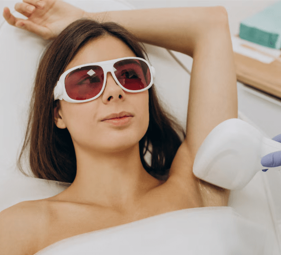
Treatment Overview
The V-Beam Laser (595 nm pulsed-dye laser, PDL) is one of the most widely used vascular lasers in Korean dermatology for acne inflammation, redness, and post-acne erythema (red marks). It targets oxyhemoglobin in superficial blood vessels, shrinking them and thereby reducing redness and inflammation.
In Korea, V-Beam is considered a gold-standard treatment for acne redness and is frequently recommended both for active inflamed pimples and for fading post-inflammatory vascular scars. It is also used as part of combination acne programs with extractions, peels, or toning lasers.
Purpose & Benefits
- Redness Reduction: Calms inflamed acne and reduces vascular redness.
- Post-Acne Mark Fading: Improves erythema left behind after acne heals.
- Scar Prevention: Treats inflammation early, lowering scar risk.
- Gentle & Safe: Selective vascular targeting without damaging surrounding skin.
- Skin Clarity: Overall brighter, even-toned complexion.
Ideal Candidates
V-Beam Laser in Korea is recommended for:
- Patients with active red, inflamed acne.
- Individuals with post-acne erythema (red marks).
- Those with sensitive skin prone to persistent redness.
- Patients who want a non-invasive, no-downtime solution for acne-related redness.
Possible Risks & Complications
V-Beam is safe when performed under Korean dermatology protocols, but temporary side effects may occur:
- Redness & Warmth: Immediately after treatment, fades in hours.
- Mild Swelling: Common, especially under the eyes or cheeks, lasts 1–2 days.
- Purpura (Bruising): Rare with sub-purpuric settings (older protocols used higher energy that caused bruising).
- Rare Risks: PIH (post-inflammatory hyperpigmentation) if overly aggressive settings are used—minimized with Korean low-fluence protocols.
Surgical Techniques Used
- 595 nm Pulsed-Dye Laser: Targets oxyhemoglobin in blood vessels.
- Sub-Purpuric Low-Fluence Settings: Used in Korean clinics to avoid bruising.
- Multi-Pass Gentle Protocols: Gradual reduction of redness over sessions.
- Protocol: 3–5 sessions, spaced 3–4 weeks apart.
Recovery & Aftercare
Immediately: Skin feels warm and slightly red.
1–2 Days: Mild swelling possible, subsides quickly.
1–2 Weeks: Gradual fading of redness and vascular marks.
Aftercare Tips:
- Use soothing moisturizers and barrier creams.
- Apply SPF 50+ sunscreen daily to prevent pigmentation.
- Avoid hot baths, saunas, and strenuous workouts for 1–2 days.
- Do not pick or rub treated skin.
Results & Longevity
- After 1 Session: Skin looks calmer, inflamed pimples less red.
- After 2–3 Sessions: Noticeable fading of post-acne vascular marks.
- After 4–5 Sessions: Significant improvement in acne redness, clearer and more even skin tone.
Results last months to years, but maintenance may be needed if redness recurs.
Treatment Process in Korea
Consultation & Skin Analysis
Dermatologist examines acne inflammation and redness severity.
Preparation
Gentle cleansing, protective goggles applied.
V-Beam Laser Session
- Step 1: Pulsed-dye laser delivered across inflamed acne and vascular marks.
- Step 2: Low-fluence, sub-purpuric settings minimize downtime.
- Step 3: Cooling mask or serum applied post-treatment.
Duration: 15–20 minutes.
Post-Treatment Care
Moisturizer and sunscreen applied.
Patients can return to daily life immediately.
Follow-Up
3–5 sessions for optimal results.
Unique Korean Advantages
- Sub-Purpuric Protocols: Minimize bruising risk, ideal for Asian skin.
- Combination Acne Programs: V-Beam often paired with IPL, toning laser, or extractions.
- Scar Prevention: Focuses on treating inflammation early to prevent scarring.
- Cost-Effective Packages: Multi-session V-Beam programs are more affordable in Korea than in the West.
Cost Range (Estimated)
- Single V-Beam Session: USD 150 – 300
- V-Beam + Extraction/Peel: USD 200 – 400
- Premium Package (V-Beam + IPL + Toning/LED): USD 500 – 900
Example Korean Packages:
- Standard V-Beam Program (3 sessions): USD 500–700
- Acne Redness Care (V-Beam + Peel): USD 700–1,000
- Premium Package (V-Beam + IPL + Whitening Drip): USD 1,200–1,800
Popular Clinics in Seoul
- Oracle Dermatology: V-Beam for active acne redness and vascular scars.
- Banobagi Dermatology: V-Beam + IPL programs for acne erythema.
- Renewme Skin Clinic: V-Beam for vascular marks with acne facials.
- View Dermatology: Acne redness protocols combining V-Beam + toning laser.
- Chaum Anti-Aging Center: Premium V-Beam vascular acne programs with boosters.


