
Treatment Overview
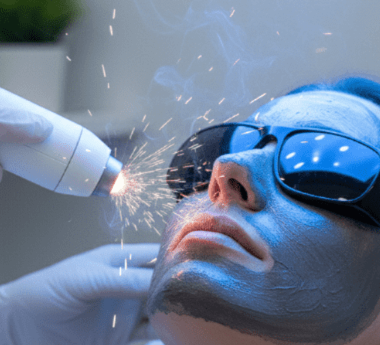
The Carbon Laser Peel with Blue Light Therapy is a combination acne treatment offered in Korean dermatology clinics that pairs two synergistic procedures:
- Carbon Laser Peel (Hollywood Peel) – A thin layer of liquid carbon is applied to the skin and absorbed into pores. A Q-switched Nd:YAG laser then targets the carbon particles, vaporizing impurities, unclogging pores, shrinking sebaceous glands, and reducing acne bacteria.
- Blue Light Therapy (415 nm wavelength) – After the peel, a soothing blue light session is applied to kill remaining Cutibacterium acnes bacteria and calm inflammation.
This dual approach provides deep cleansing + bacterial reduction + anti-inflammatory effects, making it ideal for oily, acne-prone skin with frequent breakouts.
Purpose & Benefits
- Deep Pore Cleansing: Carbon peel removes oil, sebum, and impurities.
- Sebum Regulation: Laser shrinks sebaceous glands to reduce oiliness.
- Bacterial Reduction: Blue light targets acne bacteria to prevent flare-ups.
- Inflammation Control: Blue light calms redness and swelling.
- Skin Refinement: Improves pore size, tone, and overall clarity.
Ideal Candidates
This combination is recommended in Korea for:
- Patients with oily, acne-prone skin.
- Individuals with frequent inflammatory pimples and clogged pores.
- Teenagers and adults seeking a non-invasive acne solution.
- Patients who want both cleansing and bacterial control in one session.
Possible Risks & Complications
The combination is safe when performed under Korean dermatology protocols, but mild side effects may include:
- Temporary Redness or Warmth: Fades in a few hours.
- Mild Dryness or Flaking: From exfoliation and oil reduction.
- Rare Risks: PIH (post-inflammatory hyperpigmentation) or sensitivity if aggressive settings are used—minimized with low-fluence Korean protocols.
Surgical Techniques Used
- Carbon Peel (Q-switched Nd:YAG, 1064 nm): Targets carbon particles absorbed into pores, vaporizing impurities.
- Blue Light LED (415 nm): Kills acne bacteria and calms inflammation.
- Multi-Step Protocol: Often combined with extraction, masks, or serums.
- Protocol: Typically 3–6 sessions, spaced 2–4 weeks apart.
Recovery & Aftercare
Immediately: Skin feels smoother, refreshed, and less oily.
1–2 Days: Mild redness subsides, acne looks calmer.
1 Week: Clearer pores, reduced pimples, and brighter tone.
Aftercare Tips:
- Apply hydrating creams to counteract dryness.
- Use SPF 50+ sunscreen daily.
- Avoid harsh scrubs, acids, or retinoids for 3–5 days.
- Maintain an acne-friendly skincare routine.
Results & Longevity
- After 1 Session: Fresher, smoother skin and reduced redness.
- After 2–3 Sessions: Noticeable decrease in oiliness and active pimples.
- After 4–6 Sessions: Long-term acne control, refined pores, and improved overall clarity.
Maintenance sessions every 2–3 months are recommended for oily, acne-prone skin.
Treatment Process in Korea
Consultation & Skin Analysis
Dermatologist assesses acne severity, oil production, and sensitivity.
Preparation
Cleansing and application of a carbon lotion.
Carbon Laser + Blue Light Session
- Step 1: Carbon mask applied and allowed to absorb.
- Step 2: Q-switched Nd:YAG laser vaporizes carbon, unclogging pores.
- Step 3: Blue light LED applied for 10–20 minutes to kill acne bacteria.
- Step 4: Cooling mask or calming serum applied post-procedure.
Duration: 40–60 minutes.
Post-Treatment Care
Barrier cream and sunscreen provided.
No downtime—patients return to daily life immediately.
Follow-Up
Series of sessions recommended for lasting results.
Unique Korean Advantages
- Safe Low-Fluence Protocols: Optimized for Asian skin to avoid PIH.
- Dual Benefit Approach: Cleansing (Carbon Peel) + Anti-Bacterial (Blue Light).
- Combination Programs: Often paired with Aqua Peel, LED red light, or whitening drips.
- Affordable Multi-Session Packages: Cost-effective compared to Western clinics.
Cost Range (Estimated)
- Single Session (Carbon + Blue Light): USD 150 – 250
- Carbon + Blue Light + Extraction: USD 200 – 350
- Premium Package (Carbon + Blue Light + LED/Whitening Drip): USD 400 – 700
Example Korean Packages:
- Standard Program (3 sessions): USD 400–600
- Acne Care Program (Carbon + Blue Light + Extraction): USD 600–900
- Premium Package (Carbon + Blue Light + LED + Drip): USD 1,000–1,500
Popular Clinics in Seoul
- Oracle Dermatology: Carbon Peel + Blue Light acne reduction program.
- Banobagi Dermatology: Dual acne control with carbon laser + LED therapy.
- Renewme Skin Clinic: Combination Carbon Peel + Blue Light with acne facials.
- View Dermatology: Carbon Peel + Blue/Red light acne program.
- Chaum Anti-Aging Center: Premium protocols with Carbon Peel + LED + regenerative boosters.


