
Treatment Overview
Autologous Fat Grafting with Subcision is an advanced scar revision technique offered in Korean dermatology and plastic surgery clinics for patients with severe depressed acne scars.
The procedure combines subcision, which mechanically releases the fibrotic bands pulling acne scars down, with autologous fat grafting, where the patient’s own processed fat is injected beneath the scars to restore lost volume, stimulate collagen regeneration, and improve skin texture.
In Korea, this approach is often enhanced with nanofat or stem-cell enriched fat grafting, providing not only structural support but also regenerative properties that help heal scarred skin. This dual treatment is especially effective for rolling scars, boxcar scars, and volume loss from long-standing acne damage.
Purpose & Benefits
- Scar Release: Subcision cuts fibrous scar tissue tethering the skin.
- Volume Restoration: Fat grafting fills in depressed scars for smoother skin.
- Collagen Stimulation: Enriched fat promotes fibroblast activity for long-term improvement.
- Natural Healing: Uses the patient’s own fat, minimizing rejection risk.
- Dual Action: Corrects both surface texture and underlying volume loss.
- Long-Term Results: Scar remodeling continues over months after the procedure.
Ideal Candidates
Autologous Fat Grafting with Subcision in Korea is recommended for:
- Patients with moderate to severe depressed acne scars.
- Individuals with rolling scars or tethered scars resistant to lasers or peels.
- Those with facial volume loss from scarring or chronic acne.
- Patients seeking a natural, biocompatible solution instead of synthetic fillers.
- Individuals committed to a multi-step, regenerative treatment plan.
Possible Risks & Complications
When performed by experienced Korean dermatologists and surgeons, the treatment is safe. Potential risks include:
- Bruising & Swelling at donor and injection sites.
- Fat Resorption: Some fat may naturally dissolve over time.
- Asymmetry or Irregularities if fat grafting is uneven (rare with skilled technique).
- Infection or Cyst Formation (very rare).
Korean clinics minimize risks by using refined fat purification systems and microcannula techniques.
Surgical Techniques Used
- Subcision: Fine needle or cannula inserted beneath scars to release tethered fibrotic bands.
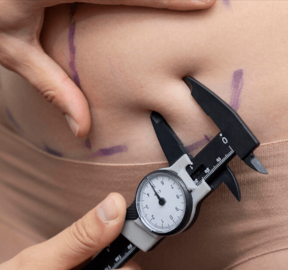
- Fat Harvesting: Small liposuction performed (commonly from abdomen or thighs).
- Fat Processing: Fat purified and refined into microfat or nanofat for injection.
- Fat Grafting: Processed fat carefully layered beneath acne scars to restore contour.
- Combination Add-Ons: Korean clinics often integrate stem-cell enriched fat, PRP (platelet-rich plasma), or exosomes for enhanced regeneration.
Protocol: Typically 1–2 sessions, spaced 3–6 months apart, depending on scar severity.
Recovery & Aftercare
Immediately: Swelling and bruising at donor and injection sites.
1–2 Weeks: Bruising resolves; initial results visible.
1–3 Months: Scar depth improves as fat integrates and collagen remodels.
6 Months+: Long-term textural improvements and stable results.
Aftercare Tips:
- Apply cold compress for first 24–48 hours.
- Avoid strenuous exercise for 5–7 days.
- Sleep with head elevated to minimize swelling.
- Use SPF 50+ sunscreen daily to prevent pigmentation.
- Avoid pressure or massage on treated areas unless advised.
Results & Longevity
- After 1 Session: Visible lifting of depressed scars, improved contour.
- After 3–6 Months: Significant improvement in scar depth and texture.
- Long-Term: Many patients experience permanent scar remodeling, though some fat resorption may require touch-ups.
With stem-cell enriched fat grafting, results tend to last longer and regenerate more effectively.
Treatment Process in Korea
Consultation & Scar Mapping
Dermatologist analyzes scar type and severity, determines donor fat sites, and plans combined subcision + grafting approach.
Preparation
Local anesthesia applied; donor site disinfected.
Procedure
- Step 1: Subcision performed to release tethered scars.
- Step 2: Fat harvested from abdomen/thighs via mini-liposuction.
- Step 3: Fat purified and processed into microfat/nanofat.
- Step 4: Fat grafted under scars to restore volume.
- Step 5: Cooling therapy or LED healing applied post-procedure.
Duration: 60–90 minutes.
Why Korea is a Top Destination
- Refined Fat Grafting Technology: Use of nanofat and stem-cell enriched grafts.
- Combination Approach: Subcision + fat + regenerative boosters (PRP, exosomes).
- Scar-Free Philosophy: Korean clinics prioritize natural, smooth results.
- Safe for Asian Skin: Protocols minimize PIH (post-inflammatory hyperpigmentation).
- Comprehensive Packages: Affordable compared to Western markets, with premium techniques.
Cost Range (Estimated)
- Single Subcision + Fat Grafting Session: USD 800 – 1,500
- Subcision + Nanofat/Stem-Cell Enriched Grafting: USD 1,200 – 2,000
- Comprehensive Scar Program (Fat Grafting + Lasers/Boosters): USD 1,500 – 2,800 per session
Example Korean Packages:
- Standard Program (1 session): USD 1,000 – 1,500
- Advanced Program (2 sessions with nanofat + PDRN/PRP): USD 2,000 – 3,500
- Premium Program (2–3 sessions with exosomes/Rejuran + laser resurfacing): USD 3,500 – 5,500
Popular Clinics in Seoul
- Oracle Dermatology: Subcision with fat grafting for rolling acne scars.
- Banobagi Dermatology: Stem-cell enriched fat grafts for severe scarring.
- Renewme Skin Clinic: Combination of nanofat + PDRN for scar healing.
- View Dermatology: Multi-step scar repair with subcision, fat grafting, and lasers.
- Chaum Anti-Aging Center: Premium scar remodeling programs with fat grafting + regenerative boosters.


