
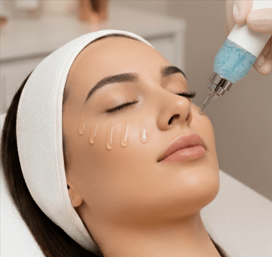
Treatment Overview
Stem Cell Microneedling Therapy is a regenerative acne scar treatment offered in advanced Korean dermatology clinics, designed to repair atrophic scars, pigmentation, and skin texture damage through the combined power of collagen induction therapy and stem cell-derived growth factors.
The treatment merges:
- Microneedling – ultra-fine medical-grade needles create controlled micro-injuries, stimulating fibroblasts to produce new collagen and elastin for scar remodeling.
- Stem Cell Extract Infusion – stem cell-conditioned media or stem cell–derived exosomes (rich in peptides, growth factors, and cytokines) are infused into the dermis through the microneedling channels. These bioactive molecules accelerate healing, improve pigmentation, and promote tissue regeneration.
In Korea, stem cell microneedling is a premium acne scar therapy, often included in multi-step programs with subcision, fractional lasers, or RF microneedling for more severe scarring.
Purpose & Benefits
- Scar Remodeling: Stimulates collagen and elastin to fill depressed scars.
- Regenerative Healing: Stem cell extracts enhance cellular repair and angiogenesis.
- Anti-Inflammatory Action: Reduces redness and irritation post-acne.
- Pigmentation Control: Helps fade PIH (post-inflammatory hyperpigmentation).
- Skin Rejuvenation: Improves tone, texture, hydration, and resilience.
- Safe & Advanced: Suitable for sensitive or Asian skin types, with lower PIH risk compared to aggressive resurfacing lasers.
Ideal Candidates
Stem Cell Microneedling Therapy in Korea is recommended for:
- Patients with moderate to severe atrophic acne scars (rolling, boxcar, mixed).
- Individuals with post-acne pigmentation and uneven tone.
- Patients with sensitive skin prone to pigmentation after lasers.
- Those seeking a premium, regenerative approach to scar care.
- Individuals wanting both scar improvement and overall rejuvenation.
Possible Risks & Complications
Stem cell microneedling is safe under clinical supervision. Temporary side effects may include:
- Redness & Swelling (1–3 days).
- Pinpoint Bleeding during treatment.
- Mild Dryness or Flaking as skin renews.
- Rare PIH – minimized with Korea’s protocols and strict sun protection.
Surgical Techniques Used
- Microneedling Device: Pen or dermastamp with adjustable depths (0.5–2.5 mm based on scar severity).
- Stem Cell Extract Infusion: Conditioned media or exosome serums applied to microneedling channels for dermal penetration.
- Combination Therapy: Often paired with subcision, RF microneedling, or fractional CO₂ laser for deeper scar correction.
Protocol: Typically 3–5 sessions, spaced 4–6 weeks apart.
Recovery & Aftercare
Immediately: Redness, swelling, and pinpoint bleeding.
1–3 Days: Redness subsides; skin feels tighter and hydrated.
1–2 Weeks: Scars begin softening, tone evens out.
1–6 Months: Progressive collagen remodeling and stem cell–driven regeneration.
Aftercare Tips:
- Avoid makeup for 24 hours.
- Use hydrating barrier creams and soothing serums.
- Avoid retinoids, acids, and scrubs for 5–7 days.
- Apply SPF 50+ sunscreen daily to prevent pigmentation.
Results & Longevity
- After 1 Session: Skin appears more hydrated and radiant.
- After 2–3 Sessions: Noticeable improvement in scar depth and pigmentation.
- After 4–5 Sessions: Long-term collagen remodeling with smoother, firmer skin.
- Longevity: Results last 1–2 years, with yearly maintenance recommended.
Treatment Process in Korea
Consultation & Skin Analysis
Dermatologist evaluates scar severity, pigmentation, and skin thickness.
Preparation
Topical numbing cream applied; skin sterilized.
Stem Cell Microneedling Session
- Step 1: Microneedling performed at tailored depth.
- Step 2: Stem cell serum (conditioned media or exosomes) infused into microchannels.
- Step 3: Cooling mask or LED therapy applied for soothing.
Duration: 45–60 minutes.
Why Korea is a Top Destination
- Leaders in Stem Cell Dermatology: Korea pioneers stem cell–based skin regeneration.
- Premium Serums: High-quality stem cell–conditioned media and exosome formulations.
- Safe for Asian Skin: Gentle protocols reduce PIH risk.
- Comprehensive Care: Often combined with lasers, RF, or subcision for severe scars.
- Cost-Effective Premium Care: More affordable compared to Western regenerative programs.
Cost Range (Estimated)
- Single Stem Cell Microneedling Session: USD 350 – 600
- Microneedling + Stem Cell Serum + LED Therapy: USD 450 – 700
- Comprehensive Scar Program (Microneedling + Stem Cell/Exosomes + Subcision/Lasers): USD 1,000 – 2,500 per session
Example Korean Packages:
- Standard Program (3 sessions): USD 1,000 – 1,500
- Advanced Program (5 sessions with PDRN/Exosome add-ons): USD 1,800 – 2,800
- Premium Program (5 sessions with exosomes/Rejuran + fractional CO₂): USD 3,200 – 4,500
Popular Clinics in Seoul
- Oracle Dermatology: Stem cell microneedling with PDRN boosters.
- Banobagi Dermatology: Multi-step acne scar packages with stem cell extracts.
- Renewme Skin Clinic: Microneedling with exosome and stem cell–conditioned serums.
- View Dermatology: Scar protocols combining microneedling, RF, and stem cell therapy.
- Chaum Anti-Aging Center: Premium regenerative care with stem cell microneedling.


