
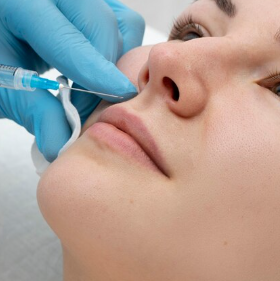
Treatment Overview
Nasolabial fold fillers are a non-surgical cosmetic treatment designed to soften the prominent lines that run from the sides of the nose to the corners of the mouth. These lines, often referred to as “smile lines” or “laugh lines,” naturally deepen with age due to volume loss, skin laxity, and decreased collagen. In Korea, this treatment is highly sought after as part of comprehensive facial rejuvenation programs.
Using hyaluronic acid (HA) dermal fillers, Korean dermatologists restore volume to the mid-face, reduce the depth of folds, and enhance overall facial harmony. The procedure is precise, ensuring that the nasolabial folds are corrected without creating unnatural puffiness or stiffness. Korea is renowned for combining advanced filler technology with artistic injection techniques, producing subtle, youthful, and natural-looking results.
Purpose & Benefits
Nasolabial fold fillers serve multiple aesthetic purposes:
- Reduce the appearance of deep folds, softening an aged or tired look
- Restore volume and lift to the mid-face
- Improve facial symmetry and proportion
- Enhance overall facial balance and harmony
- Provide a non-surgical alternative to facelift procedures
- Offer immediate, noticeable improvement with minimal downtime
Patients benefit aesthetically by achieving a smoother, rejuvenated appearance, and psychologically through increased confidence in their facial expressions.
Ideal Candidates
Nasolabial fold fillers are suitable for:
- Individuals with deep or prominent nasolabial lines
- Patients experiencing mid-face volume loss or sagging
- Those seeking a non-surgical method for facial rejuvenation
- Individuals with realistic expectations and good overall health
This treatment is generally not recommended for patients who are pregnant or breastfeeding, have active skin infections near the treatment site, or are allergic to filler substances.
Possible Risks & Complications
While considered safe, potential side effects may include:
- Mild swelling, redness, or bruising at the injection sites
- Temporary tenderness or minor discomfort
- Rare asymmetry or irregularities, which can be corrected with touch-ups
- Very rare vascular complications if the filler is not administered correctly
Korean dermatologists mitigate risks through precise anatomical knowledge, micro-cannula techniques, and high-quality fillers, ensuring smooth, natural outcomes.
Techniques Used in Korea
Korean clinics are globally recognized for their expertise in facial harmony and advanced filler techniques. Common techniques for nasolabial fold fillers include:
- Layered filler injections – Gradual volumization for natural lifting
- Micro-cannula application – Reduces bruising and ensures even distribution
- Deep plane correction – Targeting underlying fat and tissue for lasting results
- Combination treatments – Often paired with cheek or jawline fillers to support mid-face structure
- 3D facial contouring – Ensures harmonious blending with the rest of the face
The goal is to soften folds while preserving natural facial expressions, avoiding an overfilled or unnatural look.
Recovery & Aftercare
Recovery from nasolabial fold filler injections is minimal. Most patients return to normal activities immediately. Korean aftercare guidelines include:
- Avoid pressing or massaging the treated area for at least 24 hours
- Avoid alcohol, saunas, and strenuous exercise for 1–2 days
- Apply ice packs to reduce swelling
- Attend follow-up appointments to assess results and perform touch-ups if necessary
Mild swelling or tenderness is expected but generally resolves within a few days.
Results & Longevity
Results are visible immediately after treatment, with final effects appearing as swelling subsides within a few days. Depending on the filler type and individual metabolism, results typically last 12–18 months. Regular maintenance treatments can help sustain a youthful and smooth mid-face contour over time.
Patients can expect reduced fold depth, lifted mid-face, and enhanced facial symmetry, contributing to a rejuvenated appearance.
Treatment Process in Korea
The typical procedure includes:
- Consultation and facial assessment – Evaluate nasolabial fold depth and facial balance
- Marking injection points – Ensures symmetry and precise filler placement
- Injection – HA filler carefully administered using needle or cannula
- Shaping and evaluation – Smooths folds and ensures natural blending
- Aftercare guidance – Instructions to minimize swelling and optimize results
Korean clinics are known worldwide for precision, artistry, and patient-focused care, making them a top choice for natural and effective nasolabial fold correction.
Cost of Nasolabial Fold Fillers in Korea
Pricing varies depending on filler type, clinic reputation, and the number of units used:
- Standard session: 400,000 – 900,000 KRW (USD $300 – $675)
- Premium filler brands or expert clinics: 900,000 – 1,500,000 KRW (USD $675 – $1,125)
Top Clinics in Korea
- Banobagi Dermatology – Renowned for natural mid-face rejuvenation and filler results
- ID Dermatology Clinic – Specializes in nasolabial fold correction and lower-face contouring
- Oracle Dermatology Clinic – Offers advanced filler placement with holistic facial planning
- Cinderella Plastic Surgery & Dermatology – Integrates fillers with complementary treatments for a youthful look
- REGEN Dermatology Clinic – Expert injector teams with a focus on precision and natural aesthetics


