
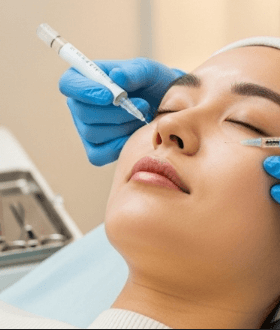
Treatment Overview
The lower face, including the jawline, cheeks, chin, and jowls, is often the first area to show signs of aging. Loss of collagen, sagging skin, and volume reduction can lead to jowling, wrinkles, and a tired or aged appearance. In Korea, Sculptra collagen stimulation injections have become a leading non-surgical solution for lower face rejuvenation, offering natural, long-lasting, and gradual improvements.
Sculptra (poly-L-lactic acid, PLLA) stimulates the body’s own collagen production rather than simply filling the area with volume. This results in structural support, lifted tissues, and smoother skin texture, creating a youthful, balanced, and refreshed lower face. Korean dermatologists are globally recognized for combining advanced injection techniques, facial mapping, and aesthetic precision to achieve natural, harmonious results.
Purpose & Benefits
The main goal of Sculptra lower face rejuvenation is to restore volume, improve skin elasticity, and redefine the jawline and mid-lower facial contours.
Key benefits include:
- Reduction of sagging skin and jowls
- Improvement in jawline definition and lower face contour
- Stimulation of collagen for firmer, smoother skin
- Long-lasting results, typically 18–24 months
- Non-surgical procedure with minimal downtime
- Natural-looking, progressive improvements without the overfilled appearance
Sculptra is ideal for individuals who want refined, natural facial rejuvenation without surgical intervention or temporary fillers.
Ideal Candidates
Sculptra lower face rejuvenation is suitable for:
- Adults with volume loss, sagging skin, or jowls in the lower face
- Individuals seeking non-surgical facial rejuvenation
- Patients desiring gradual, natural improvements over time
- Those with good overall health and realistic expectations
Patients with active infections, allergies to PLLA, or those who are pregnant or breastfeeding may need to postpone treatment.
Possible Risks & Side Effects
Sculptra is generally safe when administered by skilled dermatologists, but minor side effects can include:
- Redness, swelling, or tenderness at the injection sites
- Mild bruising
- Small nodules under the skin (preventable with proper massage)
- Rare allergic reactions
Korean clinics minimize risks through micro-cannula techniques, precise injection mapping, and post-procedure care instructions.
Techniques Used in Korea
Korea is internationally recognized for expertise in non-surgical facial rejuvenation. Techniques for lower face rejuvenation with Sculptra include:
- Layered injections targeting both deep and superficial facial layers for balanced collagen stimulation
- Customized facial mapping to restore harmony between the jawline, chin, cheeks, and neck
- Gradual treatment strategy, usually 2–3 sessions for subtle and natural results
- Combination therapies such as thread lifting, HIFU, or energy-based skin tightening to enhance lifting and contouring
These methods allow for a smoother, firmer, and youthful lower face while preserving natural facial expressions.
Recovery & Aftercare
Recovery is minimal, allowing most patients to resume daily activities immediately. Recommended aftercare includes:
- Gently massage treated areas for 5 minutes, 5 times a day, for 5 days (“5-5-5 rule”)
- Avoid strenuous exercise, hot baths, and sun exposure for 24–48 hours
- Follow clinic-specific instructions for skincare and lifestyle
- Attend follow-up visits to monitor progress and schedule additional sessions if needed
Mild swelling, redness, or tenderness typically resolves within a few days.
Results & Longevity
Sculptra results develop gradually as collagen regenerates:
- Initial improvements visible within 4–6 weeks
- Full effects usually achieved after 2–3 sessions spaced a few weeks apart
- Results last 18–24 months or longer, depending on individual metabolism and care
Because collagen is stimulated naturally, results look subtle, natural, and harmonious, avoiding the overfilled appearance of traditional fillers.
Treatment Process in Korea
- Consultation & assessment – Facial evaluation to determine volume loss, sagging, and lower face contours
- Cleansing & numbing – Topical anesthetic applied for comfort
- Injection session – Sculptra administered using fine needles or micro-cannulas according to customized mapping
- Post-injection massage – Ensures even distribution and optimal collagen stimulation
- Follow-up sessions – Typically 2–3 treatments for best results
Korean dermatologists are internationally recognized for combining precision, artistry, and advanced technology in lower face rejuvenation.
Cost of Lower Face Rejuvenation with Sculptra in Korea
Costs depend on the number of vials and clinic reputation:
- Per vial: 500,000 – 900,000 KRW (USD $375 – $675)
- Complete treatment (2–3 sessions): 1,500,000 – 3,000,000 KRW (USD $1,125 – $2,250)
Top Clinics in Korea
- Banobagi Dermatology & Plastic Surgery – Experts in facial rejuvenation and contouring
- Oracle Dermatology Clinic – Known for customized Sculptra treatment plans
- Cinderella Clinic – Specializes in natural, subtle enhancements
- ID Dermatology – Leaders in non-surgical facial rejuvenation
- REGEN Dermatology Clinic – Renowned for collagen-stimulating injectables and aesthetic precision


