
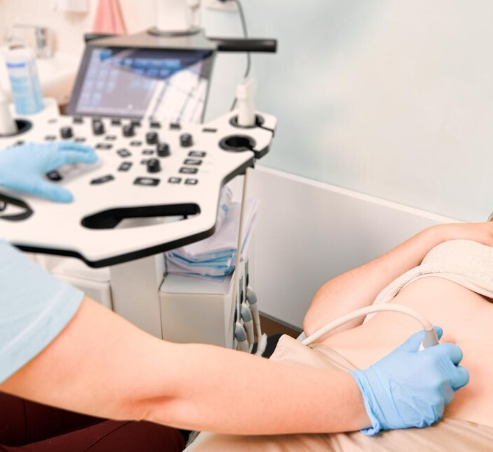
Treatment Overview
Detailed Ovarian Ultrasound Evaluation in Korea is an advanced diagnostic procedure that uses high-resolution ultrasound technology to provide a thorough examination of the ovaries and surrounding pelvic structures. This evaluation is critical in identifying ovarian conditions such as cysts, polycystic ovary syndrome (PCOS), tumors, endometriomas, and other abnormalities that may affect women’s reproductive health.
Korean gynecological centers are renowned for their expertise in ultrasound diagnostics, combining advanced imaging technology with skilled sonographers and gynecologists. This enables a highly precise assessment that is essential for early detection, accurate diagnosis, and personalized treatment planning.
Purpose & Benefits
The purpose of a Detailed Ovarian Ultrasound Evaluation is to deliver a comprehensive assessment of ovarian health, helping detect abnormalities at an early stage and providing valuable insights for reproductive and hormonal health management. Benefits include:
- High-resolution imaging for precise detection of ovarian abnormalities
- Early diagnosis of ovarian cysts, tumors, and PCOS
- Non-invasive and pain-free procedure with no radiation exposure
- Real-time evaluation of ovarian function and blood flow
- Improved accuracy in fertility assessments
- Better pre-surgical planning for gynecological procedures
- Enhanced monitoring for ongoing ovarian or reproductive conditions
This evaluation enables clinicians to make informed decisions for targeted, effective care.
Ideal Candidates
Detailed Ovarian Ultrasound Evaluation is suitable for women who:
- Experience pelvic pain, irregular menstruation, or infertility
- Are suspected to have ovarian cysts, PCOS, or ovarian tumors
- Require monitoring of existing ovarian conditions
- Are undergoing fertility treatment or evaluation
- Need preoperative ovarian assessment
- Wish to have a precise and non-invasive evaluation of ovarian health
This procedure is beneficial for women of all ages, from reproductive years to menopause, depending on their medical needs.
Possible Risks & Complications
A Detailed Ovarian Ultrasound Evaluation is a safe procedure with minimal risks. Potential considerations include:
- Mild discomfort during a transvaginal ultrasound (if used)
- Temporary fullness or pressure in the pelvic region
- Slight inconvenience if a full bladder is required for transabdominal scans
There is no radiation exposure, making the procedure safe for repeated use, including during pregnancy under medical guidance.
Techniques Used
Korea’s ovarian ultrasound centers use advanced imaging techniques for optimal evaluation:
- High-Resolution 2D Ultrasound: Provides clear images of ovarian structures and abnormalities.
- 3D and 4D Ultrasound Imaging: Offers detailed multi-dimensional views of the ovaries for better analysis.
- Transvaginal Ultrasound: Provides high-definition imaging of ovarian tissue and follicles.
- Transabdominal Ultrasound: Used for general ovarian screening and assessment.
- Doppler Ultrasound: Measures blood flow within ovarian tissue, useful for evaluating ovarian function and detecting tumors.
- Follicular Tracking: For women undergoing fertility treatments to monitor ovulation and ovarian response.
These advanced techniques ensure comprehensive and accurate ovarian evaluation.
Recovery & Aftercare
Detailed Ovarian Ultrasound Evaluation is a non-invasive procedure requiring no recovery time. Patients can return to their normal routine immediately after the scan. Aftercare generally includes:
- Review and explanation of imaging results by the gynecologist
- Recommendations for follow-up tests or treatment if abnormalities are detected
- Regular ovarian monitoring for patients undergoing fertility treatments or with ovarian conditions
- Integration of findings into a comprehensive treatment or fertility plan
The simplicity and safety of this procedure make it a valuable tool in gynecologic care.
Results & Longevity
Results from a Detailed Ovarian Ultrasound Evaluation are usually available immediately, with a detailed report provided shortly afterward. Digital imaging allows for future comparisons, making this procedure an excellent option for ongoing ovarian monitoring and fertility management.
The longevity of benefits depends on the patient’s condition and follow-up care, but the evaluation provides a durable foundation for long-term reproductive health.
Treatment Process in Korea
The process generally includes:
- Initial Consultation: Discussion of symptoms, medical history, and diagnostic needs.
- Preparation: Depending on the type of ultrasound, patients may need a full bladder or specific pre-scan instructions.
- Ultrasound Examination: Performed by a trained sonographer using advanced ultrasound machines.
- Image Review: A gynecologist reviews high-definition images to assess ovarian health.
- Consultation: Results are explained, and follow-up or treatment plans are discussed.
This structured process ensures precision, comfort, and clarity in diagnosis.
Cost Range
Detailed Ovarian Ultrasound Evaluation in Korea typically ranges from ₩300,000 to ₩900,000 KRW (approximately $240–$720 USD) per session. Comprehensive packages, including consultation, imaging, and follow-up, may cost between ₩1,000,000 and ₩2,500,000 KRW ($800–$2,000 USD).
Popular Clinics
- CHA Women’s Clinic Seoul – Known for advanced ovarian ultrasound and comprehensive diagnostics.
- Samsung Medical Center (OBGYN Division) – Offers high-precision ovarian imaging and expert interpretation.
- Banobagi Women’s Clinic – Specializes in high-definition ovarian imaging for accurate diagnosis.
- Seoul Women’s Hormone & Fertility Clinic – Focuses on advanced ovarian assessment for fertility and reproductive health.
- Ewha Womans University Medical Center – Recognized for precise diagnostics and innovative imaging techniques.
- Mirae Women’s Hospital Seoul – Offers advanced ovarian ultrasound as part of holistic gynecological care.


