
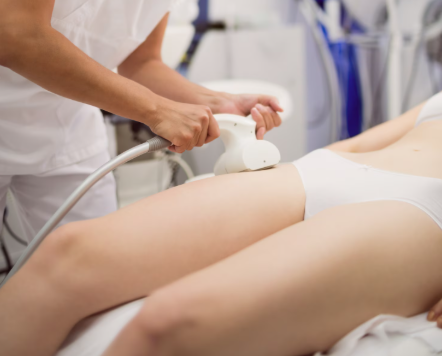
Treatment Overview
Tightness Recovery Laser Perineoplasty is a next-generation Korean procedure that restores the firmness, strength, and symmetry of the perineal and vaginal entrance area using a combination of laser precision + microsurgical refinement.
It is designed for women who experience laxity, scarring, or reduced muscle tone after childbirth or aging, and who wish to regain both functional support and natural aesthetic balance.
Korean OBGYN specialists perform this treatment using fractional CO₂ or Er:YAG medical lasers that stimulate collagen remodeling and tighten deep tissues without damaging the surface. When combined with gentle reconstructive suturing, the result is a smoother, firmer, and more youthful perineal contour with minimal downtime.
Purpose & Benefits
The goal of Tightness Recovery Laser Perineoplasty is to revitalize and strengthen the perineal region through safe, minimally invasive laser technology.
Key benefits include:
- Re-tightening of perineal and vaginal entrance muscles
- Enhanced elasticity and tissue firmness via collagen stimulation
- Correction of scars, irregularities, or uneven texture
- Improved sexual satisfaction and comfort
- Faster recovery than traditional surgery
- Natural results with minimal scarring or pain
Korean laser-based systems deliver controlled energy to targeted areas, improving tone and support while maintaining the body’s natural anatomy.
Ideal Candidates
This procedure is ideal for women who:
- Experience perineal or vaginal looseness after childbirth or aging
- Have mild to moderate laxity, scarring, or asymmetry
- Desire tightening and rejuvenation without major surgery
- Want to improve comfort, appearance, and confidence in intimate areas
- Prefer a modern, technology-driven treatment with rapid healing
Possible Risks & Complications
Laser Perineoplasty is very safe when performed by certified Korean OBGYN surgeons, though temporary side effects may occur:
- Mild redness, swelling, or warmth
- Temporary tenderness or tightness
- Minor spotting for a few days
- Rare risk of infection or pigmentation change
Korean clinics minimize these risks through precise energy calibration, sterile techniques, and advanced cooling systems that protect sensitive tissue.
Techniques and Technology Used
Korea leads the world in laser-assisted gynecologic rejuvenation, and Tightness Recovery Laser Perineoplasty integrates several sophisticated methods:
- Fractional CO₂ or Er:YAG Laser Resurfacing: Stimulates deep collagen fibers and tightens perineal tissues.
- Dual-Mode Energy Delivery: Treats both superficial and deeper layers for full-thickness rejuvenation.
- Microsurgical Layer Repair: When needed, fine absorbable sutures reinforce perineal muscles for durability.
- Bio-Regenerative Therapy: PRP (Platelet-Rich Plasma), exosome, or stem-cell-based add-ons promote faster healing and smoother skin tone.
- 3D Laser Mapping: Korean devices analyze tissue density to tailor laser depth and energy output per patient.
This hybrid approach ensures optimal tightening, precision, and comfort — the hallmark of Korean cosmetic gynecology.
Recovery & Aftercare
Recovery is typically quick and comfortable.
Post-treatment care guidelines:
- Rest for 24–48 hours; most patients resume daily activities immediately
- Avoid sexual activity, tampons, or strenuous exercise for 4–6 weeks
- Keep the area clean and moisturized with prescribed creams
- Attend scheduled follow-ups for evaluation and touch-up laser sessions
Korean clinics complement healing with LED light therapy, oxygen regeneration, and regenerative serums, ensuring minimal swelling and faster tissue renewal.
Results & Longevity
Visible improvement usually appears within 2–3 weeks, with full collagen remodeling over 2–3 months.
Expected results:
- Noticeable tightness and elasticity restoration
- Smoother texture and balanced contour
- Increased comfort and sensitivity
- Minimal or no visible scarring
Results last 2–3 years for non-surgical laser-dominant procedures and 8–10 years when combined with microsurgical repair. Regular maintenance laser sessions every 12–18 months keep tissues firm and healthy.
Treatment Process in Korea
Korea’s Tightness Recovery Program follows a structured, personalized process renowned for safety and sophistication:
- Comprehensive Consultation: Gynecologic and aesthetic assessment using 3D imaging and tissue analysis.
- Personalized Treatment Plan: Selection of laser settings, regenerative options, and surgical refinements.
- Procedure Session: Outpatient laser tightening (30–60 minutes) or combined microsurgery under local anesthesia.
- Post-Care Program: Cooling therapy, LED light treatment, and regenerative cream application.
- Follow-Up Evaluation: Check-ups to monitor healing and measure tissue elasticity improvement.
Korean clinics provide private, spa-like recovery rooms and discreet, multilingual services for international patients.
Why Korea Is a Top Destination for Laser Perineoplasty
- Pioneers in Intimate Laser Therapy: Korea introduced hybrid laser + microsurgery systems for women’s rejuvenation.
- Regenerative Medicine Integration: PRP, exosome, and stem-cell technology enhance recovery and long-term quality.
- Dual-Certified Specialists: Surgeons trained in both functional and cosmetic gynecology.
- Advanced Equipment: AI-guided laser systems ensure safe, precise energy delivery.
- Holistic Care Philosophy: Emphasis on natural results, patient comfort, and emotional well-being.
These factors make Korea the global epicenter for safe, elegant, and scientifically advanced perineoplasty.
Cost Range
Pricing depends on the type of laser, clinic reputation, and regenerative add-ons.
Estimated cost range:
- ₩3,500,000 – ₩8,500,000 KRW (≈ USD $2,600 – $6,400)
Hybrid laser + microsurgical or PRP packages can reach ₩10,000,000 KRW (≈ USD $7,400).
Most Korean clinics offer complete packages including consultation, anesthesia, laser sessions, and follow-up care.
Popular Clinics for Tightness Recovery Laser Perineoplasty in Korea
- JW Plastic Surgery & Women’s Center (Seoul): Combines fractional CO₂ laser with regenerative PRP therapy.
- Girin Women’s Clinic: Renowned for precision laser-microsurgical perineoplasty and natural design.
- Banobagi Aesthetic Clinic: Offers exosome-enhanced laser tightening for rapid healing.
- Oracle Clinic Korea: Focuses on non-surgical laser rejuvenation with collagen-boosting protocols.
- The Line Clinic: Integrates AI-guided laser energy mapping and 3D simulation for perfect symmetry.


