
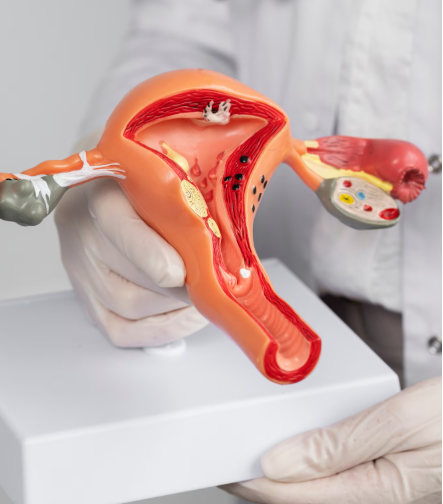
Treatment Overview
Cervical Mucus and Ovulation Assessment is a simple yet powerful method used to evaluate a woman’s fertile window and hormonal balance by observing the natural changes in cervical secretions throughout the menstrual cycle. Cervical mucus — a fluid produced by the cervix — varies in consistency and appearance depending on estrogen and progesterone levels, providing key indicators of ovulation and reproductive health.
In Korea, this assessment is enhanced by modern diagnostic tools, digital tracking systems, and professional fertility interpretation. Korean OBGYN specialists use cervical mucus evaluation as part of a comprehensive fertility testing program, combining it with ultrasound follicle tracking, hormonal profiling, and digital ovulation monitoring to provide highly accurate fertility insights and personalized conception planning.
Purpose & Benefits
Cervical Mucus and Ovulation Assessment helps women understand their natural fertility signals, making it an essential component of both natural family planning and advanced fertility diagnostics.
Key Benefits Include:
- Identifies fertile and infertile days of the menstrual cycle
- Confirms ovulation timing naturally
- Provides insight into hormonal balance and reproductive function
- Helps diagnose anovulation (lack of ovulation) or hormonal irregularities
- Assists in timing intercourse or fertility treatment for optimal conception
- 100% non-invasive, hormone-free, and safe
- Empowers women to track and understand their reproductive health
Korean fertility clinics integrate cervical mucus assessment with clinical hormone tests and imaging technologies, creating a precise and science-backed fertility evaluation system.
Ideal Candidates
The Cervical Mucus & Ovulation Assessment is ideal for:
- Women who want to conceive naturally
- Patients undergoing fertility testing or pre-IVF evaluation
- Women with irregular cycles or suspected hormonal imbalance
- Individuals experiencing difficulty predicting ovulation
- Those seeking non-invasive and natural fertility monitoring methods
- Women interested in cycle awareness and natural family planning
This program is suitable for women of all ages who wish to gain deeper insight into their body’s natural reproductive rhythm.
Possible Risks & Complications
Cervical mucus observation and ovulation assessment are completely non-invasive and risk-free. However, accuracy can be affected by:
- Vaginal infections or irritation
- Hormonal medications or contraceptives
- Stress, diet, or lifestyle factors
- Incorrect observation technique
Korean fertility specialists minimize these factors through clinical guidance, digital monitoring tools, and professional instruction, ensuring reliable, consistent results.
Diagnostic Techniques Used
In Korea, cervical mucus and ovulation assessments are elevated through scientific precision and digital integration, going beyond traditional self-observation methods.
Advanced Techniques Used in Korean Clinics:
- Microscopic analysis of cervical mucus samples to determine viscosity and ferning patterns
- pH and electrolyte testing to assess mucus receptivity for sperm transport
- Hormone testing (LH surge, estrogen, progesterone) for cycle correlation
- Transvaginal ultrasound to confirm follicle maturation and ovulation
- AI-based ovulation tracking applications and digital charting systems
- Cervical imaging and hydration scoring to evaluate reproductive fluid quality
These combined approaches allow Korean OBGYN specialists to identify ovulation windows with high accuracy, ensuring precise fertility planning and diagnosis.
Recovery & Aftercare
Since the assessment is non-invasive, no recovery period is required. Patients can resume all activities immediately.
Aftercare and Monitoring Tips:
- Keep consistent daily records if participating in home-based tracking
- Avoid vaginal douching or lubricants before sample collection
- Stay hydrated to maintain optimal cervical mucus quality
- Follow the clinic’s recommendations for timing fertility treatments or intercourse
Korean fertility clinics often provide personalized cycle reports and fertility counseling, guiding each patient through their ovulation and hormonal health journey.
Results & Interpretation
Cervical mucus patterns offer valuable insights into reproductive status:
| Cycle Phase | Cervical Mucus Characteristics | Fertility Indication |
|---|---|---|
| Early Cycle | Thick, sticky, or dry | Low fertility |
| Pre-Ovulation | Creamy or cloudy mucus | Approaching fertile window |
| Ovulation | Clear, stretchy, “egg-white” texture | Peak fertility |
| Post-Ovulation | Thick or dry mucus | Fertile period has ended |
Korean fertility experts analyze these patterns alongside hormone levels and ultrasound imaging to confirm ovulation and overall reproductive function.
This combination provides the highest diagnostic accuracy for fertility planning and fertility treatment preparation.
Testing Process in Korea
Korea’s fertility evaluation programs integrate cervical mucus analysis into structured, professional fertility testing systems.
Typical Process Includes:
- Initial consultation with an OBGYN or fertility specialist.
- Cycle review and history-taking to understand menstrual patterns.
- Cervical mucus sampling and observation under clinical conditions.
- Hormonal testing and ultrasound tracking to confirm ovulation.
- Result analysis and fertility planning session.
Why Korea is a Top Destination for Fertility Evaluation:
- Advanced reproductive endocrinology and diagnostic technology
- Integration of natural and scientific fertility monitoring methods
- AI-assisted ovulation prediction systems developed in Korea
- Highly trained fertility specialists and multilingual patient support
- Emphasis on privacy, comfort, and personalized fertility care
Korean fertility centers offer a holistic approach that merges traditional ovulation monitoring with the latest fertility science and precision medicine.
Cost Range
The cost of Cervical Mucus & Ovulation Assessment in Korea depends on the level of testing and whether it’s part of a full fertility evaluation package.
- Basic Cervical Mucus Analysis: USD $60 – $120
- Comprehensive Ovulation Testing (Mucus + Hormone + Ultrasound): USD $200 – $400
- Full Fertility Evaluation Packages: USD $400 – $700, including AMH, FSH, LH, and reproductive hormone profiles
Korean clinics offer affordable, high-quality fertility assessments with fast results and personalized counseling for both local and international patients.
Popular Clinics in Korea for Ovulation & Fertility Evaluation
CHA Fertility Center (Seoul): Known for complete fertility diagnostics, hormone testing, and natural cycle tracking programs.
MizMedi Women’s Hospital: Offers cervical mucus and ovulation assessments combined with advanced reproductive imaging.
Maria Fertility Hospital: Specializes in natural conception programs and cycle-based fertility optimization.
Seoul National University Hospital – Fertility Center: Provides evidence-based fertility evaluations and research-backed ovulation analysis.
ID Women’s Health Center: Offers personalized ovulation tracking and hormone analysis integrated with reproductive counseling.


