
Treatment Overview
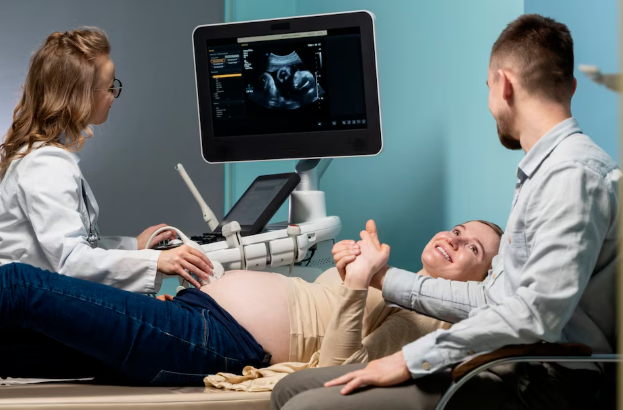
Ultrasound-Guided IVF is a modern approach to in vitro fertilization that enhances accuracy, comfort, and safety through the use of high-resolution ultrasound imaging during key stages of the IVF process. From follicular monitoring and egg retrieval to embryo transfer, ultrasound ensures every step is performed with real-time visualization and maximum precision.
In Korea, fertility centers are at the forefront of ultrasound-guided reproductive procedures. Using 3D and Doppler ultrasound systems integrated with AI-assisted cycle management, Korean specialists can identify optimal follicles, guide oocyte aspiration safely, and precisely place embryos in the most receptive area of the uterus. This advanced imaging support improves success rates while minimizing complications, making it a preferred IVF method for both domestic and international patients.
Purpose & Benefits
The purpose of Ultrasound-Guided IVF is to combine imaging technology with fertility science to improve the safety, accuracy, and efficiency of each IVF stage.
Key benefits include:
- Precise follicle monitoring: Allows accurate assessment of follicular growth and ovulation timing.
- Higher-quality egg retrieval: Ultrasound guidance ensures minimal trauma and optimal follicle aspiration.
- Accurate embryo transfer: Real-time visualization ensures embryos are placed exactly where implantation is most likely to occur.
- Reduced risk of complications: Avoids injury to surrounding structures during egg retrieval.
- Enhanced patient comfort and safety: Minimally invasive and gentle procedures.
- Improved pregnancy rates: Better embryo placement leads to higher implantation success.
Korean fertility clinics utilize advanced imaging systems to ensure that every IVF cycle benefits from unparalleled precision, increasing both efficiency and patient confidence.
Ideal Candidates
Ultrasound-Guided IVF in Korea is ideal for:
- Women undergoing their first IVF cycle seeking higher accuracy and comfort.
- Patients with previous failed IVF cycles due to implantation issues.
- Women with complex pelvic anatomy, where guidance ensures safe access to follicles.
- Couples wanting advanced embryo transfer precision to enhance pregnancy chances.
- Patients with uterine abnormalities requiring customized embryo placement.
- Those seeking minimally invasive, technologically supported fertility treatment.
Ultrasound-guided IVF benefits nearly all IVF patients, but it is especially valuable for women needing meticulous follicle management or precision embryo transfer.
Possible Risks & Complications
While ultrasound-guided IVF is a safe and well-tolerated procedure, mild or temporary side effects can occur:
- Light pelvic discomfort or bloating after egg retrieval.
- Minor spotting following embryo transfer.
- Rare infection or bleeding (minimized with sterile techniques).
- Emotional stress during the waiting period for results.
These risks are managed through Korea’s strict clinical protocols, sterile environments, and post-procedure monitoring, ensuring optimal safety and recovery.
Surgical & Laboratory Techniques Used
Ultrasound-Guided IVF integrates reproductive medicine with advanced imaging technology to ensure precision across every procedural phase.
Key techniques include:
- Transvaginal Ultrasound Monitoring: Tracks follicle development, endometrial thickness, and ovulation timing.
- Ultrasound-Guided Oocyte Retrieval: A thin needle guided by ultrasound gently aspirates mature eggs from the follicles under sedation.
- Doppler Imaging: Evaluates ovarian blood flow and endometrial receptivity for cycle optimization.
- AI-Assisted Ultrasound Mapping: Used to predict the best embryo transfer location and improve implantation probability.
- Ultrasound-Guided Embryo Transfer: Real-time imaging ensures the embryo is deposited precisely in the uterine cavity’s most receptive region.
- Time-Lapse Embryo Monitoring (in lab): Complements imaging precision with continuous embryo development tracking.
Korean IVF laboratories are equipped with state-of-the-art imaging, micro-manipulation systems, and certified embryology standards, ensuring superior outcomes at every stage.
Recovery & Aftercare
Recovery following ultrasound-guided IVF is typically smooth and comfortable.
Standard aftercare includes:
- Resting for a few hours after egg retrieval or embryo transfer.
- Avoiding strenuous activity for one to two days.
- Taking prescribed medications for luteal phase support (such as progesterone).
- Maintaining hydration and a balanced diet.
- Attending follow-up appointments to monitor hormone levels and uterine readiness.
- Conducting a pregnancy test around 10–14 days post-transfer.
Korean fertility clinics also offer holistic aftercare, including stress management, nutritional counseling, and acupuncture-based fertility support programs for enhanced well-being.
Results & Longevity
Ultrasound-Guided IVF has significantly improved IVF success rates worldwide, particularly when performed with modern imaging and laboratory systems.
Typical results include:
- Higher pregnancy rates: Accurate embryo placement increases implantation success by 10–15%.
- Lower complication risk: Real-time guidance minimizes procedural trauma.
- Reduced cycle cancellations: Enhanced follicle tracking allows optimal egg retrieval timing.
- Consistent outcomes: Standardized precision ensures reproducible success.
In Korea, success rates for ultrasound-guided embryo transfer often surpass those of blind transfers due to superior imaging accuracy and experienced clinicians. The longevity of results depends on embryo quality, uterine health, and patient-specific factors.
Treatment Process in Korea
Korea’s fertility centers follow a streamlined, technology-driven workflow for ultrasound-guided IVF, combining high clinical standards with personalized care.
Initial Consultation & Evaluation
Comprehensive fertility assessments, including hormone profiling, ultrasound imaging, and semen analysis, to design a personalized treatment plan.
Ovarian Stimulation & Monitoring
Fertility medications stimulate controlled follicle growth, monitored daily using transvaginal ultrasound and hormone testing.
Ultrasound-Guided Egg Retrieval
Under light sedation, a fine needle guided by real-time ultrasound collects mature eggs from the ovaries safely and painlessly.
Fertilization & Embryo Development
Collected eggs are fertilized using IVF or ICSI in high-quality culture media. Embryos are monitored in laboratory incubators until transfer.
Ultrasound-Guided Embryo Transfer
Embryos are transferred into the uterus under continuous ultrasound imaging, ensuring precise placement in the endometrial cavity.
Luteal Support & Pregnancy Confirmation
Hormonal supplements help prepare the uterus for implantation. A blood pregnancy test is conducted 10–14 days after transfer.
Why Korea Leads in Ultrasound-Guided IVF
Korea has established itself as a global leader in reproductive imaging and fertility technology through innovations such as:
- High-resolution 3D and Doppler ultrasound systems for unmatched accuracy.
- AI-assisted follicle and endometrial tracking software.
- Ultrasound-integrated egg retrieval systems with safety optimization.
- Expert embryologists and fertility specialists with international training.
- Strong focus on patient comfort and individualized care.
Korean fertility centers blend cutting-edge technology with a patient-first philosophy, making them preferred destinations for advanced IVF procedures.
Cost Range
The cost of Ultrasound-Guided IVF in Korea varies depending on clinic technology, medication use, and cycle complexity.
- Standard IVF with Ultrasound Guidance: USD 5,000 – 7,000
- Advanced IVF (with 3D Imaging & AI Monitoring): USD 7,000 – 10,000
- Add-ons (ICSI, PGT, Cryopreservation): USD 1,500 – 4,000 additional
- Frozen Embryo Transfer (FET) with Ultrasound Guidance: USD 2,000 – 4,000
These costs typically include consultations, ultrasound monitoring, egg retrieval, embryo culture, and guided embryo transfer. Medication and genetic testing may vary based on the patient’s protocol.
Popular Clinics
Several leading fertility centers in Korea are known for excellence in ultrasound-guided IVF and imaging-based fertility management.
CHA Fertility Center (Seoul & Bundang)
Pioneers in ultrasound-guided IVF and advanced reproductive imaging for precision fertility care.
Asan Medical Center – Reproductive Medicine Department
Offers sophisticated imaging-assisted IVF programs with personalized stimulation monitoring.
MizMedi Women’s Hospital (Seoul)
Integrates ultrasound-guided protocols in all IVF procedures for higher success rates.
Hamchoon Women’s Clinic
Specializes in minimally invasive, ultrasound-supported IVF with patient-centered care.
G Clinic (Seoul)
Provides affordable, technology-driven ultrasound-guided IVF for both local and international patients.


