
Treatment Overview
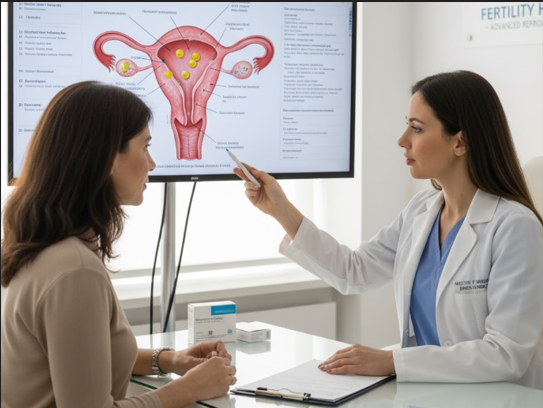
Controlled Ovarian Stimulation (COS) is a key phase in the In-Vitro Fertilization (IVF) process. The procedure involves administering fertility medications to encourage the ovaries to produce multiple mature eggs rather than the single egg typically released in a natural menstrual cycle. By retrieving multiple eggs, embryologists can select the healthiest embryos for fertilization and transfer, increasing the chances of a successful pregnancy.
In Korea, fertility specialists combine advanced hormone monitoring systems, precise dosage algorithms, and state-of-the-art ultrasound imaging to personalize ovarian stimulation for each patient. The use of controlled protocols, daily hormonal tracking, and individualized drug adjustments allows Korean fertility centers to achieve high ovarian response rates with minimal complications such as Ovarian Hyperstimulation Syndrome (OHSS).
Purpose & Benefits
The main purpose of controlled ovarian stimulation is to optimize the number and quality of eggs available for IVF while maintaining hormonal balance.
Key benefits include:
- Increased egg yield: Multiple follicles grow simultaneously, providing more eggs for fertilization.
- Enhanced embryo selection: More embryos allow for better selection and freezing options for future cycles.
- Precise hormonal control: Korea’s IVF centers use real-time hormone monitoring (estradiol, LH, FSH) for safe dose adjustments.
- Improved pregnancy rates: Controlled stimulation significantly increases implantation and live birth rates compared to natural cycles.
- Customized patient protocols: Korean specialists tailor each treatment to minimize side effects and maximize outcomes based on age, AMH (Anti-Müllerian Hormone) levels, and previous cycle responses.
- Shorter treatment timelines: With synchronized cycles and cutting-edge ovarian monitoring, the overall IVF process becomes more efficient.
Ideal Candidates
Controlled ovarian stimulation is recommended for:
- Women undergoing IVF, ICSI, or egg freezing.
- Patients with unexplained infertility or those who failed previous natural-cycle IVF attempts.
- Women with regular or irregular ovulation cycles requiring enhanced follicular development.
- Individuals with diminished ovarian reserve (low AMH) seeking maximal egg retrieval per cycle.
- Women with polycystic ovary syndrome (PCOS)—treated under customized low-dose protocols to avoid overstimulation.
- Patients considering fertility preservation before cancer treatment or other medical conditions affecting fertility.
However, women with severe ovarian dysfunction or medical contraindications (e.g. active cancer, unregulated thyroid or adrenal disorders) may not be ideal candidates without pre-treatment optimization.
Possible Risks & Complications
While controlled ovarian stimulation is widely regarded as safe, it carries some risks when hormone levels are not carefully regulated:
- Ovarian Hyperstimulation Syndrome (OHSS): Excessive follicle growth and fluid retention, now rare due to precise monitoring and GnRH trigger protocols.
- Multiple pregnancies: Due to multiple eggs retrieved, though mitigated by single embryo transfer strategies common in Korea.
- Hormonal side effects: Temporary bloating, mood changes, abdominal discomfort.
- Cycle cancellation: Inadequate or excessive ovarian response may lead to protocol adjustment or cancellation.
- Injection site reactions: Mild irritation or bruising from daily hormonal injections.
- Emotional stress: Hormonal fluctuations and the physical process can cause anxiety; many Korean clinics integrate psychological support and relaxation therapies.
Through advanced hormone monitoring systems, Korean specialists keep complication rates minimal while maintaining optimal egg yield.
Surgical Techniques Used
Although ovarian stimulation itself is non-surgical, it is followed by ultrasound-guided oocyte retrieval, a minimally invasive procedure:
- Transvaginal Oocyte Retrieval (TVOR): A fine needle is inserted under ultrasound guidance to aspirate mature follicles, performed under light sedation or anesthesia.
- Vitrification Technology: Retrieved eggs can be frozen using rapid freezing to preserve quality.
- Embryo Culture & Transfer: Embryos are developed and transferred into the uterus under precisely monitored hormonal conditions.
Korean fertility centers employ high-resolution 3D ultrasonography, AI-based follicular monitoring, and robot-assisted retrieval instruments for unmatched precision. These innovations ensure minimal discomfort and rapid recovery.
Recovery & Aftercare
Recovery from ovarian stimulation and egg retrieval is typically swift:
- Mild abdominal discomfort or bloating may occur for 1–3 days post-retrieval.
- Hormone balance monitoring: Blood tests (estradiol, progesterone, LH, FSH) and ultrasound check follicular regression and ovarian health.
- Hydration and rest: Patients are advised to stay hydrated to reduce OHSS risk.
- Luteal phase support: Progesterone supplementation is commonly given to prepare the uterus for embryo implantation.
- Resumption of normal activities: Most patients return to daily routines within 24–48 hours.
- Follow-up visits: Korean clinics emphasize frequent check-ups and personalized aftercare with detailed hormone tracking to ensure rapid recovery and cycle optimization.
Results & Longevity
Controlled ovarian stimulation offers predictable, measurable results:
- Typical outcomes include retrieval of 8–15 mature eggs per cycle for women under 38, with high fertilization potential.
- Advanced Korean IVF centers report pregnancy rates exceeding 50–60% per cycle among optimized patients.
- Hormonal recovery is typically complete within one menstrual cycle after treatment.
- Egg or embryo cryopreservation allows long-term fertility potential, with frozen embryos viable for years under regulated lab conditions.
Longevity of the results depends on patient age, ovarian reserve, and overall reproductive health, but with continued hormone regulation, outcomes remain stable across cycles.
Treatment Process in Korea
Korea has earned international recognition for its scientific precision and innovation in fertility medicine. Controlled ovarian stimulation here follows a structured, high-tech approach:
- Initial Consultation & Hormone Assessment: Blood tests for FSH, LH, AMH, and estradiol, plus transvaginal ultrasound to evaluate ovarian reserve.
- Personalized Protocol Design: Based on hormone profiles, age, and reproductive history, specialists create individualized stimulation regimens using recombinant FSH or LH preparations.
- Ovarian Stimulation Phase (8–12 days): Daily injections combined with hormone level tracking and ultrasound monitoring.
- Hormone Monitoring: Real-time monitoring of estrogen, progesterone, and follicle size ensures optimal response; adjustments are made daily.
- Trigger Injection: A final hCG or GnRH agonist injection is administered to mature the eggs before retrieval.
- Egg Retrieval & Fertilization: Performed 34–36 hours post-trigger; fertilization follows through IVF or ICSI.
- Embryo Transfer / Cryopreservation: Healthy embryos are either transferred or frozen for later use.
Unique Korean Technologies and Practices
- AI-Integrated Follicle Tracking Systems for real-time prediction of follicular growth and ovulation timing.
- Time-Lapse Embryo Culture to monitor development without disturbing embryos.
- Personalized Hormone Algorithms designed to minimize drug use while maximizing egg quality.
- Genetic and Metabolic Screening Integration to improve patient matching and outcomes.
Why Korea Is a Global Leader
- High success rates and modern infrastructure.
- Accredited fertility laboratories with world-class safety standards.
- Cost-effective care compared to the U.S. or Europe with comparable success outcomes.
- Seamless medical tourism services—multilingual staff, travel coordination, and post-treatment support.
- Reputation for innovation, research, and reproductive precision within Asia’s most advanced healthcare system.
Cost Range
The cost of controlled ovarian stimulation in Korea depends on drug types, duration, and personalized monitoring requirements.
Typical ranges:
- Controlled Ovarian Stimulation: ₩1,800,000 – ₩4,000,000 KRW (≈ USD 1,400 – 3,200) per cycle.
- Complete IVF Package (including stimulation, retrieval, and embryo transfer): ₩5,000,000 – ₩9,000,000 KRW (≈ USD 3,800 – 7,000).
- Add-ons: Genetic testing (PGT-A/PGS) ₩3,000,000 – ₩6,000,000 KRW; Cryopreservation ₩1,000,000 – ₩2,000,000 KRW.
- Medication costs vary depending on hormone types and response (approximately 30–40% of total cycle expenses).
Compared to Western countries, Korea offers 20–40% lower treatment costs while maintaining global-standard success rates.
Popular Clinics in Korea
- CHA Fertility Center (Seoul & Bundang): Pioneering reproductive medicine, AI-based stimulation protocols, and internationally accredited IVF labs.
- Maria Fertility Hospital: One of Korea’s largest fertility networks with advanced hormone monitoring systems and high clinical pregnancy rates.
- MizMedi Women’s Hospital (Seoul): Specialized women’s center with integrated fertility, endocrinology, and OBGYN services.
- Hamchoon Women’s Clinic: Leading center for IVF, genetic testing, and reproductive endocrinology.
- Samsung Medical Center (Seoul): Offers comprehensive reproductive and endocrine health programs with global-level laboratory facilities.
These institutions are internationally recognized for their technological innovation, patient-centered care, and multilingual support for medical tourists.


