
Treatment Overview
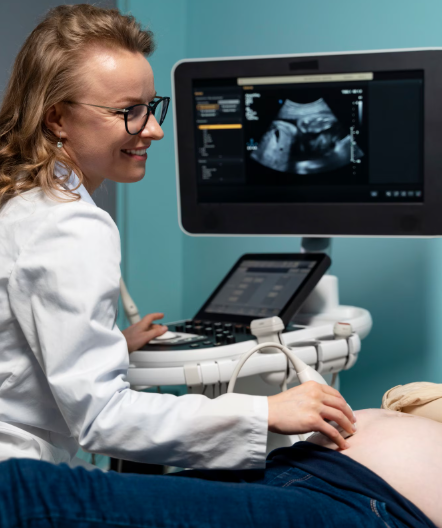
The Transabdominal & Transvaginal Combined Early Scan Package is a specialized prenatal ultrasound examination performed during the early stages of pregnancy — typically between 5 and 12 weeks of gestation. This combined approach uses both abdominal and vaginal ultrasound techniques to provide the most accurate and comprehensive view of the uterus, developing embryo, and surrounding pelvic structures.
In Korea, women’s hospitals and fertility clinics are globally recognized for offering high-precision combined ultrasound services using the latest imaging technology. By integrating transvaginal and transabdominal scans, Korean specialists ensure accurate early pregnancy confirmation, precise gestational dating, and early detection of potential complications.
This dual-modality scan represents the gold standard in early prenatal care, offering both medical accuracy and emotional reassurance for expectant parents.
Purpose & Benefits
Purpose:
- To confirm pregnancy location (intrauterine vs. ectopic).
- To assess fetal heartbeat and viability.
- To determine gestational age and estimate the due date.
- To examine uterine and ovarian health, including corpus luteum and endometrial thickness.
- To detect multiple pregnancies or early complications such as bleeding or cysts.
- To evaluate pelvic anatomy, ensuring the reproductive organs are normal and supportive of pregnancy.
Benefits:
- High diagnostic accuracy: Combines two imaging perspectives for complete early-stage visualization.
- Safe and non-invasive: Uses sound waves, with no radiation exposure.
- Early detection of complications: Identifies ectopic pregnancy, miscarriage risk, or uterine abnormalities.
- Comprehensive maternal assessment: Evaluates ovaries, cervix, and uterine lining in detail.
- Emotional reassurance: Confirms early heartbeat and normal progression of pregnancy.
Ideal Candidates
This combined early scan is recommended for:
- Women with a positive pregnancy test seeking confirmation and gestational age assessment.
- Those who have undergone IVF or fertility treatments.
- Expectant mothers with pelvic pain, spotting, or previous miscarriage history.
- Women with ectopic pregnancy risk factors or uterine anomalies.
- Multiple pregnancy cases requiring accurate fetal number confirmation.
- Mothers with irregular menstrual cycles who need precise dating of conception.
- Early pregnancy evaluations in high-risk or medically monitored cases.
Possible Risks & Considerations
- The ultrasound is safe and well-tolerated, with no known risks to mother or baby.
- Transvaginal ultrasound may cause mild pressure but is painless and poses no harm.
- Transabdominal imaging may require a full bladder for clearer visualization.
- Both scans are performed under strict hygiene and patient comfort protocols in Korean hospitals.
By combining both methods, Korean specialists achieve optimal clarity in early pregnancy imaging, even in challenging anatomical conditions.
Medical & Diagnostic Techniques Used in Korea
Korean hospitals are pioneers in early pregnancy imaging, using the latest ultrasound and AI-based diagnostic technologies for precision and patient safety.
- Transabdominal Ultrasound (TAUS): Performed on the abdomen to provide a wide view of the uterus, gestational sac, and ovaries.
- Transvaginal Ultrasound (TVUS): A closer, more detailed scan of the uterus and early embryo, offering superior clarity in early gestation.
- High-Frequency Imaging Probes: Used for precise visualization of small embryonic structures and cardiac activity.
- 3D/4D Early Pregnancy Imaging: Creates volumetric views of the uterus and developing gestational sac.
- Color Doppler Flow Mapping: Evaluates blood flow to the uterus, corpus luteum, and developing placenta.
- AI-Assisted Measurement Systems: Automatically detect gestational sac, yolk sac, and fetal pole for accurate gestational dating.
- Pelvic Organ Assessment: Evaluates uterine shape, cervical length, and ovarian health for comprehensive reproductive screening.
This dual-scan combination provides unparalleled accuracy in early pregnancy diagnosis and monitoring.
Recovery & Aftercare
- Immediate results: Findings are reviewed and explained during the visit.
- No recovery time: Both scans are quick, painless, and require no downtime.
- Follow-up scheduling: Repeat scans may be advised after 1–2 weeks for ongoing fetal development tracking.
- Lifestyle guidance: Patients receive medical advice on nutrition, supplements, and activity restrictions if necessary.
- Emotional support: Korean hospitals often include early pregnancy counselling to reassure and educate expectant mothers.
Results & Longevity
- Accurate early confirmation: Confirms fetal heartbeat and viability as early as 5–6 weeks.
- Gestational age precision: Provides accurate dating to guide further prenatal care.
- Detection of abnormalities: Identifies ectopic pregnancy or structural issues at the earliest stage.
- Improved pregnancy outcomes: Early intervention and monitoring ensure safer progression to mid-trimester.
- Enhanced maternal confidence: Expectant mothers gain peace of mind through early, detailed imaging results.
Korean hospitals ensure that early ultrasound findings are seamlessly integrated into ongoing prenatal care programs for consistent monitoring.
Procedure Process in Korea
1. Pre-Scan Consultation
Patients meet with an obstetrician or fertility specialist to review symptoms, cycle details, and prior test results.
2. Transabdominal Scan
The first scan is performed on the abdomen using ultrasound gel. It provides an overview of uterine and ovarian structures and identifies the gestational sac if visible.
3. Transvaginal Scan
A specially designed probe is gently inserted into the vagina to capture high-resolution images of the uterus, embryo, and yolk sac. This method allows for early detection of the fetal heartbeat and implantation details.
4. Result Review & Counselling
Doctors explain findings immediately, including pregnancy location, viability, gestational age, and next steps for prenatal care.
5. Follow-Up and Monitoring
If early pregnancy complications are suspected, follow-up scans and hormone level checks (hCG, progesterone) are arranged.
Why Korea Is a Top Destination
- Global standard early pregnancy imaging technology.
- Expert obstetric and fertility specialists with advanced ultrasound training.
- AI-integrated diagnostic systems offering unmatched accuracy.
- Comprehensive early pregnancy care programs, including lab testing and nutritional guidance.
- Compassionate, patient-centered care emphasizing safety and emotional support.
Unique Korean Methods & Technology
- Hybrid early scan protocols combining abdominal and vaginal imaging for maximum accuracy.
- AI-powered fetal viability detection for automatic heartbeat recognition.
- 3D early gestational mapping for superior structural analysis.
- Integrated fertility and obstetric collaboration to ensure smooth transition from conception to pregnancy monitoring.
Cost Range
The cost of the Transabdominal & Transvaginal Combined Early Scan Package in Korea depends on hospital level, technology used, and additional prenatal services included:
- Basic combined early scan: USD 150 – 300
- 3D/4D combined early imaging: USD 300 – 600
- Comprehensive early pregnancy package (including labs and consultation): USD 600 – 1,000
- High-risk or fertility monitoring package: USD 1,000 – 1,800
Most Korean hospitals offer combined early scan packages as part of integrated prenatal care or fertility treatment plans, ensuring seamless monitoring and patient support.
Popular Hospitals and Centers in Korea
- Asan Medical Center (Seoul): Renowned for fertility-related and early pregnancy diagnostic imaging.
- Samsung Medical Center (Seoul): Offers AI-enhanced early ultrasound with comprehensive maternal evaluation.
- Severance Hospital (Yonsei University Health System): Provides detailed dual-scan packages for early pregnancy and implantation assessment.
- CHA Bundang Women’s Hospital: Specialized in IVF pregnancy monitoring and early transvaginal diagnostics.
- MizMedi Women’s Hospital: Focused on early fetal detection and safe maternal management programs.


