
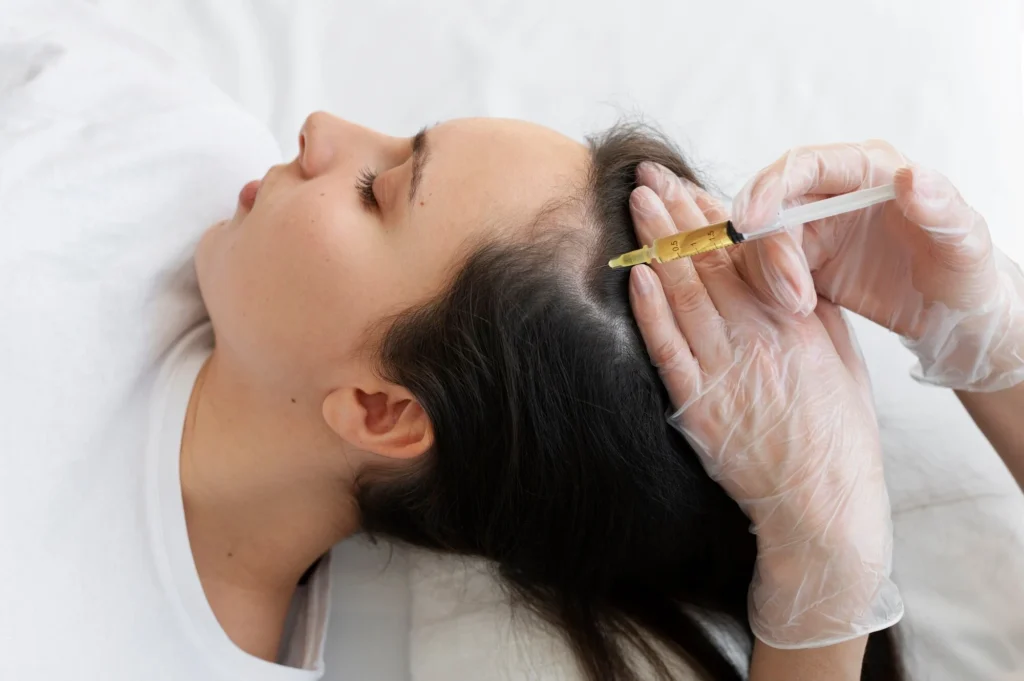
Stem cell therapy for hair loss is a rapidly evolving area of regenerative medicine. While Korean clinics are pioneering many of these advanced treatments, questions about legality, FDA approval, and regulatory compliance are common — especially among international patients traveling for procedures.
So, are stem cell hair loss treatments FDA-approved? And how do Korean clinics position their offerings legally and ethically?
🇺🇸 What Is the FDA’s Position on Stem Cell Hair Loss Treatments?
In the United States, the Food and Drug Administration (FDA) has not approved stem cell therapy specifically for hair restoration as a standardized or mass-marketed treatment. The agency categorizes stem cell products as biologic drugs, and their use requires extensive clinical trials and formal approval.
FDA’s Key Criteria:
- Minimal Manipulation: Cells must not be extensively processed or altered from their original state.
- Homologous Use: The cells should be used in a way that aligns with their natural function (e.g., fat-derived stem cells should ideally be used for fat repair, not necessarily hair).
Since many stem cell treatments for hair involve processing adipose tissue or using exosomes/conditioned media, these often fall outside the FDA’s definition of “minimal manipulation” — thus, they are not FDA-approved.
🇰🇷 What Do Korean Clinics Say About Legality and Safety?
South Korea operates under a separate regulatory framework managed by the Ministry of Food and Drug Safety (MFDS) — Korea’s equivalent of the FDA. However, the landscape in Korea allows for more flexible use of regenerative therapies, especially in cosmetic or non-life-threatening conditions like hair loss.
Legal Status in Korea:
- Autologous stem cell therapies (from the patient’s own fat or blood) are legal for use in cosmetic procedures, including hair restoration, when performed in licensed medical clinics.
- Allogeneic stem cell products (from umbilical cords, etc.) must be sourced from government-certified cell banks.
- Stem cell-conditioned media and exosome products are legally used for cosmetic dermatology under the classification of “advanced biocosmetics” rather than drugs.
How Korean Clinics Maintain Compliance:
- GMP-Certified Processing: Cells and media are processed in Good Manufacturing Practice (GMP) facilities to meet national safety standards.
- Clinical Research Collaboration: Many top clinics partner with academic hospitals or biotech labs to ensure treatments are research-based.
- Informed Consent Protocols: Patients are fully informed that these therapies may not be FDA-approved in their home countries.
- IRB-Approved Trials: Some clinics run Institutional Review Board (IRB) studies that allow the ethical testing of stem cell therapies under strict oversight.
🏥 What Korean Clinics Tell Their International Patients
Korean clinics are transparent about the regulatory differences and are careful to frame stem cell treatments as regenerative and supportive, rather than “cures.”
Typical messages communicated to patients include:
- “Our stem cell hair restoration is based on autologous fat-derived cells, which are naturally occurring in your body and processed under sterile, MFDS-compliant protocols.”
- “While not yet FDA-approved for hair regrowth in the U.S., this therapy has shown significant results in Korean clinical studies and is widely used in Asia.”
- “We follow ethical and scientific standards set by Korea’s medical regulatory authorities and only use legally approved cellular materials.”
✈️ Is Medical Tourism for Stem Cell Hair Restoration Legal?
Yes — many international patients legally travel to South Korea for these treatments, especially from countries where the procedures are not yet available or are heavily restricted. As long as:
- The treatment is administered by licensed medical personnel,
- The clinic is certified, and
- The patient gives informed consent,
…there are no legal issues with receiving stem cell hair restoration treatments in Korea, even if they are not yet FDA-approved in the patient’s home country.
🧬 Summary: The Legality Landscape
| Region | FDA/MFDS Approval Status | Legal Use | Notes |
|---|---|---|---|
| USA | Not FDA-approved for hair loss | Restricted | Only in clinical trials or specific conditions |
| Korea | Approved under MFDS for autologous & cosmetic use | Legal in licensed clinics | Widely offered with strict safety protocols |
Bottom Line: While stem cell hair restoration is not FDA-approved in the U.S., it is legal, regulated, and widely practiced in Korea under the MFDS — making it a viable and safe option for international patients seeking advanced hair regrowth solutions.


