
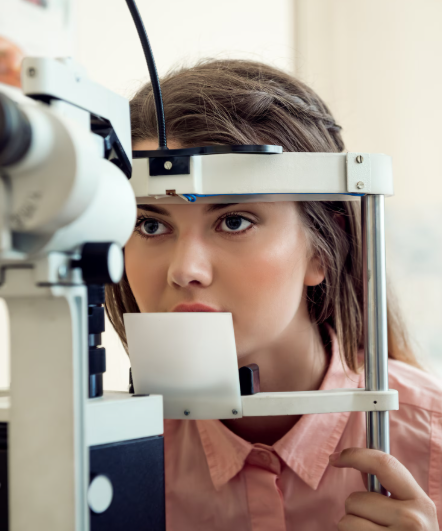
Treatment Overview
Multi-Focal LASIK in Korea is an advanced form of laser vision correction designed to treat presbyopia (age-related near vision loss) and other refractive errors such as myopia, hyperopia, and astigmatism. Unlike standard LASIK, which creates a single focal point for distance vision, Multi-Focal LASIK reshapes the cornea into multiple optical zones — allowing the eye to focus naturally at near, intermediate, and far distances.
This revolutionary approach mimics the functionality of multi-focal contact lenses or intraocular lenses, offering clear and comfortable vision at all ranges without glasses. Korean ophthalmology centers are international leaders in AI-guided Multi-Focal LASIK, using wavefront-optimized excimer lasers, femtosecond precision flap creation, and custom topography mapping to ensure exact depth control and long-term stability.
The result is youthful, multifocal vision — enabling patients to read, work on digital devices, and drive comfortably without dependence on corrective eyewear.
Purpose & Benefits
Purpose
- Correct presbyopia, myopia, hyperopia, and astigmatism simultaneously.
- Provide clear vision across all distances — near, intermediate, and far.
- Reduce dependence on reading glasses, bifocals, or progressive lenses.
- Offer a long-term and natural solution for age-related vision changes.
Benefits
- Comprehensive Vision Correction: Sharp focus at all distances.
- Glasses-Free Lifestyle: Eliminates the need for reading or bifocal glasses.
- Custom Optical Design: Multi-zone ablation tailored to individual eye anatomy.
- Fast Visual Recovery: Minimal discomfort with rapid improvement.
- AI-Guided Precision: Ensures perfect corneal reshaping and alignment.
- Long-Term Stability: Maintains clear, balanced vision for years.
Ideal Candidates
Multi-Focal LASIK in Korea is ideal for:
- Adults aged 40 or older experiencing presbyopia.
- Individuals with stable prescriptions for at least one year.
- Patients with healthy corneas and adequate corneal thickness.
- Those seeking independence from glasses for both near and far vision.
- People looking for a permanent, safe, and advanced vision correction option.
Possible Risks & Complications
Multi-Focal LASIK is safe and highly effective when performed by experienced Korean ophthalmologists. However, mild and temporary effects may include:
- Slight glare or halos during night vision in early healing.
- Mild dry eyes for a few weeks post-surgery.
- Temporary difficulty adapting to multi-focal visual zones.
- Rarely, slight over- or under-correction requiring enhancement.
Korean clinics minimize these risks using AI-calibrated laser mapping, real-time eye tracking, and biophotonic healing systems, ensuring smooth recovery and optimal optical balance.
Techniques & Technology Used
Core Techniques
- Femtosecond Laser Flap Creation: Bladeless and precise corneal flap preparation.
- Multi-Zone Excimer Laser Ablation: Creates multiple refractive zones for distance, intermediate, and near vision.
- Wavefront-Guided Customization: Corrects optical aberrations unique to each eye.
- Topography-Guided Optimization: Ensures smooth transitions between focal zones.
- AI Eye Tracking: Monitors micro eye movements for perfect accuracy.
- Biophotonic Regeneration Therapy: Accelerates healing and enhances corneal recovery.
Korea’s integration of these technologies provides maximum clarity, precision, and safety in every Multi-Focal LASIK procedure.
Treatment Process in Korea
Step-by-Step Workflow
- Comprehensive Eye Evaluation: Includes wavefront analysis, corneal mapping, and presbyopia assessment.
- Customized Surgical Planning: AI software generates a multi-zone ablation profile for optimal focus.
- Femtosecond Flap Creation: A thin, uniform corneal flap is created with a laser.
- Excimer Laser Reshaping: The cornea is sculpted into multi-focal zones using advanced excimer technology.
- Flap Repositioning: The flap is gently repositioned to heal naturally without sutures.
- Post-Operative Care: Antibiotic and lubricating eye drops applied; recovery monitored through digital imaging.
The procedure typically takes 15–20 minutes per eye, with visual clarity improving within 24–48 hours.
Recovery & Aftercare
Aftercare Guidelines
- Use prescribed antibiotic and lubricating drops as directed.
- Avoid rubbing or touching your eyes for at least one week.
- Wear sunglasses outdoors to protect against UV exposure.
- Avoid swimming, saunas, and heavy exercise for 1–2 weeks.
- Attend all follow-up visits for adaptation and stability checks.
Recovery Timeline
- 24–48 Hours: Vision becomes clearer and more balanced.
- 1 Week: Most patients achieve excellent functional vision at all distances.
- 1–3 Months: Full neural adaptation and stable multifocal clarity achieved.
Results & Longevity
Expected Results
- Clear, natural vision for near, intermediate, and distance tasks.
- Elimination or major reduction in dependence on reading glasses.
- Stable, comfortable eyesight with minimal glare or halos.
- Improved quality of life and visual freedom.
Longevity
Multi-Focal LASIK provides permanent vision correction for most patients.
Korean clinics report success rates of 97–99%, with long-term stability and patient satisfaction sustained for 10–20 years or more.
Periodic eye exams ensure continued clarity and ocular health.
Why Korea Is a Top Destination
- Pioneers in Presbyopia Correction: Korea is a leader in multi-focal and presbyopic LASIK technologies.
- AI-Guided Precision: Guarantees perfect optical balance between focal zones.
- High Surgical Expertise: Thousands of successful cases performed annually.
- Rapid Recovery & Comfort: Enhanced with regenerative post-op care.
- Affordable Excellence: 40–60% more cost-effective than similar procedures abroad.
- International Support: Clinics offer full multilingual care and tailored patient services.
Korea’s combination of AI vision mapping, multi-zone laser refinement, and biologic healing innovation makes it a global leader in Multi-Focal LASIK eye surgery.
Unique Korean Methods & Technology
- AI-Calibrated Multi-Zone Excimer Systems
- Wavefront-Guided & Topography-Fused LASIK Platforms
- 3D Vision Simulation for Presbyopia Correction
- Oxygen-Assisted Corneal Cooling Systems
- PRF (Platelet-Rich Fibrin) Ocular Healing Therapy
- Biophotonic Laser Regeneration Technology
- AI Healing Progress & Adaptation Tracking
These innovations ensure biologically safe, precise, and long-lasting multifocal vision correction.
Cost Range
| Treatment Package | Price (KRW) | Approx. USD | Inclusions |
|---|---|---|---|
| Standard Multi-Focal LASIK | ₩2,500,000 – ₩3,500,000 | $1,850 – $2,590 | Femtosecond LASIK + multifocal ablation + aftercare |
| Custom Multi-Focal LASIK | ₩3,800,000 – ₩4,800,000 | $2,810 – $3,550 | AI mapping + wavefront optimization + follow-ups |
| Premium Multi-Focal Vision Program | ₩5,000,000 – ₩6,500,000 | $3,700 – $4,810 | Biophotonic healing + PRF regeneration + lifetime monitoring |
Popular Clinics
- BGN Eye Clinic (Seoul): Specialists in presbyopia and multi-focal LASIK vision correction.
- B&VIIT Eye Center (Gangnam): Leaders in AI-guided multifocal LASIK and wavefront customization.
- Dream Eye Center (Myeongdong): Experts in blended multi-zone LASIK for near and far vision.
- Olim Eye Clinic (Gangnam): Pioneers in advanced multi-focal corneal sculpting and regenerative healing.
- Eyereum Eye Clinic (Apgujeong): Known for premium, biologically enhanced multi-focal LASIK procedures.


