
Treatment Overview
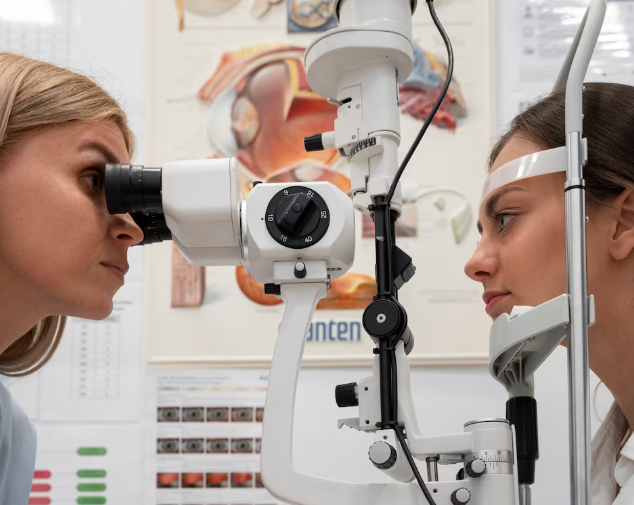
CheongDam Pterygium Removal Program in Korea is an advanced ocular surface reconstruction and pterygium excision system developed to restore the eye’s clarity, comfort, and natural appearance. Designed to treat pterygium — a fibrovascular growth that spreads from the conjunctiva onto the cornea — this procedure combines microsurgical precision, AI-guided imaging, and biologic grafting technology for long-term visual and cosmetic success.
Unlike conventional surgery, which can result in recurrence or visible scarring, CheongDam Pterygium Removal employs bio-adhesive suture-free grafting, conjunctival or amniotic membrane transplants, and regenerative healing therapy. Korean ophthalmologists at CheongDam and other top clinics utilize real-time surgical tracking and growth factor-based recovery programs to ensure gentle healing and natural aesthetic outcomes.
CheongDam Pterygium Removal Program in Korea delivers the perfect balance between advanced medical precision and refined ocular beauty — redefining global standards in eye surface repair.
Purpose & Benefits
Purpose
- Safely and completely remove pterygium tissue from the ocular surface.
- Restore the cornea and conjunctiva to a clear, healthy state.
- Prevent recurrence using biologic grafting and UV-protective aftercare.
- Relieve redness, irritation, and surface distortion.
Benefits
- AI-Guided Surgical Accuracy: Provides enhanced safety and precision during excision.
- Biologic Graft Restoration: Promotes seamless tissue healing and natural ocular texture.
- Suture-Free Comfort: Uses bio-adhesive fixation for faster, scar-free recovery.
- Cosmetic Refinement: Achieves bright, natural eye appearance post-surgery.
- Low Recurrence Rate: Advanced regenerative care minimizes regrowth.
- Fast Recovery: Less postoperative inflammation and downtime.
Ideal Candidates
CheongDam Pterygium Removal Program in Korea is recommended for:
- Patients with visible or growing pterygium extending onto the cornea.
- Individuals suffering from chronic redness, tearing, or discomfort.
- Those with astigmatism or vision distortion due to corneal irregularity.
- Patients seeking cosmetic correction along with medical precision.
- Individuals with recurrent pterygium after prior surgeries.
Possible Risks & Complications
CheongDam Pterygium Removal is safe, effective, and performed by expert Korean ophthalmic surgeons. However, mild and temporary effects may occur:
- Redness or Irritation: Normal during early healing, subsiding in days.
- Mild Swelling or Discomfort: Managed with eye drops and cold compresses.
- Temporary Blurred Vision: Improves as epithelial healing completes.
- Dryness: Controlled with lubricating solutions.
- Rare Recurrence: Significantly reduced with grafting and regenerative therapy.
Korean eye specialists use AI-calibrated imaging systems and regenerative biologic treatments to minimize side effects and ensure a smooth recovery.
Techniques & Technology Used
Core Techniques
- Microsurgical Pterygium Excision: Removes affected tissue with minimal trauma.
- Conjunctival or Amniotic Graft Replacement: Restores the ocular surface using biologic materials.
- Bio-Adhesive Fixation (No-Stitch Method): Eliminates sutures for comfort and faster healing.
- AI-Assisted Visualization System: Provides real-time monitoring and tissue mapping.
- Regenerative Growth Factor Therapy: Stimulates natural cell repair and prevents inflammation.
- UV-Protection Surface Therapy: Guards against recurrence caused by sunlight exposure.
These advanced systems make CheongDam Pterygium Removal Program one of the most innovative and effective ocular surface treatments in Korea.
Treatment Process in Korea
Step-by-Step Workflow
- Comprehensive Eye Evaluation:
Includes corneal topography, ocular surface imaging, and pterygium size analysis. - Anesthesia & Preparation:
Local anesthesia is applied to ensure comfort and pain-free surgery. - Microsurgical Removal:
The pterygium tissue is carefully excised using fine surgical instruments. - Tissue Grafting:
A conjunctival or amniotic graft is applied to the affected area to promote healing. - Bio-Adhesive Fixation:
The graft is secured using a biologic adhesive rather than sutures, improving comfort and aesthetics.
Procedure Duration: 25–40 minutes per eye
Recovery Period: Functional vision typically returns in 3–5 days; complete healing within 2–3 weeks.
Recovery & After-Care
After-Care Guidelines
- Use prescribed antibiotic, anti-inflammatory, and lubricating drops regularly.
- Avoid touching or rubbing your eyes for at least one week.
- Wear UV-blocking sunglasses when outdoors.
- Refrain from swimming, sauna use, and heavy activity for two weeks.
- Attend all follow-up visits for corneal healing assessment.
Recovery Timeline
- Days 1–3: Mild redness and irritation; graft begins to stabilize.
- Week 1: Redness reduces; visual clarity improves.
- Weeks 2–3: Smooth corneal surface and stable ocular comfort achieved.
- 1 Month: Full cosmetic and functional recovery.
Results & Longevity
Expected Results
- Complete removal of pterygium with restored ocular surface smoothness.
- Reduced redness, irritation, and inflammation.
- Natural cosmetic appearance without visible scarring.
- Long-term stability and vision clarity.
Longevity
CheongDam Pterygium Removal Program provides permanent correction with extremely low recurrence rates. Korean ophthalmology centers report recurrence under 5%, ensuring years of stable, clear, and comfortable vision.
Why Korea Is a Top Destination
Korea is globally acclaimed for excellence in ocular surface and corneal surgery, combining cutting-edge technology, regenerative science, and aesthetic refinement.
- AI-Driven Microsurgery: Provides unparalleled accuracy and tissue preservation.
- Regenerative Healing Systems: Deliver faster, scar-free ocular surface recovery.
- Highly Skilled Surgeons: Experts in biologic grafting and pterygium management.
- Suture-Free Bio-Adhesive Techniques: Enhance patient comfort and natural results.
- Integrated Eye Care Services: From advanced diagnostics to customized aftercare.
- Proven Global Outcomes: Korean eye centers maintain among the world’s highest satisfaction rates.
Unique Korean Methods & Technology
- AI-Calibrated Microsurgical Visualization
- Conjunctival & Amniotic Graft Integration
- Bio-Adhesive (No-Stitch) Fixation System
- Regenerative Growth Factor Healing
- Oxygen-Enhanced Recovery Therapy
- UV-Blocking and Surface Stabilization Program
These innovations make CheongDam Pterygium Removal Program in Korea one of the safest, most advanced, and aesthetically refined pterygium treatment options worldwide.
Cost Range
| Treatment Package | Price (KRW) | Approx. USD | Inclusions |
|---|---|---|---|
| Standard Pterygium Excision | ₩800,000 – ₩1,200,000 per eye | ~$600 – $900 | Conventional excision with standard postoperative care |
| Graft-Based Pterygium Surgery | ₩1,500,000 – ₩2,200,000 per eye | ~$1,100 – $1,600 | Conjunctival or amniotic graft healing with anti-recurrence protocol |
| CheongDam Premium Pterygium Removal | ₩2,800,000 – ₩4,200,000+ per eye | ~$2,000 – $3,000+ | AI-guided microsurgery, biologic grafting, regenerative therapy, and UV-protection aftercare plan |
Pricing may vary based on clinic technology, graft material, and surgeon expertise.
Popular Clinics in Korea
- CheongDam Eye Center (Seoul): Specialized in AI-assisted pterygium removal and regenerative ocular repair.
- B&VIIT Eye Clinic (Gangnam): Leader in biologic graft integration and cosmetic ocular surgery.
- Dream Eye Center (Seoul): Offers no-stitch microsurgery and regenerative ocular surface therapy.
- BGN Eye Clinic (Busan & Seoul): Expert in ocular surface restoration and long-term stabilization.
- Glory Seoul Eye Clinic: Focuses on biologic healing systems and recurrence prevention care.


