
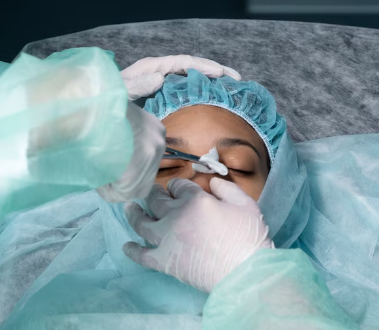
Treatment Overview
Lamellar Corneal Transplant Surgery in Korea is an advanced, partial-thickness corneal transplantation technique designed to treat keratoconus, corneal scarring, and stromal thinning while preserving the patient’s healthy corneal layers. Unlike traditional full-thickness transplants, this procedure replaces only the damaged portion of the cornea — either the front (anterior) or back (posterior) layer — resulting in faster recovery, fewer complications, and superior long-term clarity.
Korean ophthalmic surgeons utilize femtosecond laser precision, AI-guided lamellar mapping, and microsurgical imaging systems to achieve perfect graft depth and alignment. The result is exceptional visual outcomes, minimal rejection risk, and natural optical transparency.
Lamellar Corneal Transplant Surgery in Korea represents a modern evolution in corneal transplantation — combining surgical artistry, laser technology, and regenerative healing to restore vision with safety, accuracy, and biological harmony.
Purpose & Benefits
Purpose
- Replace only the damaged corneal layers affected by keratoconus or scarring.
- Restore corneal curvature, transparency, and optical integrity.
- Preserve healthy corneal endothelium to reduce rejection risk.
- Strengthen and stabilize corneal structure for long-term visual rehabilitation.
- Minimize surgical trauma compared to full-thickness transplants.
Benefits
- Tissue Preservation: Retains healthy corneal layers for faster recovery.
- Low Rejection Risk: Immune compatibility significantly improved.
- Faster Visual Recovery: Healing time reduced compared to penetrating keratoplasty.
- Enhanced Structural Strength: Reinforces corneal stability and shape.
- High Optical Quality: Reduces irregular astigmatism and enhances clarity.
- Regenerative Healing: Biologic therapy promotes smooth integration of the graft.
Ideal Candidates
Lamellar Corneal Transplant Surgery in Korea is ideal for:
- Patients with keratoconus unresponsive to cross-linking or ring implantation.
- Individuals with corneal scarring or thinning but intact endothelium.
- Those who require partial corneal replacement rather than full transplantation.
- Patients seeking faster recovery and reduced complication risk.
- Individuals desiring a natural, long-lasting corneal reconstruction.
Possible Risks & Complications
Lamellar corneal transplantation is extremely safe, though temporary or mild effects may occur:
- Redness or Swelling: Common in early healing, subsides in a few days.
- Light Sensitivity or Blurred Vision: Temporary as graft stabilizes.
- Mild Inflammation: Controlled with medication.
- Rare Graft Interface Haze: Managed with regenerative therapy.
- Minimal Rejection Risk: Greatly reduced compared to full transplants.
Korean surgeons employ AI-calibrated laser depth control, real-time OCT imaging, and regenerative biologic care to ensure optimal healing and transparency.
Techniques & Technology Used
Core Techniques
- Femtosecond Laser Lamellar Dissection: Creates precise graft and recipient interfaces.
- AI-Guided Corneal Mapping: Determines accurate layer depth and surgical parameters.
- Anterior or Posterior Lamellar Grafting: Replaces only the affected corneal layer.
- Micro-Suture or Suture-Free Fixation: Ensures smooth alignment and comfort.
- Regenerative Biologic Therapy: Promotes rapid integration and reduces inflammation.
- OCT Imaging Guidance: Monitors graft placement in real-time for maximum accuracy.
These techniques make lamellar transplantation in Korea one of the world’s most refined and biologically precise corneal surgeries.
Treatment Process in Korea
Step-by-Step Workflow
Step 1 – Diagnostic Assessment:
Comprehensive imaging with corneal topography, tomography, and OCT identifies the depth and location of damage.
Step 2 – Surgical Planning:
AI software defines the optimal graft type (anterior or posterior) and laser incision parameters.
Step 3 – Laser-Assisted Lamellar Dissection:
The femtosecond laser separates the corneal layers with micron-level precision.
Step 4 – Graft Placement:
Healthy donor tissue is implanted into the prepared corneal bed and secured with fine sutures or bio-adhesive.
Step 5 – Regenerative Aftercare:
Biologic and anti-inflammatory eye drops promote smooth healing and long-term clarity.
Procedure Duration: 60–90 minutes per eye
Recovery Period: Functional vision in 2–3 weeks; full clarity in 2–3 months.
Recovery & After-Care
After-Care Guidelines
- Use prescribed antibiotic, steroid, and lubricating drops as directed.
- Avoid rubbing or touching the eyes for several weeks.
- Wear UV-protective sunglasses outdoors.
- Avoid swimming and strenuous activity for one month.
- Attend all scheduled follow-up appointments for graft monitoring.
Recovery Timeline
- Days 1–3: Mild irritation and light sensitivity.
- Week 1: Vision begins to clear as swelling decreases.
- Weeks 2–4: Graft integration progresses; clarity improves.
- 2–3 Months: Full visual stability and corneal transparency achieved.
Results & Longevity
Expected Results
- Restored corneal transparency and curvature.
- Improved visual clarity and reduced irregular astigmatism.
- Long-term corneal stability and strength.
- Natural vision restoration with minimal scarring.
Longevity
Lamellar Corneal Transplant Surgery provides permanent structural restoration, with grafts maintaining transparency and stability for decades.
Korean studies report over 95% graft survival rates and exceptional visual outcomes due to precision laser techniques and regenerative care integration.
Why Korea Is a Top Destination
Korea is globally recognized for its excellence in corneal transplantation and regenerative eye surgery, combining innovative technology, biological healing, and surgical precision.
- Femtosecond Laser Precision: Enables exact layer separation with minimal tissue trauma.
- AI-Guided Graft Design: Customizes treatment for each patient’s unique corneal structure.
- Regenerative Healing Integration: Promotes smooth recovery and long-term clarity.
- Expert Corneal Surgeons: Renowned for advanced lamellar and endothelial grafting.
- Minimal Rejection Rate: Due to partial grafting and precise tissue preservation.
- Comprehensive Eye Care Programs: Include imaging, surgery, and personalized follow-up care.
Unique Korean Methods & Technology
- AI-Guided Femtosecond Lamellar Dissection
- 3D OCT-Based Corneal Mapping
- Anterior & Posterior Lamellar Grafting Techniques
- Bio-Adhesive or Micro-Suture Fixation
- Regenerative Biologic Eye Therapy
- UV-Protective Long-Term Healing Protocols
These innovations make Lamellar Corneal Transplant Surgery in Korea one of the most advanced, precise, and biologically optimized treatments for restoring natural vision and corneal integrity in keratoconus patients.
Cost Range
| Treatment Package | Price (KRW) | Approx. USD | Inclusions |
|---|---|---|---|
| Standard Lamellar Transplant Surgery | ₩4,800,000 – ₩6,500,000 per eye | ~$3,400 – $4,700 | Partial-thickness graft with femtosecond precision |
| AI-Guided Lamellar Transplant Package | ₩6,800,000 – ₩8,500,000 per eye | ~$4,900 – $6,200 | AI-mapped graft design and regenerative aftercare |
| Premium Regenerative Lamellar Transplant | ₩9,000,000 – ₩11,000,000+ per eye | ~$6,500 – $7,900+ | Laser-assisted grafting, biologic recovery, and long-term follow-up care |
Prices vary depending on graft type, surgical complexity, and clinic technology.
Popular Clinics in Korea
- B&VIIT Eye Center (Seoul): Expert in AI-guided lamellar and endothelial transplant surgery.
- Dream Eye Center (Seoul): Specialized in femtosecond-assisted corneal reconstruction and regenerative care.
- BGN Eye Clinic (Busan & Seoul): Offers advanced lamellar keratoplasty with biologic healing support.
- Glory Seoul Eye Clinic: Known for precision partial grafting and long-term corneal stability.
- K-Cure Vision Center (Gangnam): Pioneers in AI-driven lamellar grafting and corneal regeneration.


