
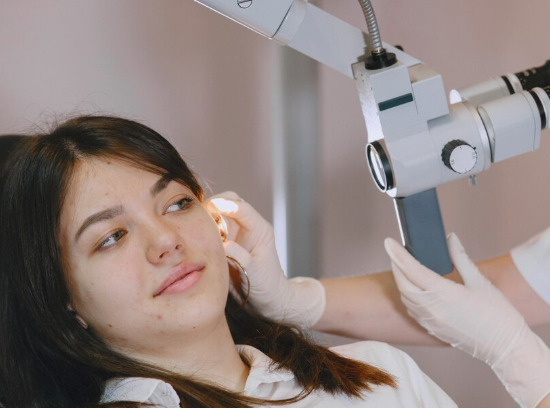
Treatment Overview
Eye Surface Regeneration Therapy in Korea is a state-of-the-art treatment designed to repair and rejuvenate the damaged ocular surface caused by Dry Eye Syndrome, chronic inflammation, or environmental stress. This therapy focuses on restoring the corneal and conjunctival epithelial layers through biologic regenerative compounds, growth factor serums, and cellular repair techniques that promote natural healing and long-term hydration.
Korean ophthalmologists integrate AI-guided ocular surface imaging, personalized biologic formulations, and cell-targeted regenerative medicine to restore smoothness, transparency, and function to the corneal epithelium. This approach enhances tear film stability, reduces inflammation, and relieves chronic irritation while promoting true tissue recovery.
Eye Surface Regeneration Therapy in Korea represents the most advanced, biologically driven solution for patients suffering from persistent or severe dry eye, offering deep healing beyond temporary symptom relief.
Purpose & Benefits
Purpose
- Regenerate and repair damaged corneal and conjunctival cells.
- Restore tear film balance and ocular surface integrity.
- Reduce inflammation and oxidative stress.
- Improve tear retention and comfort.
- Prevent recurrence of chronic dryness and irritation.
Benefits
- Biologic Healing: Uses regenerative factors derived from natural or autologous sources.
- Long-Term Relief: Promotes true tissue repair, not just temporary lubrication.
- Improved Vision Clarity: Restores a smooth, transparent corneal surface.
- Reduced Inflammation: Calms the ocular surface and stabilizes tear production.
- Safe & Non-Surgical: Minimally invasive and highly biocompatible.
- Enhanced Comfort: Ideal for chronic dry eye, post-surgery recovery, or ocular trauma.
Ideal Candidates
Eye Surface Regeneration Therapy in Korea is ideal for:
- Patients with moderate to severe Dry Eye Syndrome or corneal epithelial damage.
- Individuals with autoimmune-related ocular dryness (e.g., Sjögren’s Syndrome).
- Post-LASIK, PRK, or cataract patients with persistent dryness or sensitivity.
- Those suffering from corneal microerosions, inflammation, or tear film instability.
- Patients seeking long-term regenerative solutions instead of palliative care.
Possible Risks & Complications
This therapy is safe and biologically compatible, but mild and temporary effects may occur:
- Mild Stinging or Blurring: Common immediately after application.
- Temporary Redness: Due to increased cellular activity and tear stimulation.
- Rare Sensitivity: Resolved by adjusting formulation concentration.
Korean ophthalmologists ensure maximum safety and effectiveness using sterile biologic laboratories, AI-based ocular monitoring, and personalized dosage control throughout treatment.
Techniques & Technology Used
Core Techniques
- AI-Guided Ocular Surface Imaging: Analyzes epithelial thickness, tear quality, and cellular damage.
- Autologous Serum & PRP Therapy: Uses patient-derived biologic serum enriched with growth factors.
- Stem Cell-Derived Regenerative Solutions: Repairs epithelial and stromal tissue naturally.
- Growth Factor Infusion: Provides key proteins for healing, such as EGF and fibronectin.
- Anti-Inflammatory Integration: Reduces immune-mediated ocular surface damage.
- Tear Film Restoration Systems: Stabilizes hydration and lipid balance post-treatment.
These techniques make Eye Surface Regeneration Therapy in Korea one of the most advanced regenerative approaches in ophthalmology.
Treatment Process in Korea
Step-by-Step Workflow
Step 1 – Diagnostic Assessment:
AI-assisted corneal imaging and tear film testing identify tissue damage and dryness severity.
Step 2 – Regenerative Formulation Preparation:
Biologic serum or regenerative compounds are prepared based on individual ocular needs.
Step 3 – Application or Infusion:
The regenerative solution is applied to the ocular surface or administered as specialized eye drops.
Step 4 – Cellular Activation:
Growth factors stimulate epithelial cell regeneration and enhance tear film structure.
Step 5 – Monitoring & Maintenance:
Ongoing imaging tracks tissue recovery and ocular surface stabilization.
Procedure Duration: 30–60 minutes
Recovery Period: Visible improvement in 1–2 weeks; full recovery within 1–3 months.
Recovery & After-Care
After-Care Guidelines
- Apply prescribed regenerative or lubricating drops regularly.
- Avoid rubbing the eyes or wearing contact lenses for one week.
- Protect eyes from UV light using sunglasses.
- Maintain eyelid hygiene and hydration through warm compresses.
- Attend follow-up appointments for progress monitoring.
Recovery Timeline
- Week 1: Reduction in dryness and irritation.
- Weeks 2–4: Enhanced tear stability and surface healing.
- 1–3 Months: Full epithelial regeneration and visual comfort achieved.
- 3–6 Months: Long-term tear balance and sustained results.
Results & Longevity
Expected Results
- Regenerated and smoother corneal surface.
- Reduced dryness, irritation, and redness.
- Improved tear film stability and vision clarity.
- Enhanced ocular comfort and long-term protection.
Longevity
Eye Surface Regeneration Therapy delivers long-lasting results, with benefits typically maintained for 12–24 months, depending on ocular health and aftercare.
Korean clinics report over 90% improvement in ocular surface stability and patient comfort following regenerative treatment.
Why Korea Is a Top Destination
Korea is globally recognized for excellence in ocular regenerative medicine and biologic eye therapies, combining advanced biotechnology and precision diagnostics to restore corneal health and tear stability.
- AI-Calibrated Imaging Systems: Allow precise mapping of ocular surface damage.
- Regenerative Biologic Laboratories: Ensure high-quality, sterile serum formulations.
- Personalized Treatment Plans: Tailored to each patient’s corneal condition.
- Expert Ophthalmologists: Skilled in cellular healing and ocular regeneration.
- Integrated Eye Care Programs: Include diagnostics, treatment, and regenerative aftercare.
- Outstanding Clinical Outcomes: Proven results in chronic dry eye and ocular surface disease recovery.
Unique Korean Methods & Technology
- AI-Guided Corneal Surface Mapping
- Stem Cell & PRP-Based Regenerative Therapy
- Growth Factor-Enriched Biologic Serums
- Biologic Anti-Inflammatory Eye Care Integration
- Real-Time Healing Progress Imaging
- Long-Term Ocular Surface Stability Programs
These innovations make Eye Surface Regeneration Therapy in Korea one of the most advanced, restorative, and effective treatments for chronic Dry Eye Syndrome and corneal damage worldwide.
Cost Range
| Treatment Package | Price (KRW) | Approx. USD | Inclusions |
|---|---|---|---|
| Standard Regenerative Serum Therapy | ₩1,200,000 – ₩1,800,000 | ~$850 – $1,300 | Biologic eye drops with diagnostic evaluation |
| Advanced Growth Factor Regeneration Program | ₩2,000,000 – ₩3,500,000 | ~$1,400 – $2,500 | Customized biologic formulation with AI imaging and healing protocol |
| Premium Stem Cell Regenerative Therapy | ₩4,000,000 – ₩6,000,000+ | ~$2,900 – $4,300+ | Stem cell-based regenerative therapy with long-term follow-up care |
Prices vary based on formulation type, technology, and clinic expertise.
Popular Clinics in Korea
- B&VIIT Eye Center (Seoul): Specialized in biologic regeneration and stem cell ocular healing.
- Dream Eye Center (Seoul): Expert in AI-based corneal repair and dry eye regeneration therapy.
- BGN Eye Clinic (Busan & Seoul): Offers PRP and growth factor regenerative programs for ocular recovery.
- Glory Seoul Eye Clinic: Renowned for advanced ocular surface regeneration and hydration care.
- K-Cure Vision Center (Gangnam): Pioneers in biologic eye surface rejuvenation and AI-guided regenerative treatment.


