
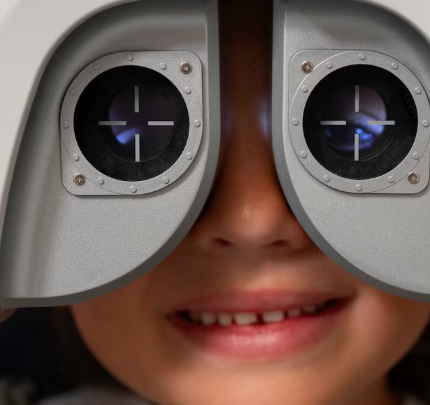
Treatment Overview
Bifocal Intraocular Lens (IOL) Implantation in Korea is an advanced vision correction procedure designed to restore clear sight at both near and distance ranges after cataract surgery or refractive lens exchange.
Bifocal IOLs contain two distinct focal zones—one for distant vision and another for near tasks such as reading or smartphone use—eliminating the need for glasses or bifocal spectacles post-surgery.
Korean ophthalmologists utilize AI-guided ocular biometry, femtosecond laser-assisted lens implantation, and wavefront aberrometry to ensure perfect lens alignment and customized focal balance. This precision-driven approach provides sharp, natural, and stable vision with minimal visual disturbances.
Bifocal IOL Implantation in Korea represents a blend of optical innovation, surgical precision, and patient-centered care, delivering high-definition vision across multiple focal distances.
Purpose & Benefits
Purpose
- Replace the eye’s natural or cataractous lens with a bifocal optical implant.
- Provide clear vision at both near and far distances.
- Reduce or eliminate dependency on reading glasses or bifocal spectacles.
- Restore visual balance and improve overall optical quality.
- Offer long-term correction for age-related presbyopia and cataracts.
Benefits
- Dual Focus Vision: Clear sight for both reading and distance activities.
- Reduced Dependence on Glasses: Excellent for those seeking spectacle-free vision.
- High Visual Clarity: Enhances contrast and image sharpness.
- Quick Recovery: Minimally invasive with rapid healing.
- Customized Optics: AI-driven preoperative mapping ensures precise focus allocation.
- Long-Term Stability: Maintains performance for decades without deterioration.
Ideal Candidates
Bifocal IOL Implantation in Korea is ideal for:
- Patients with cataracts and presbyopia (age-related near vision loss).
- Individuals desiring independence from glasses after lens surgery.
- Patients with healthy corneas and retinas suitable for premium IOLs.
- Those seeking balanced near and distance vision without multifocal halos.
- People aged 40+ considering refractive lens exchange for vision correction.
Possible Risks & Complications
Bifocal IOL implantation is safe and effective, though mild or transient effects can occur:
- Mild Glare or Halo: Common during the initial adaptation period.
- Temporary Blurred Vision: Usually stabilizes within 1–2 weeks.
- Dryness or Light Sensitivity: Managed with artificial tears and protective care.
- Residual Refractive Error: Rare, easily corrected with minor adjustments or laser enhancement.
Korean surgeons minimize these effects using AI-calibrated alignment systems, precise IOL centration, and real-time intraoperative verification.
Techniques & Technology Used
Core Techniques
- AI-Guided Biometry & Wavefront Analysis: Customizes IOL power and focus distribution.
- Femtosecond Laser-Assisted Lens Surgery: Creates precise capsulotomy and lens placement.
- Dual-Focus Bifocal IOLs: Designed with near and distance optical segments.
- Intraoperative Aberrometry: Confirms alignment and residual refractive error correction.
- Micro-Incision Phacoemulsification: Minimizes surgical trauma and speeds recovery.
- Postoperative Visual Mapping: Evaluates contrast sensitivity and focal clarity.
Korean clinics utilize FDA-approved premium IOL brands such as Alcon AcrySof IQ ReSTOR, Zeiss LISA, and Tecnis Bifocal IOLs, ensuring world-class visual outcomes.
Treatment Process in Korea
Step-by-Step Workflow
Step 1 – Preoperative Diagnostics:
Comprehensive eye evaluation using corneal topography, ocular biometry, and AI-assisted visual simulations.
Step 2 – Surgical Planning:
Precise selection of bifocal IOL model and power distribution based on lifestyle and visual needs.
Step 3 – Lens Removal & Implantation:
Under topical anesthesia, the natural lens is emulsified using micro-incision phacoemulsification, followed by insertion of the bifocal IOL through a 2.2 mm incision.
Step 4 – Alignment & Verification:
The lens is centered and its focal orientation verified with AI-guided real-time imaging systems.
Step 5 – Postoperative Assessment:
Follow-ups monitor vision stabilization, contrast sensitivity, and adaptation comfort.
Treatment Duration: 20–30 minutes per eye (outpatient procedure).
Follow-Up: 1 day • 1 week • 1 month • 3 months post-surgery.
Recovery & After-Care
After-Care Guidelines
- Use antibiotic and anti-inflammatory drops as prescribed.
- Avoid eye rubbing, water exposure, and strenuous activity for 1 week.
- Wear protective eyewear outdoors to reduce UV strain.
- Keep eyes hydrated and follow-up regularly for vision checks.
- Limit screen use during the early recovery phase to avoid visual fatigue.
Recovery Timeline
- Day 1–3: Noticeable improvement in clarity and color contrast.
- Week 1: Vision stabilizes for distance; near focus adaptation begins.
- Weeks 2–4: Balanced dual-focus vision achieved.
- 1–3 Months: Full adaptation to bifocal optics and long-term stability.
Results & Longevity
Expected Results
- Clear and balanced near and distance vision.
- Elimination of glasses for most daily activities.
- Natural depth perception and improved contrast.
- Long-term clarity with stable IOL centration.
Longevity
Bifocal IOLs are permanent implants designed for lifetime stability.
Korean ophthalmology centers report over 95% patient satisfaction, with sustained visual performance for 20 years or more, and minimal regression in optical quality.
Why Korea Is a Top Destination
Korea is globally recognized for its precision cataract and refractive lens surgeries, integrating cutting-edge AI, laser technology, and optical science for superior results.
- AI-Calibrated Lens Customization: Perfectly balances near and distance focus.
- Advanced Surgical Equipment: Includes femtosecond lasers and digital alignment systems.
- Highly Trained Surgeons: Experts in premium IOL and presbyopia correction surgery.
- Comprehensive Visual Rehabilitation: Integrated diagnostics and follow-up care.
- Innovative Optical Design Research: Korea contributes to global IOL development and biocompatibility advances.
- World-Class Safety Standards: Ultra-sterile microsurgical environments ensure optimal outcomes.
Unique Korean Methods & Technology
- AI-Based Dual-Focus Lens Optimization
- Femtosecond Laser-Assisted Bifocal IOL Insertion
- Image-Guided IOL Centering & Rotation Systems
- High-Definition Visual Simulation (Preoperative Preview)
- Hybrid Bifocal + Toric Integration for Astigmatism Correction
- Long-Term Ocular Adaptation Monitoring
These innovations make Bifocal IOL Implantation in Korea one of the most precise and patient-tailored refractive solutions available worldwide.
Cost Range
| Treatment Package | Price (KRW) | Approx. USD | Inclusions |
|---|---|---|---|
| Standard Bifocal IOL Implantation | ₩2,500,000 – ₩3,800,000 | ~$1,800 – $2,750 | Standard bifocal IOL surgery with diagnostic evaluation and postoperative follow-up |
| AI-Guided Bifocal Vision Program | ₩4,000,000 – ₩5,500,000 | ~$2,900 – $4,000 | Laser-assisted bifocal IOL implantation with AI-calibrated optics and advanced imaging |
| Premium Vision Restoration Package | ₩6,000,000 – ₩7,500,000+ | ~$4,300 – $5,400+ | Premium bifocal or hybrid IOL with femtosecond laser, digital centration, and long-term ocular monitoring |
Prices may vary depending on IOL brand, refractive correction complexity, and clinic technology.
Popular Clinics in Korea
- B&VIIT Eye Center (Seoul): Leading in bifocal and multifocal IOL technology with AI-guided customization.
- Dream Eye Center (Seoul): Experts in laser-assisted bifocal implantation and refractive enhancement.
- BGN Eye Clinic (Busan & Seoul): Renowned for premium lens options and postoperative vision optimization.
- Glory Seoul Eye Clinic: Specializes in high-definition lens implantation and dual-focus precision alignment.
- K-Cure Vision Center (Gangnam): Pioneers in AI-calibrated bifocal and presbyopia-correcting lens technologies.


