
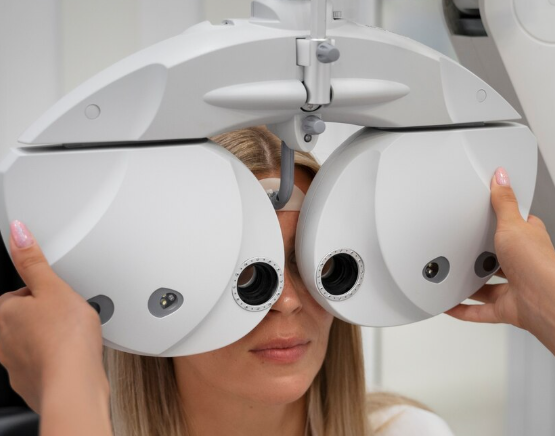
Treatment Overview
The Bleb Function Assessment Program in Korea is a specialized diagnostic and monitoring system designed to evaluate the health, performance, and long-term stability of filtration blebs created after glaucoma surgeries such as trabeculectomy, Ex-PRESS shunt, PreserFlo MicroShunt, Xen-type implants, and Ologen-assisted MIGS.
Korean ophthalmology centers are known for their exceptional precision in bleb analysis through:
- High-resolution Anterior Segment OCT (AS-OCT)
- Enhanced depth imaging for bleb morphology
- AI-driven bleb functionality scoring
- Digital risk prediction for bleb scarring
- Vascularity and fluid-dynamics assessment
- Subconjunctival tissue profiling
This comprehensive system ensures early detection of bleb dysfunction, scarring, leaks, or over-filtration, allowing timely intervention and long-term glaucoma stability.
Purpose & Benefits
Purpose
- Assess bleb function after glaucoma filtration surgery
- Detect scarring, fibrosis, or fluid-flow obstruction early
- Identify leaks, over-filtration, or thin-walled blebs
- Monitor long-term stability of subconjunctival drainage
- Guide treatment decisions such as bleb revision, needling, MMC augmentation, or MIGS transition
- Prevent vision-threatening complications associated with bleb failure
Benefits
- Early detection of bleb malfunction before IOP rises
- AI-powered analysis improves diagnostic accuracy
- High-resolution imaging reveals microscopic structural changes
- Optimized treatment timing for needling or revision
- Better long-term IOP control and vision preservation
- Customized treatment approach based on bleb morphology and fluid dynamics
- Reduces risk of infection or bleb leaks through proactive monitoring
Ideal Candidates
This program is ideal for:
- Patients who underwent trabeculectomy
- Individuals with Ex-PRESS, PreserFlo MicroShunt, Xen-type, or Ologen-assisted blebs
- Patients experiencing fluctuating or rising IOP after filtration surgery
- Individuals with symptoms such as redness, tearing, or vision fluctuations
- Those at risk of scarring due to young age, previous surgery, or heavy Tenon’s tissue
- Patients requiring long-term monitoring after filtration-based MIGS
Possible Risks & Complications
Monitoring itself is safe, but bleb-related complications may include:
- Bleb fibrosis or encapsulation
- Over-filtration and hypotony
- Leakage or bleb thinning
- Infection risk (blebitis or endophthalmitis)
- Conjunctival cyst formation
- IOP spikes due to reduced aqueous outflow
Korean specialists minimize risks through:
- AI-assisted prediction of bleb failure
- OCT-based bleb wall thickness and height measurement
- Vascularity scoring to detect inflammation
- Early intervention strategies such as needling or MMC application
- Post-revision monitoring to ensure stability
Surgical Techniques
(These reflect the surgical or procedural interventions used when bleb issues are detected.)
1. Bleb Needling Revision
Breaks fibrotic tissue around the bleb using a fine needle to restore flow, often combined with MMC.
2. Mitomycin-C (MMC) Augmentation
Applied during needling or revision to prevent future scarring and maintain bleb function.
3. Surgical Bleb Revision
Reconstructs thickened, encapsulated, or non-functioning blebs through conjunctival dissection and reformation.
4. Ologen-Assisted Bleb Reconstruction
Uses a biodegradable spacer to promote healthier, diffuse bleb formation.
5. Closure of Over-Filtrating Blebs
Includes suturing or tissue grafting to prevent hypotony or leaks.
6. Antifibrotic Injection Therapy
Subconjunctival 5-FU or MMC injections reduce fibrosis and stabilize bleb function.
7. Transition to MIGS
For recurrent bleb failure, MIGS such as Canaloplasty, GATT, or iStent may be considered as a safer alternative.
Treatment Process in Korea
Step 1 – Comprehensive Bleb Evaluation
AS-OCT, slit-lamp exam, bleb height and wall thickness measurement, and vascularity analysis.
Step 2 – AI-Powered Bleb Function Scoring
Predicts likelihood of failure, scarring, or leak using advanced modeling tools.
Step 3 – IOP and Flow Dynamics Assessment
Evaluates stability of filtration and aqueous humor outflow.
Step 4 – Treatment Decision Planning
Depending on findings, recommends needling, antifibrotic therapy, or surgical revision.
Step 5 – Post-Intervention Follow-Up
Routine imaging and IOP monitoring ensure stable bleb performance.
Evaluation Duration: 15–25 minutes
Setting: Outpatient diagnostic center or glaucoma clinic
Recovery & After-Care
After-Care Guidelines
- Use anti-inflammatory and antibiotic drops after needling or revision
- Avoid eye rubbing and strenuous activity
- Monitor for symptoms such as redness, discharge, or sudden vision change
- Attend frequent bleb check-ups after interventions
- Protect eyes from contamination to reduce infection risk
Recovery Timeline
Days 1–3: Early response to revision or needling; mild irritation possible
Week 1: Bleb shape stabilizes; IOP begins to settle
Weeks 2–4: Full healing; stable filtration established
1–3 Months: Long-term bleb stability confirmed through imaging
Results & Longevity
Expected Results
- Restoration of healthy bleb function
- Improved IOP control
- Prevention of scarring or further bleb collapse
- Reduced risk of bleb-related infection
- Increased longevity of filtration surgery outcomes
Longevity
- Stable blebs may function effectively for years or decades
- Regular monitoring ensures early detection of changes
- AI-enhanced long-term tracking improves predictive accuracy
- Revisions and antifibrotic therapies prolong bleb lifespan
Why Korea Is a Top Destination
- World leaders in bleb imaging and filtration surgery care
- Advanced AS-OCT and digital bleb analysis tools
- AI-driven risk modeling for early intervention
- Highly skilled glaucoma specialists in bleb revision
- Comprehensive follow-up and long-term monitoring
- Integration of MIGS for recurrent bleb failure
Unique Korean Innovations
- AI-based bleb functionality scoring
- Deep imaging of bleb wall microstructure
- Automated fibrosis risk prediction
- Ologen-enhanced bleb reconstruction techniques
- Dynamic bleb fluid-flow modeling
- Long-term filtration stability tracking
These innovations make Korea’s Bleb Function Assessment Program one of the most advanced systems for maintaining and restoring filtration surgery success worldwide.
Cost Range (Indicative Estimate)
| Program Package | Price (KRW) | Approx. USD | Inclusions |
|---|---|---|---|
| Basic Bleb Evaluation Program | ₩150,000 – ₩300,000 | ~$110 – $230 | AS-OCT + bleb morphology + IOP test |
| Premium Bleb Function Monitoring Program | ₩400,000 – ₩700,000 | ~$300 – $520 | AI analysis + vascularity scan + risk modeling |
| Comprehensive Bleb Revision & Management Solution | ₩1,000,000 – ₩3,000,000+ | ~$750 – $2,250+ | Needling, MMC, revision planning + postoperative monitoring |
Popular Clinics in Korea
- B&VIIT Eye Center (Seoul)
- Dream Eye Center (Seoul)
- BGN Eye Clinic (Seoul & Busan)
- Glory Seoul Eye Clinic
- K-Cure Vision Center (Gangnam)


