
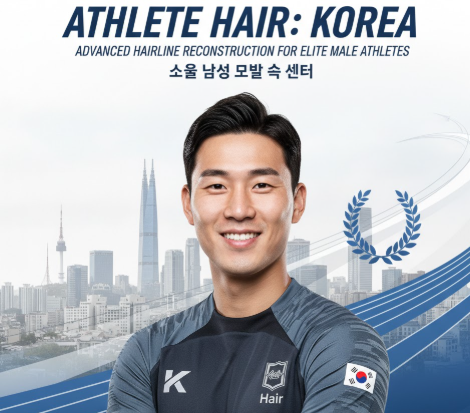
Treatment Overview
Athlete-Friendly Male Hairline Reconstruction in Korea is a specialized hair restoration procedure designed for men who lead active lifestyles, including professional or recreational athletes. This technique focuses on creating a natural, robust hairline that can withstand physical activity, sweating, and frequent hair washing. Korean clinics utilize advanced FUE (Follicular Unit Extraction), FUT (Follicular Unit Transplantation), and robotic-assisted systems to deliver precise, durable, and natural-looking results.
Purpose & Benefits
The primary purpose of Athlete-Friendly Hairline Reconstruction is to restore a youthful and masculine hairline while ensuring durability under an active lifestyle. Benefits include:
- Strong, long-lasting hairline designed for athletes
- Natural hair growth with proper density and angles
- Minimal downtime to allow a faster return to training and competition
- Reduced risk of graft displacement during physical activity
- Improved self-confidence and facial aesthetics
This procedure is ideal for men who want hairline restoration without limiting their athletic performance or daily activity.
Ideal Candidates
Athlete-Friendly Male Hairline Reconstruction is suitable for:
- Men with receding or thinning hairlines who maintain an active lifestyle
- Individuals requiring hairline restoration that can endure sweating, helmets, and rigorous physical activity
- Patients with sufficient donor hair for transplantation
- Those seeking minimally invasive procedures with permanent results
- Athletes, fitness enthusiasts, and professionals who cannot afford extended downtime
Patients with scalp infections or medical conditions affecting hair growth should be evaluated before the procedure. Consultation at a Korean clinic ensures customized planning.
Possible Risks & Complications
While generally safe, potential risks include:
- Mild redness, swelling, or tenderness at graft sites
- Temporary shedding of transplanted hair (shock loss)
- Rare infection if sterilization protocols are not strictly maintained
- Minimal discomfort during or after the procedure
Most side effects are temporary and resolve within a few days. Choosing an experienced Korean clinic minimizes risks and ensures durable, high-quality results.
Techniques & Technology Used
Korean clinics employ advanced techniques to achieve athlete-friendly hairline reconstruction:
- FUE (Follicular Unit Extraction): Minimally invasive extraction of individual follicles with minimal scarring
- FUT (Follicular Unit Transplantation): Strip harvesting for high-density graft placement
- Robotic-assisted transplantation (ARTAS/NeoGraft): Ensures precise and consistent follicle placement
- Customized hairline mapping: Focuses on natural angles, density, and durability
- Optional PRP or stem cell therapy: Enhances follicle survival and promotes faster growth
These methods allow for a natural, resilient hairline designed to withstand the demands of an active lifestyle.
Treatment Process in Korea
The treatment process generally includes:
- Initial consultation to assess hair loss, donor hair availability, and lifestyle considerations
- Selection of the optimal technique (FUE, FUT, or robotic-assisted transplantation)
- Extraction of donor follicles from the scalp
- Precise implantation into the hairline, considering growth direction, density, and durability
- Post-operative care instructions with activity guidelines and follow-up visits
Sessions typically last 4–6 hours depending on the number of grafts. Korean clinics provide comfortable, efficient procedures suitable for athletes.
Recovery & After-Care
Recovery is straightforward and tailored for active individuals:
- Mild swelling or redness at graft sites for 2–3 days
- Formation of small scabs, healing within 7–10 days
- Avoid strenuous physical activity, direct sunlight, and aggressive washing for the first week
- Follow-up visits to monitor healing and hair growth
Most patients can resume light physical activity within a few days, with full athletic activity usually allowed after 2–3 weeks, depending on clinic recommendations.
Results & Longevity
Visible hair growth typically starts within 3–4 months, with full results seen after 9–12 months. Transplanted hair is permanent, and optional PRP or stem cell therapies can enhance thickness and longevity. The reconstructed hairline is natural, durable, and suitable for physically active lifestyles.
Why Korea Is a Top Destination
Korea is a preferred destination for athlete-friendly hairline reconstruction due to:
- Expertise in advanced FUE, FUT, and robotic-assisted hair restoration
- Clinics specializing in durable hairline design and natural aesthetics
- International patient support including translation, accommodation, and concierge services
- Competitive pricing with high-quality results
- Proven success in creating resilient hairlines for active patients
These factors make Korea an ideal destination for men seeking durable, natural, and athlete-ready hairline restoration.
Cost Range
The cost of Athlete-Friendly Male Hairline Reconstruction in Korea typically ranges from $4,500 to $9,000, depending on clinic, number of grafts, and any optional regenerative therapies. Many clinics offer packages for international patients, including post-operative care.
Popular Clinics in Korea
Top clinics offering Athlete-Friendly Male Hairline Reconstruction include:
- ID Hospital, Seoul – Experts in advanced male hairline restoration and athlete-focused procedures
- JK Plastic Surgery & Dermatology, Seoul – Provides robotic-assisted hairline reconstruction tailored for active lifestyles
- The GONG Hospital, Seoul – Specializes in durable and natural hairline restoration for men
- Medi-Peel Clinic, Seoul – Offers high-quality hairline treatments for athletes and international patients


