
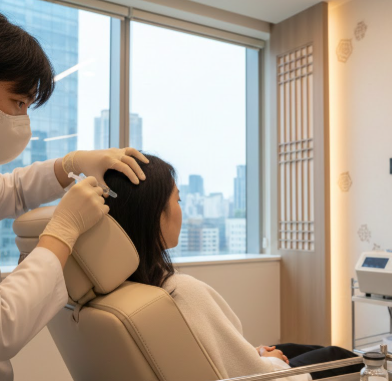
Treatment Overview
Pure PRP (Leukocyte-Reduced) Hair Treatment in Korea is an advanced, high-precision regenerative therapy designed to stimulate hair follicles and improve hair density using platelet-rich plasma that has been carefully filtered to remove leukocytes (white blood cells). Korean dermatology and hair restoration clinics specialize in refined PRP preparation techniques, producing a cleaner, highly concentrated plasma that reduces inflammation while maximizing growth factor activity. This treatment is widely chosen by individuals seeking natural, minimally invasive hair regrowth without surgery.
Purpose & Benefits
The main purpose of Pure PRP therapy is to promote hair follicle regeneration while minimizing inflammation and scalp irritation. Since leukocytes can trigger inflammatory responses, reducing them in the PRP solution leads to faster healing, decreased redness, and improved patient comfort.
Key benefits include:
- Enhanced hair thickness and density
- Reduced hair shedding
- Healthier scalp environment
- Minimal downtime and non-surgical approach
- More comfortable than standard PRP due to lower inflammatory components
- Visible results within 3–4 months
Korean clinics often combine Pure PRP with growth factor solutions or laser stimulation, leading to superior outcomes.
Ideal Candidates
Pure PRP (Leukocyte-Reduced) Hair Treatment in Korea is ideal for:
- Men and women experiencing early-to-moderate hair thinning
- Patients with androgenetic alopecia (male or female pattern hair loss)
- Individuals seeking a natural, drug-free hair restoration option
- People who experienced inflammation or discomfort from standard PRP
- Post-hair-transplant patients who want to maintain graft strength
- Patients who want a safe treatment with no downtime
Those with complete baldness, severe scarring alopecia, or advanced follicle loss may require combined treatments or hair transplantation.
Possible Risks & Complications
Pure PRP is considered extremely safe, but minor side effects may occur, such as:
- Mild swelling or redness at injection sites
- Temporary scalp tightness
- Slight tenderness for 24–48 hours
Because leukocytes are removed, inflammation-related risks (such as excessive swelling or post-treatment sensitivity) are significantly reduced compared to traditional PRP. Serious complications are extremely rare when performed in Korean medical clinics with sterile single-use kits and certified specialists.
Techniques & Technology Used
Korea is known for its advanced PRP technology, ensuring high purity and optimal concentration. Common techniques include:
- Double-Spin Centrifugation: Separates platelets with precision while isolating and removing leukocytes.
- Closed-System PRP Kits: Prevent contamination and maintain high growth factor viability.
- Optical Cell Counters: Used to verify platelet concentration and confirm leukocyte reduction.
- Microneedle-Assisted PRP Delivery (optional): Enhances absorption and scalp rejuvenation.
- Cooling anesthesia system: Minimizes discomfort during injections.
Clinics often use FDA-approved PRP kits and international-grade centrifuges for consistent results.
Treatment Process in Korea
- Consultation & Scalp Diagnosis: Trichoscopy and scalp imaging are performed to assess follicle health.
- Blood Collection: 10–20 ml of blood is drawn depending on the treatment area.
- Double-Spin Processing: Plasma is separated with a leukocyte filtration system to obtain Pure PRP.
- Preparation of Injection Areas: Scalp is disinfected and numbing cream or cooling anesthesia is applied.
- PRP Injection: Microinjections are performed across thinning areas with controlled depth and spacing.
- Optional Boosters: Some clinics add exosomes, peptides, or low-level laser therapy.
- Post-Treatment Care: Patients can return to normal activities immediately with simple after-care guidelines.
Most patients undergo 3–6 sessions spaced one month apart.
Recovery & After-Care
Because Pure PRP is minimally inflammatory, recovery is fast and comfortable.
Typical after-care:
- Avoid washing the scalp for 12–24 hours
- No gym, sauna, or heat exposure for 24 hours
- Avoid alcohol and smoking for optimal healing
- Use gentle shampoos for 2–3 days
- Optional: follow clinic-provided hair nutrients or topical growth serums
Most people resume daily activities immediately and experience no downtime.
Results & Longevity
Patients typically begin noticing improvement after 6–8 weeks, with thicker and stronger hair visible by 3–4 months. Final results usually appear between 5–7 months.
Results typically last 9–12 months, depending on lifestyle, hair condition, and genetics. Many patients choose maintenance sessions once or twice yearly to sustain long-term follicle health.
Why Korea Is a Top Destination
Korea is internationally recognized for its excellence in dermatology, hair restoration, and regenerative medicine. Reasons include:
- Highly advanced PRP systems with global certifications
- Skilled dermatologists specializing in non-surgical hair loss care
- Accurate scalp imaging and diagnostic tools
- Combination protocols (PRP + growth factors + LLLT) unavailable in many other countries
- Affordable pricing despite premium technology
- Multilingual clinics experienced with medical tourists
Patients receive evidence-based, personalized treatment plans focused on both cosmetic and medical hair wellness.
Cost Range
Pure PRP (Leukocyte-Reduced) Hair Treatment in Korea typically costs:
₩250,000 – ₩600,000 per session
(Approximately $190 – $460 USD)
Packages of 3–6 sessions often include discounts, complimentary scalp analysis, or laser therapy.
Popular Clinics in Korea
Some well-known clinics offering Pure PRP (Leukocyte-Reduced) hair treatments include:
- Gangnam Dermatology & Hair Restoration Centers
- ID Dermatology Clinic
- BANOBAGI Hair Center
- Haru Dermatology Clinic
- Motion Clinic (Hair Regeneration Unit)
- Oracle Dermatology Network
These clinics are known for advanced diagnostic systems, trained hair specialists, and experience with international patients.


