
Treatment Overview
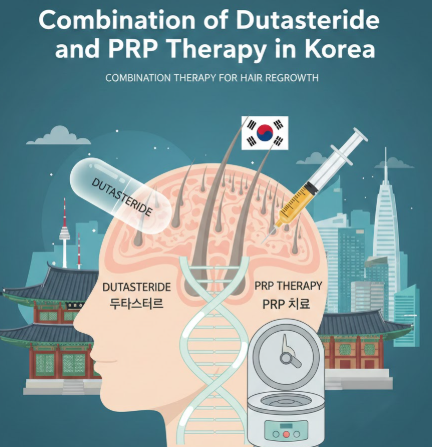
The combination of Dutasteride and PRP (Platelet-Rich Plasma) Therapy has emerged as one of Korea’s most effective approaches for treating androgenetic alopecia and thinning hair. While Dutasteride reduces DHT levels systemically or locally, PRP therapy stimulates hair follicles with concentrated growth factors derived from the patient’s blood. Korean clinics are at the forefront of integrating these treatments, offering a synergistic solution that enhances hair density, thickness, and overall scalp health.
This combined therapy is particularly suitable for patients with moderate to advanced hair loss or those who have shown limited results from either therapy alone. By merging pharmacological DHT suppression with regenerative growth factor stimulation, the therapy addresses both the hormonal and structural causes of hair thinning.
Purpose & Benefits
The main purpose of this combination therapy is to maximize hair regrowth and minimize hair loss by tackling multiple underlying factors:
- Dutasteride: Suppresses DHT to prevent follicle miniaturization
- PRP: Stimulates follicular activity, improves blood flow, and promotes thick, healthy hair growth
Key benefits include:
- Faster and more visible hair regrowth compared to single therapy
- Improved hair thickness and density across crown and frontal scalp
- Reduced shedding and stabilization of hairline
- Synergistic effects reduce treatment duration
- Minimal downtime and non-surgical procedure
Korean clinics often customize treatment frequency and dosage to suit individual scalp conditions, ensuring optimal results.
Ideal Candidates
This combination therapy is ideal for:
- Men with androgenetic alopecia stages 2–5
- Patients with diffuse thinning or crown hair loss
- Individuals who have not achieved sufficient results from Dutasteride or PRP alone
- Patients preparing for or maintaining hair transplant results
- Medical tourists seeking evidence-based, advanced hair restoration options
Women may receive treatment under careful supervision, particularly post-menopause, with modified dosing.
Possible Risks & Complications
Although generally safe, potential side effects include:
- Mild scalp tenderness or redness at injection sites
- Temporary shedding during the early phase
- Mild swelling or irritation
- Rare systemic effects from Dutasteride, such as reduced libido
- Mild fatigue or dizziness after PRP injections in some cases
Korean dermatologists minimize risks with precise injection techniques, accurate dosing, and thorough patient monitoring.
Techniques & Technology Used
Korean clinics use advanced technologies to maximize the benefits of combination therapy:
- Micro-dose Dutasteride injections (Duta-Meso): Targets areas of thinning hair for localized DHT suppression
- PRP Therapy: Blood is drawn, centrifuged, and concentrated growth factors are injected into the scalp
- Microneedle-Assisted Delivery: Enhances absorption and follicular stimulation
- AI-Based Follicle Analysis: Maps thinning areas and tracks hair density and regrowth progress
- 3D Scalp Mapping: Ensures precise targeting for injections and optimal coverage
- Adjunct Therapies: Laser therapy or nutrient-rich scalp programs may be combined to accelerate results
This integrative approach enhances treatment effectiveness and reduces recovery time.
Treatment Process in Korea
- Initial Consultation & Scalp Assessment – Dermatologists perform digital scans and evaluate hair density, miniaturization, and scalp health.
- Customized Treatment Plan – Determines the number of Dutasteride injections, PRP sessions, and combination therapy schedule.
- Dutasteride Injection Session – Micro-dose injections administered to thinning areas.
- PRP Therapy Session – Patient’s blood is processed, and growth factors are injected into the scalp to stimulate follicles.
- Follow-Up and Progress Monitoring – AI scans and dermatology checkups every 1–2 months.
- Maintenance Plan – Repeat sessions every 3–6 months based on individual response and scalp health.
Korean clinics emphasize a structured, data-driven approach, ensuring measurable results.
Recovery & After-Care
Recovery is minimal, making this therapy suitable for busy patients. After-care instructions include:
- Avoid washing or rubbing the scalp for 6–12 hours post-treatment
- Refrain from sauna, swimming, or intense workouts for 24 hours
- Use clinic-approved shampoos and scalp care products
- Attend follow-up appointments to monitor growth
- Maintain oral or topical Dutasteride if prescribed
Most patients resume normal activities immediately after treatment sessions.
Results & Longevity
Patients typically notice improvements within 3–4 months, with full results appearing after 8–12 months.
Expected outcomes include:
- Increased hair density and thickness
- Stabilization of the hairline and crown areas
- Improved follicle strength and scalp health
- Long-lasting results with periodic maintenance
Combining Dutasteride with PRP often yields superior, faster, and more durable results compared to either therapy alone.
Why Korea Is a Top Destination
Korea is a global leader in hair restoration due to:
- Expertise in combining pharmacologic and regenerative therapies
- Advanced injection techniques and AI-driven diagnostics
- High patient satisfaction with visible results
- Safe, evidence-based protocols with minimal downtime
- Transparent pricing and English-friendly services for international patients
- Integrated care including diagnostics, injections, and post-care monitoring
Medical tourists choose Korea for reliable, clinically proven hair restoration solutions.
Cost Range
The cost of combination therapy in Korea depends on the number of sessions, clinic reputation, and inclusion of adjunct therapies:
- Dutasteride Injection Session: USD $150–$350
- PRP Therapy Session: USD $200–$400
- Combination Packages (3–6 sessions): USD $600–$1,500
- Consultation & Follow-Up: USD $20–$50 per visit
Many clinics offer bundled packages for international patients to streamline treatment and travel arrangements.
Popular Clinics in Korea
- Wonjin Dermatology Center – Specializes in Dutasteride + PRP integration
- Dr. FORHAIR Clinic – Offers AI-based scalp mapping and combination therapy programs
- MODE A Hair Loss Clinic – Experienced in micro-injection and regenerative protocols
- NAPRX Hair Clinic – Uses advanced microneedle-assisted delivery systems
- REME Dermatology Clinic – Focuses on crown and frontal hair restoration


