
Treatment Overview
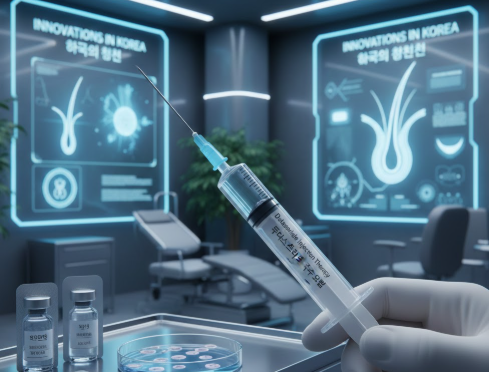
Dutasteride Injection Therapy represents one of Korea’s most innovative approaches for treating androgenetic alopecia and advanced hair thinning. Unlike standard oral medication, injectable Dutasteride delivers the active ingredient directly into thinning scalp areas, maximizing local DHT suppression while reducing systemic absorption.
Korean dermatology clinics have pioneered advanced micro-injection techniques, including mesotherapy and microneedle-assisted delivery systems, to enhance efficacy, improve absorption, and minimize side effects. This method is particularly effective for patients who have not achieved desired results from oral treatments or require targeted therapy for crown or frontal thinning.
Purpose & Benefits
The primary purpose of Dutasteride Injection Therapy is to:
- Deliver medication directly to affected follicles
- Stop further miniaturization caused by DHT
- Promote regrowth in targeted regions
Key benefits include: - Strong localized effect with faster results compared to oral therapy
- Lower systemic hormone exposure, reducing potential side effects
- Improved hair thickness and density in crown, temples, and frontal hairline
- Can be combined with PRP, growth factor injections, or laser therapy for enhanced outcomes
- Suitable for patients with partial or diffuse hair loss
In Korea, many clinics offer combination packages where injection therapy is paired with oral medication or regenerative scalp programs for optimal results.
Ideal Candidates
Dutasteride Injection Therapy is ideal for:
- Men with moderate to advanced androgenetic alopecia
- Patients who experienced minimal improvement with oral Dutasteride or Finasteride
- Individuals seeking faster or more localized hair regrowth
- Patients preparing for hair transplantation to strengthen existing follicles
- Medical tourists who prefer in-clinic administration with professional monitoring
Women (post-menopausal only) may receive treatment under strict medical supervision.
Possible Risks & Complications
Korean clinics utilize precise dosing and fine needles to minimize risks. Potential side effects include:
- Mild scalp redness or tenderness at injection sites
- Temporary shedding during initial treatment phase
- Minor swelling or irritation
- Rare systemic effects such as reduced libido or mild hormonal sensitivity
- Dizziness or mild fatigue in rare cases
Because injections are administered in controlled clinical settings, serious complications are extremely uncommon.
Techniques & Technology Used
Korea has developed cutting-edge technologies to enhance Dutasteride injection therapy:
- Micro-Dose Scalp Injection (Duta-Meso): Ultra-fine needles deliver small, precise doses into the dermal layer.
- Microneedle-Assisted Delivery: Enhances absorption into hair follicles and minimizes discomfort.
- AI-Based Follicle Analysis: Tracks growth, density, and miniaturization to personalize injection zones.
- 3D Scalp Mapping: Ensures precise targeting of thinning areas for maximum results.
- Combination Regenerative Therapy: PRP, exosomes, growth factors, and laser therapy often accompany injections for accelerated regrowth.
- Digital Progress Monitoring: Clinics perform regular scalp imaging to quantify results and adjust therapy.
Treatment Process in Korea
- Consultation & Diagnosis – High-resolution scalp imaging, hair density measurement, and DHT hormone assessment.
- Personalized Injection Plan – Determining number of sessions, injection points, and combination therapies.
- Injection Administration – Micro-dose Dutasteride is injected into affected scalp zones; sessions usually last 30–60 minutes.
- Adjunct Therapies (Optional) – Laser therapy, PRP, or growth factors may be applied immediately after injections.
- Follow-Up & Monitoring – AI scalp scans and checkups every 1–3 months to track follicle improvement.
- Maintenance – Injections are typically repeated every 3–6 months for long-term results.
Recovery & After-Care
Recovery is minimal, allowing patients to resume daily activities immediately. Recommended after-care includes:
- Avoid washing or rubbing the scalp for 6–12 hours post-injection
- Refrain from saunas, swimming, or heavy exercise for 24 hours
- Use clinic-approved shampoos and scalp care products
- Attend follow-up sessions for monitoring and maintenance
- Maintain overall hair health with proper nutrition and stress management
Side effects are generally mild and temporary, making this a low-downtime therapy.
Results & Longevity
Dutasteride Injection Therapy produces rapid and visible improvements in hair density and thickness:
- 1–2 months: Stabilization of hair loss, reduced shedding
- 3–4 months: Initial thickening of existing hairs
- 5–8 months: Significant density increase, especially in crown and frontal regions
- 8–12 months: Maximum regrowth and long-lasting follicle improvement
Results from injection therapy typically last 3–6 months per session, and combining with oral Dutasteride or laser therapy prolongs and enhances effects.
Why Korea Is a Top Destination
Korea leads globally in hair restoration innovations due to:
- Highly skilled dermatologists specializing in hair loss treatments
- Advanced micro-injection and mesotherapy techniques
- AI-driven diagnostics and follicle mapping
- Integration of regenerative therapies for faster results
- Transparent pricing and English-friendly services for international patients
- Reliable, evidence-based outcomes for patients with various hair loss stages
Medical tourists choose Korea for its scientific, safe, and precise approach to hair restoration.
Cost Range
The cost of Dutasteride injection therapy in Korea varies depending on the number of sessions, combination therapies, and clinic reputation:
- Single injection session: USD $150–$350
- 3-session package: USD $400–$900
- Combination therapies (PRP, laser, growth factors): USD $600–$1,200
- Consultation & follow-ups: USD $20–$50 per visit
Many clinics offer bundled medical tourist packages with accommodation and treatment scheduling included.
Popular Clinics in Korea
- Wonjin Dermatology Center – Experts in micro-dose Dutasteride injection therapy
- Dr. FORHAIR Clinic – Uses AI diagnostics for precise injection planning
- MODE A Hair Loss Clinic – Combination injection and regenerative therapy specialists
- NAPRX Hair Clinic – Offers cutting-edge microneedle-assisted delivery
- REME Dermatology Clinic – Advanced crown and frontal scalp treatment programs


