
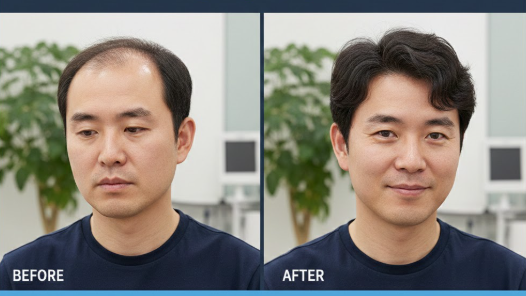
Treatment Overview
Combination Medical Hair Loss Management in Korea refers to a multi-therapy approach that targets hair loss through several scientifically proven methods instead of relying on a single treatment. Korean dermatology clinics commonly combine DHT blockers (finasteride, dutasteride), topical minoxidil, low-level laser therapy (LLLT), PRP injections, scalp scaling, and nutritional therapy. This integrative model produces significantly higher success rates because it treats both hormonal and non-hormonal causes of hair thinning.
Korea’s protocol-based system, advanced diagnostics, and personalized treatment plans give patients noticeable improvements within 3 to 6 months, with maximal results between 9 to 12 months.
Purpose & Benefits
Combination therapy is designed to achieve stronger, faster, and longer-lasting improvements in hair density compared to single-method treatments. Key benefits include:
- Higher Success Rates: Studies in Korean clinics show a 75–90% improvement rate in male and female patients.
- Customized Protocols: Treatments are based on scalp scans, blood tests, and medical history.
- Comprehensive Restoration: Improves hair thickness, density, scalp health, and follicle strength.
- Slows Hormonal Hair Loss: DHT blockers stabilize progressive hair thinning.
- Encourages Regrowth: Minoxidil, PRP, and laser work synergistically for faster regrowth.
- Suitable for All Hair Loss Stages: From early thinning to moderate alopecia.
Ideal Candidates
Combination Medical Hair Loss Management in Korea is ideal for:
- Men and women with androgenetic alopecia (male/female pattern baldness)
- Patients who did not respond well to single therapies like minoxidil
- Individuals experiencing early or moderate hair thinning
- People with stress-induced or nutritional hair loss
- Patients preparing for a hair transplant
- Post-transplant patients needing faster healing and improved graft survival
- Those seeking a non-surgical alternative to improve density
Patients with severe baldness (complete follicle inactivity) may require transplant surgery plus combination therapy for best results.
Possible Risks & Complications
Combination therapy is generally safe, but depending on the selected treatments, potential mild side effects include:
- Scalp redness, dryness, or irritation from topical solutions
- Temporary shedding (telogen effluvium) in the first 4–8 weeks
- Mild headaches or dizziness from minoxidil (rare)
- Hormonal side effects from DHT blockers in some patients
- Bruising or tenderness after PRP injections
- Increased sensitivity after laser sessions
- Allergic response to certain serums
Korean clinics always perform scalp analysis and medical screening to minimize risks.
Techniques & Technology Used
Korean clinics utilize a blend of advanced tools and therapies, including:
- Oral DHT Blockers: Finasteride or dutasteride to suppress DHT activity.
- Topical Minoxidil: 5–7% formulations for improved follicle stimulation.
- LLLT Laser Therapy: Korean-developed diode laser helmets and clinic-grade devices.
- PRP (Platelet-Rich Plasma): High-concentration PRP processed with premium centrifuges.
- Meso-Hair Cocktails: Growth factors, peptides, and vitamins injected into the scalp.
- Scalp Scaling: Deep cleansing to remove sebum and dead skin for better absorption.
- Nutritional Supplements: Biotin, saw palmetto, amino acids, and collagen.
- Stress and Lifestyle Monitoring: Common in Korean hair clinics.
The combination is customized depending on age, sebum levels, hair density, scalp condition, and hormonal activity.
Treatment Process in Korea
Most clinics follow this structured Korean protocol:
- Comprehensive Scalp Diagnosis
Includes dermatoscope imaging, hair density measurement, and sometimes hormone/blood tests. - Customized Treatment Plan
The doctor designs a combination plan depending on hair loss severity. - Monthly In-Clinic Sessions
These typically include:- Laser therapy
- PRP
- Meso injections
- Scalp scaling
- Clinic-only solutions
- Daily Home Program
Patients are provided with:- Oral DHT blockers
- Topical minoxidil
- Specialized shampoos
- Home-use laser devices (optional)
- Progress Monitoring Every 1–2 Months
Clinics measure hair growth progress using digital scanning technology.
Recovery & After-Care
Combination therapy involves minimal downtime, but optimal after-care helps boost success rates:
- Use prescribed hair products consistently
- Avoid harsh shampoos and chemical treatments
- Continue oral medication as directed
- Limit heat styling
- Attend regular monthly clinic sessions
- Follow a high-protein, iron-rich diet
- Manage stress and sleep cycles
- Protect hair from UV exposure
Patients typically see a major reduction in hair shedding within 1–2 months and visible thickening after 3–4 months.
Results & Longevity
Korea’s combination approach delivers some of the best hair restoration outcomes worldwide:
- Visible thickening: 2–3 months
- Major regrowth: 4–6 months
- Peak results: 9–12 months
- Success rates: 75–90%
- Long-term stability: Maintained with ongoing DHT blocker use
Patients who continue the maintenance program every 3–6 months retain long-lasting density and scalp health.
Why Korea Is a Top Destination
Korea leads the world in medical hair restoration because of:
- Advanced clinical technology
- Highly trained dermatologists specializing in hair science
- Combination-based protocols instead of single-method treatments
- Affordable treatment packages
- Accurate digital diagnostics
- High patient satisfaction rates
- Organized monthly programs ideal for medical tourists
Korean clinics also offer multilingual support, airport pickup, and medical tourism coordinators.
Cost Range
The cost of Combination Medical Hair Loss Management in Korea varies depending on the chosen therapies:
- Monthly combo program: USD 150–450
- PRP sessions: USD 150–300 per session
- Laser therapy programs: USD 100–200 per session
- DHT blockers & medications: USD 20–40 per month
- Full 3-month intensive program: USD 600–1,200
- Advanced multi-therapy program: USD 1,500–2,500
Prices differ based on clinic reputation, technology used, and treatment intensity.
Popular Clinics in Korea
Some well-known clinics for combination hair loss management are:
- Mojelim Hair Clinic – Seoul
- Banobagi Dermatology – Seoul
- Cheongdam Yonsei Dermatology
- Oracle Dermatology
- NIL Hair Medical Center
- Gyeonggi Dermatology Network Clinics
- Dr. For Hair Scalp Clinics
These clinics specialize in multi-therapy programs with high patient satisfaction.


