
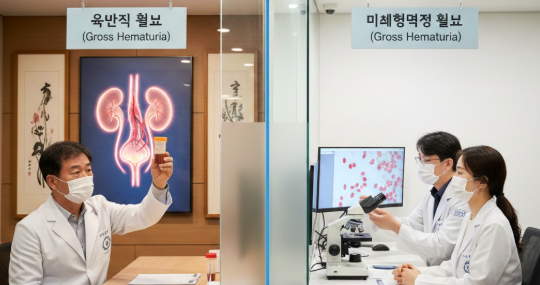
Treatment Overview
Hematuria, the presence of blood in the urine, is divided into two main types: gross hematuria and microscopic hematuria. Gross hematuria is visible to the naked eye, causing urine to appear red, pink, or brown. Microscopic hematuria, however, is not visible and can only be detected through laboratory testing.
Both forms can indicate underlying health issues such as infections, kidney stones, prostate enlargement, or urinary tract cancers. Korea has become a leading destination for hematuria consultation due to its advanced medical imaging, fast diagnostics, and internationally trained urologists.
Korean hospitals offer streamlined testing programs that allow international patients to complete all necessary evaluations within a single day. With precise results and highly accurate diagnostic tools, Korea provides one of the most reliable systems for hematuria assessment.
Purpose & Benefits
The purpose of consulting for gross or microscopic hematuria in Korea is to determine the exact cause of bleeding and prevent long-term complications. Key benefits include:
- Accurate differentiation between benign and serious causes
- Early detection of kidney, bladder, or prostate conditions
- Access to advanced CT, MRI, and cystoscopy technologies
- Fast, same-day testing suitable for medical tourists
- Personalized treatment plans based on scientific findings
Whether the hematuria is visible or microscopic, Korean specialists ensure thorough evaluation and immediate guidance.
Ideal Candidates
You may be a good candidate for hematuria consultation in Korea if you experience:
- Visible red, brown, or pink urine (gross hematuria)
- Microscopic blood detected during routine urinalysis
- Frequent urinary infections
- Painful urination or flank pain
- History of kidney stones
- Enlarged prostate symptoms
- Family history of urologic cancers
Individuals seeking a second opinion or more advanced diagnostic approaches also benefit significantly from Korea’s medical expertise.
Possible Risks & Complications
Hematuria alone is not usually dangerous, but ignoring it can lead to complications based on the underlying cause. Possible issues include:
- Urinary tract infections that worsen
- Stone obstruction leading to kidney damage
- Progression of prostate diseases
- Delayed detection of urinary tract cancers
- Chronic kidney problems due to untreated conditions
Diagnostic procedures are safe but may involve mild risks such as: - Temporary discomfort after cystoscopy
- Mild bleeding following invasive tests
- Rare allergic reactions to contrast dyes used in CT scans
Korea’s medical centers follow strict international safety standards to minimize complications.
Techniques & Technology Used
Korean hospitals employ high-end technology for precise hematuria diagnosis. The evaluation typically includes:
Urinalysis & Microscopic Examination
Used to detect red blood cells, bacteria, and other abnormalities.
Urine Cytology
Checks for cancerous or abnormal cells, especially important in gross hematuria.
Blood Tests
Evaluates kidney function, inflammation, and prostate markers.
Ultrasound Imaging
A non-invasive method to detect stones, masses, or structural abnormalities.
CT Urography
One of the most reliable imaging tools for identifying tumors, stones, and blockages.
MRI Urography
Provides detailed soft tissue images without radiation.
Digital Flexible Cystoscopy
Uses a thin, flexible camera to visually inspect the bladder and urethra. Korea uses high-resolution scopes that increase accuracy and reduce discomfort.
Urodynamic Testing
Assesses bladder function when urinary flow issues are suspected.
These technologies help differentiate between the causes of gross and microscopic hematuria quickly and accurately.
Treatment Process in Korea
Korea offers an efficient and structured evaluation pathway for both types of hematuria:
- Initial Consultation
Your urologist reviews your symptoms, health history, and risk factors. - Basic Testing
Includes urinalysis, urine culture, cytology, and blood work. - Imaging Tests
Ultrasound, CT, or MRI scans are performed depending on your condition. - Cystoscopy (if needed)
Essential for gross hematuria cases or when cancer risk is suspected. - Functional Testing
Urodynamic studies may be recommended for patients with bladder or urinary flow issues. - Diagnosis & Care Plan
Your doctor explains all findings and recommends treatment, monitoring, or further testing.
Most patients, including medical tourists, complete all tests within the same day or next morning.
Recovery & After-Care
Most tests require minimal downtime. After-care recommendations include:
- Drinking plenty of water to clear the urinary system
- Avoiding caffeine or alcohol for 24 hours after cystoscopy
- Monitoring for any changes in urine color
- Taking prescribed medications if infection or inflammation is found
Patients with conditions like stones or prostate enlargement may require follow-up appointments or ongoing care.
Results & Longevity
Test results are typically delivered quickly:
- Urinalysis results: same day
- Imaging reports: within 24 hours
- Cystoscopy results: immediate
Long-term expectations include: - Microscopic hematuria may require periodic monitoring
- Stone-forming patients may need routine follow-ups
- Prostate-related hematuria may require long-term management
- Cancer-related findings require ongoing treatment and surveillance
Korean hospitals provide detailed reports to support long-term health planning.
Why Korea Is a Top Destination
Korea is widely recognized for excellence in medical diagnostics due to:
- Cutting-edge imaging and diagnostic systems
- Highly specialized urologists with international training
- Fast-track diagnostic programs for foreign patients
- Transparent pricing with high-quality service
- Clean, modern facilities using advanced technologies
- Professional medical coordinators offering full support in English and other languages
These advantages make Korea one of the most trusted destinations for hematuria evaluation.
Cost Range
The cost of hematuria consultation and testing in Korea typically includes:
- Consultation: $20–$50
- Urinalysis & Cytology: $20–$60
- Blood Tests: $20–$60
- Ultrasound: $70–$150
- CT Urography: $250–$450
- MRI Urography: $400–$700
- Cystoscopy: $200–$500
- Comprehensive Evaluation Package: $450–$950
Costs vary based on hospital and complexity of findings but remain lower than Western healthcare systems.
Popular Clinics in Korea
Some of the best urology centers for hematuria consultation include:
- Severance Hospital (Yonsei University)
- Asan Medical Center
- Samsung Medical Center
- Seoul National University Hospital
- Wooridul Urology Clinic
- Bumin Hospital Urology Center
These medical facilities are renowned for accuracy, safety, and international patient services.


