
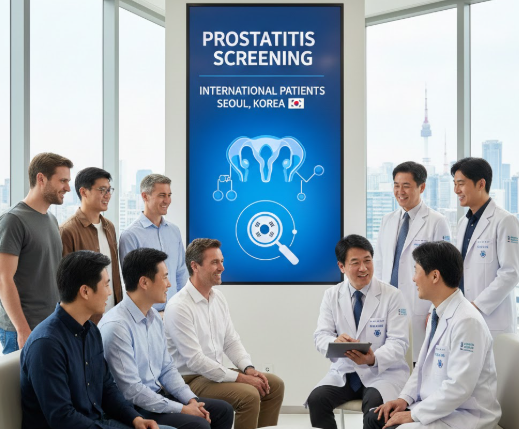
Treatment Overview
Prostatitis, an inflammation of the prostate gland, can lead to urinary symptoms, pelvic discomfort, and sexual health issues. Early screening is essential to detect prostatitis or related prostate conditions before symptoms worsen. Korea provides advanced urology screening programs for international patients, combining comprehensive evaluation, modern diagnostic tools, and personalized consultation to ensure early detection and effective management.
Screening is especially valuable for patients with recurrent urinary tract infections, chronic pelvic pain, or risk factors for prostate disease.
Purpose & Benefits
The main objectives of prostatitis screening for international patients are:
- Early detection of acute or chronic prostatitis
- Identification of underlying bacterial infections or inflammation
- Evaluation of urinary tract health and potential complications
- Prevention of chronic prostatitis and associated urinary or sexual dysfunction
- Guidance for personalized treatment and lifestyle recommendations
Benefits of screening in Korea include access to highly skilled urologists, advanced laboratory and imaging technologies, rapid diagnostics, and structured follow-up care for international patients.
Ideal Candidates
Screening is recommended for international patients who:
- Experience mild or intermittent urinary symptoms such as frequency, urgency, or weak flow
- Have recurrent urinary tract infections
- Suffer from chronic pelvic pain or discomfort
- Have a family history of prostate disease
- Are above 40 years old or at higher risk for prostate conditions
Proactive screening allows early intervention, preventing complications and improving long-term prostate and urinary health.
Possible Risks & Complications
Screening is generally safe and non-invasive. Minimal risks may include:
- Mild discomfort during digital rectal exam (DRE)
- Temporary urinary irritation from urine tests
- Anxiety related to potential diagnosis
Timely screening reduces the risk of delayed diagnosis, which could lead to chronic prostatitis, urinary retention, or prostate-related complications.
Techniques & Technology Used
Prostatitis screening in Korea utilizes advanced diagnostic tools and evaluations:
- Medical History & Symptom Assessment: Detailed review of urinary, pelvic, and sexual health
- Digital Rectal Exam (DRE): Assessment of prostate size, tenderness, and abnormalities
- Urine Analysis & Culture: Detect bacterial infection or inflammation
- Blood Tests & PSA Measurement: Evaluate prostate health and rule out other conditions
- Ultrasound Imaging: Transrectal or transabdominal ultrasound to assess prostate and bladder structure
- Uroflowmetry & Post-Void Residual Measurement: Evaluate urinary function and potential obstruction
- Patient Counseling: Guidance on prevention, lifestyle adjustments, and follow-up recommendations
These evaluations provide a comprehensive overview of prostate and urinary health for international patients.
Treatment Process in Korea
- Initial Consultation: Review of medical history, urinary symptoms, and risk factors
- Comprehensive Screening: Urine tests, blood tests, imaging, and physical examination
- Diagnosis & Assessment: Determine presence of prostatitis or related urinary conditions
- Personalized Recommendations: Lifestyle guidance, preventive measures, and potential treatment planning
- Follow-Up Care: Ensure monitoring and early intervention if needed
- International Patient Support: Appointment scheduling, translation, and post-screening guidance
Recovery & After-Care
- Screening itself does not require recovery, but follow-up visits may be scheduled based on findings
- Education on hydration, diet, and urinary health is provided
- Patients with detected issues receive treatment plans with ongoing monitoring
- Lifestyle and pelvic floor exercises may be recommended to prevent recurrence or progression
Results & Longevity
- Early identification of prostatitis or related prostate conditions
- Prevention of chronic urinary or pelvic complications
- Maintenance of prostate and urinary health
- Improved sexual health and quality of life through timely interventions
- Structured follow-up ensures long-term monitoring for international patients
Why Korea Is a Top Destination
- Highly experienced urologists specializing in prostatitis and prostate screening
- Advanced laboratory and imaging facilities for accurate diagnosis
- Integrated care for international patients including translation and coordination
- Affordable, high-quality screening programs compared to many Western countries
- Comprehensive follow-up programs to ensure early detection and ongoing urinary health
Cost Range
- Consultation & Symptom Assessment: USD 50–150
- Laboratory Tests & PSA Measurement: USD 50–200
- Ultrasound Imaging: USD 100–200
- Uroflowmetry & Post-Void Residual Measurement: USD 50–100
Costs vary depending on hospital, diagnostic package, and international patient services.
Popular Clinics in Korea
- Seoul National University Hospital
- Samsung Medical Center, Seoul
- Asan Medical Center, Seoul
- Severance Hospital (Yonsei University)
- St. Mary’s Hospital, Seoul
- Gangnam Urology Specialist Clinics
These hospitals provide comprehensive prostatitis and prostate screening services for international patients.


