
Treatment Overview
Bladder stones, hard mineral deposits that form in the bladder, can cause urinary pain, infections, and complications if untreated. Korea has become a leading destination for bladder stone treatment due to its advanced healthcare system, minimally invasive procedures, and internationally accredited hospitals. Patients seeking treatment in Korea benefit from cutting-edge lithotripsy, laser technology, and specialized urology care.
This hospital guide is designed for international patients and locals alike, helping them choose the right medical facility for safe and effective bladder stone removal.
Purpose & Benefits
Choosing the right hospital for bladder stone removal ensures effective treatment, minimal complications, and a smooth recovery. Benefits of getting treated in Korea include:
- Access to state-of-the-art medical technology such as laser lithotripsy and ESWL
- High treatment success rates for both small and large stones
- Minimally invasive procedures reduce pain and recovery time
- Comprehensive care for international patients, including translators and medical coordinators
- Post-treatment follow-up and after-care guidance for lasting results
Korean hospitals focus not only on the procedure itself but also on patient comfort, safety, and convenience.
Ideal Candidates
Bladder stone patients suitable for treatment in Korean hospitals include:
- Individuals with moderate to large bladder stones
- Patients experiencing urinary difficulties, pain, or recurrent infections
- Elderly patients who require minimally invasive approaches
- International patients seeking reliable and advanced urological care
- Patients with underlying urinary conditions such as BPH or neurogenic bladder
Hospitals in Korea evaluate each patient with advanced imaging to determine the best approach for safe removal.
Possible Risks & Complications
While bladder stone removal in Korea is highly safe, there are minor risks and potential complications, which hospitals manage with experienced care teams:
- Temporary blood in urine
- Mild bladder irritation or spasms
- Urinary frequency or urgency for a few days
- Infection, though rare with prophylactic antibiotics
- Incomplete stone removal requiring additional procedures
Top hospitals prioritize pre-procedure screening and post-operative monitoring to reduce these risks.
Techniques & Technology Used
Korean hospitals use cutting-edge technology for bladder stone removal, ensuring minimally invasive procedures and faster recovery. Common techniques include:
Extracorporeal Shock Wave Lithotripsy (ESWL)
Non-invasive shock waves break stones into small fragments, allowing them to pass naturally. ESWL is ideal for patients who want quick recovery and minimal discomfort.
Laser Lithotripsy (Holmium Laser)
A minimally invasive method using a cystoscope and laser fiber to precisely break and remove stones. This method is effective for larger or harder stones.
Transurethral Cystolitholapaxy
Small surgical instruments are used to crush and remove stones directly from the bladder, suitable for complex cases or large stones.
Digital Imaging & Diagnostics
Hospitals use CT scans, ultrasound, and endoscopic cameras to guide procedures safely and accurately.
Treatment Process in Korean Hospitals
The bladder stone removal process in Korean hospitals is efficient and patient-focused, especially for international patients:
- Consultation & Diagnostic Tests
- Urine tests, blood tests, ultrasound, and CT scans are performed to assess stone size, location, and overall urinary health.
- Treatment Planning
- Doctors develop a personalized procedure plan based on stone type, patient age, and medical condition.
- Procedure Day
- Minimally invasive procedures such as laser lithotripsy or ESWL are performed, usually under local or general anesthesia.
- Post-Procedure Monitoring
- Patients are observed for a few hours to ensure stable recovery.
- Discharge & Follow-Up
- Most patients are discharged the same day, while those with complications or comorbidities may stay overnight.
- Follow-up includes imaging and urine tests to confirm stone clearance and prevent recurrence.
International patients benefit from hospital coordinators who handle translation, transportation, and appointment scheduling.
Recovery & After-Care
Recovery and after-care are critical to ensuring a smooth healing process:
- Drink plenty of water to flush out remaining stone fragments
- Follow prescribed medications for pain and infection prevention
- Avoid strenuous activities for 1–2 weeks
- Monitor for blood in urine, urinary frequency, or pain
- Follow dietary recommendations to prevent recurrence (reduce oxalate and uric acid intake)
- Attend follow-up appointments for imaging and urine tests
Most patients recover within 3–7 days, with complete restoration of urinary function shortly after.
Results & Longevity
Korean hospitals have a high success rate for bladder stone removal. With proper after-care, patients experience:
- Relief from pain and urinary obstruction
- Reduced risk of urinary tract infections
- Long-term stone-free outcomes
- Improved overall bladder health
Preventive guidance provided by doctors ensures long-term results and helps reduce the risk of recurrence.
Why Korea Is a Top Destination
Korea is considered one of the world’s top destinations for bladder stone treatment because of:
- Highly skilled urologists with global certifications
- Advanced minimally invasive procedures and technologies
- Efficient, well-organized treatment processes
- Affordable pricing compared to the US, Europe, and Japan
- Excellent international patient services, including translators and medical tourism coordinators
Korea combines clinical excellence, patient safety, and comfort, making it ideal for domestic and international patients.
Cost Range
The cost of bladder stone removal in Korean hospitals varies by procedure:
- ESWL: USD 2,000 – 3,500
- Laser lithotripsy: USD 3,000 – 5,000
- Cystolitholapaxy: USD 3,500 – 6,000
- Diagnostics & follow-ups: USD 150 – 350
International hospitals often provide full-package pricing, including consultation, procedure, hospitalization (if required), and follow-up care.
Popular Hospitals in Korea
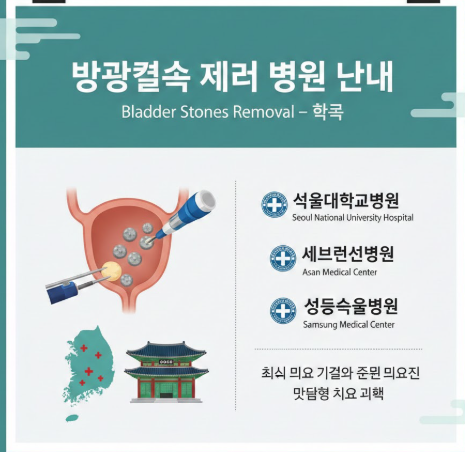
Top hospitals and clinics for bladder stone removal include:
- Seoul National University Hospital (SNUH)
- Samsung Medical Center, Seoul
- Asan Medical Center, Seoul
- Severance Hospital (Yonsei University)
- St. Mary’s Hospital, Seoul
- Specialized Urology Clinics in Gangnam, Seoul
These institutions are renowned for their urology departments, advanced technology, high success rates, and comprehensive care for international patients.


