
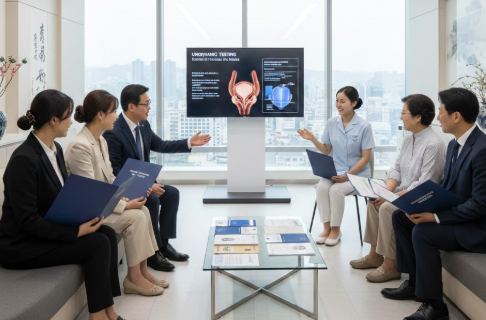
Treatment Overview
For international patients coming to Korea, urodynamic testing offers a comprehensive way to assess urinary tract function — including bladder capacity, pressure, flow, sphincter control, and voiding dynamics. Whether you come with urinary symptoms (incontinence, frequent urination, weak flow, retention) or as part of a broader health check-up, Korean urology centers provide modern diagnostics, experienced specialists, and support services tailored for foreign patients.
Purpose & Benefits
Urodynamic testing helps diagnose causes of urinary disorders — such as incontinence, overactive bladder, urinary retention, or neurogenic bladder — by providing objective, detailed measurements rather than relying solely on symptoms.
For international patients, additional benefits include:
- Access to advanced diagnostics: Many Korean clinics offer full urodynamic panels including cystometry, pressure-flow studies, uroflowmetry, EMG, and video-urodynamics if needed.
- Efficient process and fast turnaround: Hospitals/clinics in Korea often combine tests, consultations, and imaging — minimizing waiting times, which suits travelers.
- Support services for foreign patients: Clinics catering to international patients often have English-speaking staff/interpreters, help with appointments, and offer transparent pricing and documentation.
- Privacy and confidentiality: Urology clinics in Korea dealing with foreigners emphasize discreet, confidential care.
Ideal Candidates (International Patients Who Might Benefit)
International patients who may consider urodynamic testing in Korea include those who:
- Have persistent urinary symptoms (incontinence, frequency, urgency, weak stream, retention) not resolved by previous treatments.
- Experience recurrent urinary tract infections without clear cause.
- Need functional assessment (flow, pressure, sphincter, voiding) before procedures or treatment (e.g., medication, surgery, pelvic floor therapy).
- Want a thorough “bladder health check-up” — especially when relocating, traveling, or comparing care standards internationally.
- Prefer high-quality diagnostics combined with efficient medical-tourism support (language, coordination, scheduling).
How It Works for International Patients in Korea
1. Choose a foreign-patient–friendly clinic or hospital
- Major urban centers (especially in Seoul, Incheon, Bucheon) have clinics with English-speaking urologists, interpreters, or medical-tourism support services.
- Make sure the facility is properly registered to treat foreign patients under Korea’s medical-tourism regulations.
2. Contact and schedule testing
- Many clinics accept international patients and may offer “urodynamics + screening exam” packages.
- Provide your passport or equivalent ID during registration.
3. Undergo testing using advanced equipment
- Testing may include uroflowmetry (urine flow test), cystometry, pressure-flow studies, EMG, and — if needed — video-urodynamics.
- Results are interpreted by specialized urologists; many foreign-patient clinics provide consultation in English for clarity and convenience.
4. Receive documentation and management plan
- You’ll get a detailed report with diagnostic findings and recommended treatment or follow-up (medication, pelvic floor therapy, further investigations).
- For medical tourists, clinics often assist with discharge documents, prescriptions, and after-care instructions.
Why Korea Is a Good Destination for International Urodynamic Patients
- Established medical-tourism infrastructure: Korea supports foreign patients with certified clinics, transparent pricing, and patient safety regulations.
- Efficient, modern care: Top-tier hospitals and clinics provide consolidated services — diagnostics, imaging, urology consultation — making it possible to complete testing and results within a short stay.
- Language & cultural support: Clinics focusing on medical tourists often provide English (and other language) support, interpreters, and culturally sensitive care — reducing communication barriers.
- Cost-effectiveness compared to many Western countries: While exact prices vary, many urology services in Korea are more affordable than comparable services in Europe or North America — making it attractive for international patients seeking quality at reasonable cost.
Important Considerations for International Patients
- Insurance coverage: Visitors usually pay out-of-pocket, as national insurance doesn’t apply to short-term foreigners.
- Verify registration and accreditation: Always confirm the clinic/hospital is formally certified to treat foreign patients before booking.
- Clarify what’s included: Ask whether the quote includes all components (urodynamics, consultation, translation, report, follow-up).
- Logistics and after-care: For foreign visitors, coordinate for translation, possible accommodation, travel, and follow-up care if needed after you return home. Many clinics offer support services for these.
Typical Cost / Price Expectations for International Patients
While actual cost depends on hospital/clinic, complexity, and services included, some reference points:
- Basic uroflowmetry + consultation: modest fee — suitable as a first screening.
- Full urodynamic panel + consultation: higher, but generally more affordable than equivalent services in many Western countries.
Before you book, ask for a detailed, itemized quote — especially if paying privately.


