
Treatment Overview
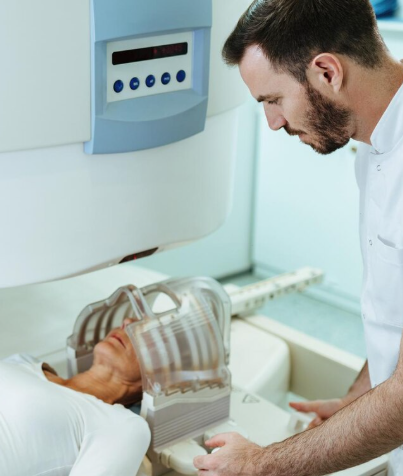
Optical Coherence Tomography Angiography (OCTA) is a non-invasive imaging technique that visualizes retinal and choroidal blood vessels without the need for dye injection. OCTA is used to detect microvascular changes, neovascularization, and perfusion deficits in conditions such as diabetic retinopathy, age-related macular degeneration (AMD), retinal vein occlusion, and glaucoma.
Korea is globally recognized for its advanced OCTA programs, incorporating:
- High-resolution spectral-domain and swept-source OCTA systems
- Quantitative analysis of retinal capillary density, foveal avascular zone, and choriocapillaris
- AI-assisted detection of microvascular abnormalities
- Integration with OCT, FAF, FA, and widefield imaging for comprehensive evaluation
- Rapid, outpatient imaging with no need for dye injection
- Real-time monitoring for disease progression and treatment response
This technology enables early detection of retinal vascular abnormalities, supporting timely interventions to preserve vision.
Purpose & Benefits
Purpose
- Detect retinal and choroidal microvascular abnormalities
- Monitor diabetic retinopathy progression and treatment response
- Identify neovascularization in AMD and retinal vein occlusion
- Evaluate perfusion deficits in glaucoma and ischemic retinal conditions
- Support treatment planning for intravitreal injections or laser therapy
- Provide baseline and longitudinal imaging for chronic retinal disease
Benefits
- Non-invasive and dye-free, avoiding fluorescein or indocyanine green risks
- Rapid imaging with immediate results
- High-resolution visualization of superficial and deep retinal capillary layers
- AI-assisted detection of subtle microvascular changes
- Supports early intervention, improving visual outcomes
- Can be combined with OCT structural imaging for comprehensive assessment
- Repeated imaging possible for longitudinal monitoring without cumulative risk
Ideal Candidates
OCTA in Korea is suitable for:
- Patients with diabetic retinopathy or diabetic macular edema
- Individuals with age-related macular degeneration (AMD)
- Patients with retinal vein occlusion or ischemic retinal disease
- Glaucoma patients for early detection of microvascular compromise
- Individuals with unexplained vision changes requiring vascular assessment
- High-risk diabetic or hypertensive patients requiring retinal microvascular monitoring
Possible Risks & Complications
OCTA is safe and non-invasive with minimal risk.
Potential Issues
- Mild eye strain or fatigue during imaging
- Difficulty maintaining fixation in uncooperative patients
- Motion artifacts in images if patient moves
Korean clinics minimize risks through:
- Experienced technicians guiding proper positioning
- Advanced software correcting motion artifacts
- Patient-friendly imaging protocols to ensure comfort
Related Diagnostic Techniques
- Macular OCT Monitoring – Assess structural changes alongside vascular imaging
- Fluorescein Angiography (FA) – Complementary for leakage and perfusion assessment
- Indocyanine Green Angiography (ICG) – Visualizes choroidal circulation in AMD or CNV
- Fundus Photography & FAF – Monitors retinal health and pigmentary changes
- Intravitreal Anti-VEGF Therapy – Treatment planning guided by OCTA findings
- Micro-Pulse or Focal Laser Therapy – Targeted treatment guided by vascular maps
Treatment Process in Korea
Step 1 – Pre-Imaging Assessment
- Comprehensive eye examination
- Visual acuity measurement and patient history
- Pupil dilation if necessary
Step 2 – OCTA Imaging
- Patient positioned at OCTA device
- Multiple scans captured covering macula and/or optic disc
- Segmentation of retinal layers and capillary plexuses
Step 3 – Image Analysis
- AI-assisted detection of microvascular abnormalities
- Quantitative analysis: vessel density, FAZ, non-perfusion areas
- Comparison with prior scans to monitor disease progression
Step 4 – Clinical Correlation
- Reports reviewed by retinal specialists
- Used to guide intravitreal injection, laser therapy, or monitoring intervals
- Integrated with multimodal imaging for comprehensive retinal assessment
Step 5 – Follow-Up Monitoring
- Regular OCTA scans for chronic conditions
- Early detection of new neovascularization or capillary drop-out
- Adjust treatment plan based on longitudinal changes
Duration: 10–20 minutes
Setting: Advanced retinal imaging center or ophthalmology clinic
Recovery & After-Care
After-Care Guidelines
- No downtime; patients can resume normal activities immediately
- No dye injection, so minimal risk of allergic reaction or systemic effects
- Follow-up as advised by retinal specialist
- Maintain systemic control of diabetes or hypertension to support retinal health
Recovery Timeline
- Immediate: Imaging results available instantly
- Short-Term: Interpretation guides clinical decisions
- Long-Term: Serial OCTA scans allow early detection of disease progression
Results & Longevity
Expected Results
- Early detection of retinal microvascular changes
- Accurate mapping of neovascularization and perfusion deficits
- Improved treatment planning for intravitreal or laser therapy
- Ability to monitor chronic disease progression and therapy response
Longevity
- Lifelong monitoring recommended for chronic retinal conditions
- Non-invasive nature allows repeated scans without cumulative risk
- AI-assisted longitudinal tracking improves predictive care
Why Korea Is a Top Destination
- Access to latest spectral-domain and swept-source OCTA devices
- AI-assisted microvascular analysis for precise assessment
- Integration with multimodal imaging: OCT, FA, ICG, and fundus photography
- Experienced retinal specialists interpreting OCTA for early intervention
- Rapid outpatient imaging with minimal patient discomfort
- Comprehensive retinal imaging centers for chronic disease management
Unique Korean Innovations
- AI-assisted microvascular mapping for early detection of capillary loss
- Widefield OCTA for peripheral retinal vasculature assessment
- Quantitative vessel density analysis for treatment monitoring
- Integration with anti-VEGF injection planning and post-treatment follow-up
- Digital dashboards tracking disease progression in real-time
These innovations make Korea a global leader in OCTA, offering precise, safe, and non-invasive retinal vascular imaging.
Cost Range (Indicative Estimate)
| Package | Price (KRW) | Approx. USD | Inclusions |
|---|---|---|---|
| Single OCTA Scan | ₩200,000 – ₩400,000 | ~$150 – $310 | High-resolution OCTA + AI-assisted report |
| Comprehensive OCT + OCTA | ₩500,000 – ₩900,000 | ~$380 – $700 | Structural OCT + angiography + analysis |
| Serial OCTA Monitoring Package | ₩900,000 – ₩1,500,000 | ~$700 – $1,150 | 3–5 scans over 3–6 months + analysis |
| OCTA + FA/ICG Combo | ₩1,200,000 – ₩2,500,000 | ~$920 – $1,900 | Multimodal vascular imaging + follow-up |
Popular Clinics in Korea
- B&VIIT Eye Center (Seoul)
- Dream Eye Center (Seoul)
- BGN Eye Clinic (Seoul & Busan)
- Kim’s Eye Hospital (Seoul)
- Seoul National University Hospital Retina Center
- NUNE Eye Hospital (Daegu)
- Glory Seoul Eye Clinic
- Gangnam Severance Hospital Ophthalmology


