
Treatment Overview
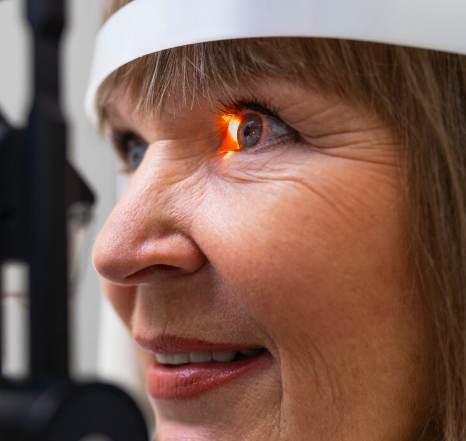
Photodynamic Therapy with Verteporfin in Korea is a minimally invasive treatment for neovascular (wet) Age-Related Macular Degeneration (AMD) and certain other choroidal vascular disorders. The therapy involves intravenous injection of a light-activated drug (verteporfin) followed by low-energy laser activation to selectively close abnormal blood vessels in the retina, minimizing damage to surrounding healthy tissue.
In Korea, PDT is performed using advanced imaging, precision laser systems, and AI-assisted treatment planning:
- OCT and OCT-Angiography (OCT-A) to map abnormal choroidal neovascularization (CNV)
- Fluorescein and indocyanine green angiography (ICGA) for vascular lesion localization
- AI-assisted verteporfin dosing and laser timing for optimal treatment
- Low-energy diode laser activation targeted precisely on abnormal vessels
- Combination protocols with anti-VEGF injections if necessary for persistent lesions
- Digital monitoring of CNV activity and visual outcomes
- Outpatient procedure with rapid recovery and minimal discomfort
PDT with Verteporfin in Korea emphasizes precision, safety, and preservation of central vision.
Purpose & Benefits
Purpose
- Close abnormal choroidal neovascular vessels in wet AMD
- Reduce macular edema and leakage from CNV
- Preserve central vision and prevent disease progression
- Complement anti-VEGF therapy for resistant or recurrent lesions
- Minimize collateral retinal or choroidal damage
Benefits
- Minimally invasive, outpatient procedure
- Selective treatment limits damage to healthy retina
- Effective in patients unsuitable for anti-VEGF monotherapy
- Can reduce treatment frequency when combined with other therapies
- AI-assisted planning enhances precision and safety
- Rapid recovery with minimal discomfort
- Preserves vision in carefully selected CNV cases
Ideal Candidates
PDT with Verteporfin in Korea is ideal for:
- Patients with wet AMD with classic or predominantly classic CNV
- Individuals resistant or intolerant to anti-VEGF therapy
- Those with juxtapapillary or subfoveal CNV requiring selective closure
- Patients seeking vision preservation with minimal retinal damage
- Individuals requiring combination therapy with anti-VEGF
- High-risk patients for whom conventional laser photocoagulation is not suitable
Possible Risks & Complications
Minor / Transient Issues
- Mild eye discomfort or irritation
- Temporary blurred vision
- Photosensitivity reaction at the injection site
Rare / Serious Risks
- Temporary decrease in visual acuity
- Rare choroidal ischemia or retinal damage
- Allergic reaction to verteporfin
- Infusion site complications (bruising, phlebitis)
- Recurrent CNV requiring additional therapy
How Korean Clinics Minimize Risks
- AI-assisted verteporfin dosing and laser targeting
- Comprehensive pre-procedure imaging with OCT, OCT-A, and ICGA
- Experienced retinal specialists performing selective PDT
- Post-procedure monitoring for CNV recurrence or adverse reactions
- Patient education on light avoidance for 48 hours after verteporfin infusion
Related Diagnostic & Treatment Techniques
- Optical Coherence Tomography (OCT) – Assess retinal thickness and edema
- OCT-Angiography (OCT-A) – Visualize CNV activity
- Fluorescein and ICGA – Map neovascular networks and leakage
- Anti-VEGF Therapy – Combined therapy for persistent or recurrent CNV
- Fundus Photography – Document baseline and post-treatment outcomes
- Low-Vision Rehabilitation – For patients with significant vision loss
- AI-assisted treatment planning – Optimize laser placement and drug activation
Treatment Process in Korea
Step 1 – Preoperative Assessment
- Comprehensive eye exam including visual acuity and intraocular pressure
- OCT, OCT-A, and ICGA to evaluate CNV location and activity
- AI-assisted planning for verteporfin dose and laser parameters
- Patient counseling on procedure, benefits, and post-treatment precautions
Step 2 – PDT Procedure
- Intravenous verteporfin infusion over 10 minutes
- Low-energy laser applied to CNV lesions within 15 minutes after infusion
- Real-time imaging to confirm laser targeting
- Optional combination anti-VEGF injection if indicated
Step 3 – Postoperative Follow-Up
- Immediate visual assessment
- Follow-up OCT and fundus imaging at 1–4 weeks
- Periodic monitoring every 1–3 months to assess CNV regression
- Patient advised to avoid direct sunlight and bright indoor light for 48 hours
Duration: 60–90 minutes (including infusion and laser)
Setting: Outpatient retinal treatment suite
Recovery & After-Care
After-Care Guidelines
- Avoid direct sunlight, bright indoor lights, or tanning beds for 48 hours
- Mild blurred vision or photophobia may occur temporarily
- Resume normal activities after 1–2 days
- Attend follow-up imaging appointments to monitor CNV response
- Report any sudden vision changes, flashes, or floaters immediately
Recovery Timeline
- Immediate: Mild blurred vision, photophobia
- 24–48 Hours: Light sensitivity subsides; retinal response begins
- 1–4 Weeks: Reduction in leakage and CNV activity observed
- Ongoing: Additional sessions if CNV persists or recurs
Results & Longevity
Expected Results
- Selective closure of abnormal CNV vessels
- Stabilization or improvement of visual acuity
- Reduced risk of central vision loss in selected patients
- Effective adjunct to anti-VEGF therapy in resistant lesions
Longevity
- Effects typically last several months; retreatment may be required
- Long-term monitoring essential to detect recurrent CNV
- Can be safely repeated if needed due to targeted, low-energy treatment
Why Korea Is a Top Destination
- Experienced retinal specialists with expertise in PDT
- AI-assisted verteporfin dosing and laser targeting
- Advanced imaging for precise CNV localization
- Integration with anti-VEGF therapy for resistant cases
- English-friendly clinics with structured follow-up programs
- High safety standards and modern outpatient treatment facilities
Unique Korean Innovations
- AI-guided CNV mapping for precise verteporfin activation
- Integration of OCT, OCT-A, and ICGA for multimodal planning
- Low-energy diode laser systems for selective treatment
- Combination PDT and anti-VEGF therapy protocols
- Digital dashboards to track CNV regression and patient outcomes
- Personalized follow-up schedules and retreatment protocols
Cost Range (Indicative Estimate)
| Package | Price (KRW) | Approx. USD | Inclusions |
|---|---|---|---|
| Single PDT Session with Verteporfin | ₩1,200,000 – ₩2,500,000 | ~$920 – $1,920 | Verteporfin infusion + laser activation + imaging |
| Combination Therapy (PDT + Anti-VEGF) | ₩2,000,000 – ₩3,500,000 | ~$1,540 – $2,675 | PDT + injection + OCT + fundus imaging |
| Follow-Up Monitoring Package | ₩300,000 – ₩800,000 | ~$230 – $615 | OCT + OCT-A + consultation |
Popular Clinics in Korea
- Kim’s Eye Hospital Retina Center (Seoul)
- Gangnam Severance Hospital Retina Clinic
- Seoul National University Hospital Ophthalmology Center
- B&VIIT Eye Center (Gangnam)
- BGN Eye Clinic (Seoul & Busan)
- NUNE Eye Hospital (Daegu)
- Glory Seoul Eye Clinic
- Dream Eye Center (Seoul)


