
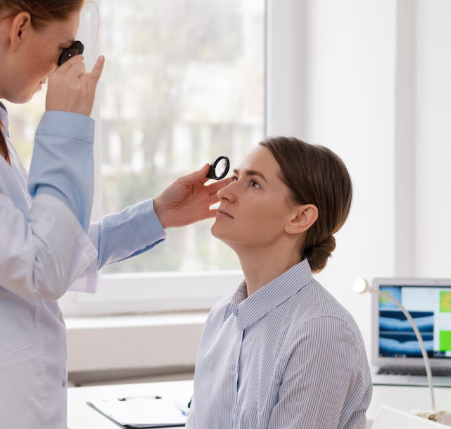
Treatment Overview
Visual Acuity Rehabilitation Therapy in Korea is a specialized program designed to help patients with macular degeneration and other chronic retinal diseases maximize their remaining vision. Instead of attempting to restore damaged retinal tissue, this therapy focuses on enhancing functional vision through structured training, adaptive strategies, optical aids, and advanced digital tools.
Korea has become a leading destination for low-vision rehabilitation due to its integration of:
- High-resolution OCT and contrast-sensitivity testing for functional baseline assessments
- Personalized rehabilitation programs led by low-vision specialists and occupational therapists
- AI-based visual performance tracking tools
- Advanced digital magnifiers, wearable vision-enhancement devices, and assistive reading systems
- Customized eccentric viewing and preferred retinal locus (PRL) training
- Multidisciplinary care involving ophthalmologists, optometrists, psychologists, and rehabilitation experts
This program aims to optimize daily functioning, reading ability, mobility, and independence for patients experiencing permanent central vision loss.
Purpose & Benefits
Purpose
Visual Acuity Rehabilitation Therapy is designed to:
- Improve functional vision for patients with macular degeneration (AMD) or other retinal disorders
- Train patients to use remaining peripheral vision effectively (eccentric viewing / PRL training)
- Enhance reading speed, contrast recognition, and visual tracking
- Reduce visual fatigue and improve adaptive visual skills
- Support daily living activities through personalized training and assistive devices
- Provide psychological support and adaptation strategies for chronic vision impairment
Benefits
- Non-invasive, safe, and customized to each patient
- Enhances reading, writing, mobility, and near-vision tasks
- Improves contrast sensitivity and usable visual field
- Supports independence in daily activities
- Integrates advanced Korean technologies (AI vision tracking, wearable low-vision aids)
- Helps patients adapt to long-term retinal conditions with confidence
- English-speaking specialists available at major Seoul centers
Ideal Candidates
Visual Acuity Rehabilitation Therapy in Korea is ideal for:
- Patients with Age-related Macular Degeneration (AMD)
- Individuals with diabetic retinopathy–related central vision loss
- Patients with macular scarring, dystrophies, or hereditary retinal disease
- Individuals with irreversible low vision but enough functional vision to benefit from training
- Patients struggling with reading, object recognition, or central blind spots
- Those needing guidance in using magnifiers, digital tools, or wearable low-vision devices
Possible Risks & Complications
Visual acuity rehabilitation is safe and non-invasive. Potential issues include:
Minor/Transient Challenges
- Mild eye strain during training exercises
- Initial frustration adapting to eccentric viewing
- Learning curve with digital assistive devices
Minimal Risks
- No medical or surgical risks
- No exposure to lasers, injections, or dye agents
Korean rehabilitation centers minimize challenges through stepwise progression, structured coaching, and AI-assisted training feedback.
Related Diagnostic & Treatment Techniques
- OCT & Visual Field Testing – To assess retinal structure and functional capacity
- Contrast Sensitivity Testing – Essential for personalized training
- Low-Vision Device Prescription – Digital magnifiers, telescopic glasses, wearable devices
- Eccentric Viewing Training – For AMD and central scotoma
- AI-Based Reading & Tracking Software – For measurable progress
- Low-Vision Counseling & Daily Living Adaptation Training
- Integration with ongoing Retina Care (anti-VEGF therapy, PRP, vitrectomy follow-up)
Treatment Process in Korea
Step 1 – Comprehensive Low-Vision Assessment
- Detailed visual acuity, contrast sensitivity, and reading-speed evaluation
- OCT and central visual field review
- Identification of preferred retinal locus (PRL)
Step 2 – Personalized Rehabilitation Plan
- Training tailored to patient goals (reading, mobility, computer use, daily tasks)
- Introduction to appropriate optical and digital aids
Step 3 – Visual Training Sessions
- Eccentric viewing & PRL exercises
- Reading enhancement drills
- Contrast and light optimization training
- Mobility and object-recognition practice
- AI-assisted performance analytics
Step 4 – Assistive Device Training
- Digital magnifier customization
- Wearable low-vision device setup (IrisVision, OrCam, etc.)
- Smartphone and tablet accessibility optimization
Step 5 – Follow-Up & Progress Monitoring
- Regular assessments every 1–3 months
- Adjustments to training intensity and device settings
- Long-term support for vision adaptation
Duration: 45–90 minutes per session
Setting: Low-vision rehabilitation center or tertiary retinal clinic
Recovery & After-Care
After-Care Guidelines
- Continue home-based visual exercises
- Use prescribed digital aids consistently
- Maintain proper lighting and contrast at home
- Attend scheduled follow-up sessions
Recovery Timeline
There is no surgical recovery — improvement occurs gradually with training:
- 2–4 weeks: Initial adaptation
- 2–3 months: Noticeable visual function improvement
- 6+ months: Stable long-term functional gains
Results & Longevity
Expected Results
- Improved reading speed and accuracy
- Better use of peripheral vision for central blind spots
- Enhanced contrast recognition and visual navigation
- Reduced visual fatigue
- Greater independence in daily activities
Longevity
- Results are long-lasting with continued practice
- No cumulative risks — ideal for lifelong management
- AI-based monitoring helps maintain progress over years
Why Korea Is a Top Destination
- One of Asia’s most advanced low-vision rehabilitation programs
- Integration of AI-based visual performance tools
- Multidisciplinary low-vision teams
- English-speaking professionals in major Seoul centers
- Access to cutting-edge magnifiers and wearable vision devices
- Personalized care with rapid appointment availability
Unique Korean Innovations
- AI-supported eccentric viewing training
- Smart reading analytics for AMD
- Wearable tech integration with rehabilitation programs
- Digital contrast and brightness optimization tools
- Customized “visual environment mapping” for home and workplace adaptation
Cost Range (Indicative Estimates)
| Package | Price (KRW) | Approx. USD | Inclusions |
|---|---|---|---|
| Single Low-Vision Evaluation | ₩150,000 – ₩300,000 | ~$115 – $230 | Functional assessment, OCT review, PRL testing |
| Visual Rehabilitation Session | ₩100,000 – ₩250,000 | ~$75 – $190 | 45–90 min training + device guidance |
| Comprehensive Rehab Program (4–6 sessions) | ₩500,000 – ₩1,000,000 | ~$380 – $760 | Full training program + progress tracking |
| Assistive Device Training Package | ₩300,000 – ₩700,000 | ~$230 – $530 | Digital magnifier or wearable device setup + training |
Popular Clinics in Korea
- B&VIIT Eye Center (Seoul)
- Kim’s Eye Hospital Low Vision Center (Seoul)
- Seoul National University Hospital Vision Rehabilitation Clinic
- Yonsei Severance Hospital Ophthalmology – Low Vision Care
- NUNE Eye Hospital (Daegu)
- BGN Eye Clinic (Seoul & Busan)
- Dream Eye Center (Seoul)


