
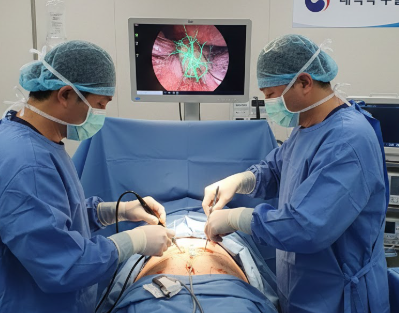
Treatment Overview
Pelvic Lymph Node Dissection (PLND) is a surgical procedure performed to remove lymph nodes in the pelvic region for men with prostate cancer. It is often done in combination with radical prostatectomy to accurately stage the disease and reduce the risk of cancer spread. In Korea, hospitals offer both open and minimally invasive (robotic or laparoscopic) PLND procedures, utilizing advanced technology to ensure precise removal of lymph nodes while minimizing complications.
Purpose & Benefits
The main purpose of PLND is to detect and remove cancerous lymph nodes, which helps in:
- Accurate staging of prostate cancer to guide further treatment.
- Reducing the risk of cancer spread to other parts of the body.
- Improving long-term outcomes when combined with radical prostatectomy.
- Providing critical information for postoperative therapies such as radiation or hormone treatment.
- Minimally invasive options allow faster recovery with less pain and smaller incisions.
Ideal Candidates
PLND is suitable for:
- Men undergoing radical prostatectomy for intermediate- to high-risk localized prostate cancer.
- Patients with elevated PSA levels or aggressive tumor characteristics.
- Individuals whose preoperative imaging suggests potential lymph node involvement.
- Patients in good overall health able to tolerate surgery.
Possible Risks & Complications
While PLND is generally safe, potential risks include:
- Lymphocele formation (fluid accumulation in the pelvic area)
- Bleeding or hematoma
- Infection at the surgical site
- Injury to nearby blood vessels, nerves, or organs
- Rare risk of deep vein thrombosis (DVT) or pulmonary embolism
- Standard anesthesia-related risks
Techniques & Technology Used
Korean hospitals performing PLND employ advanced surgical techniques:
- Robotic-assisted PLND: Enhanced precision and 3D visualization for safe removal of lymph nodes.
- Laparoscopic PLND: Minimally invasive approach using small incisions and specialized instruments.
- Open PLND: Traditional approach for complex cases requiring extensive node removal.
- Intraoperative imaging: Helps identify lymph nodes accurately for complete dissection.
Treatment Process in Korea
The typical process for PLND in Korea includes:
- Preoperative Consultation & Assessment: PSA testing, MRI, biopsy results, and overall health evaluation.
- Surgical Planning: Decision on open, laparoscopic, or robotic approach based on patient and tumor characteristics.
- Surgical Procedure: Performed under general anesthesia, usually lasting 2–4 hours depending on extent of dissection.
- Postoperative Care: Hospital stay of 1–5 days depending on surgical method; monitoring for bleeding, lymphocele, and other complications.
- Follow-up Visits: Imaging and PSA monitoring to assess surgical outcomes and guide further treatment.
Recovery & After-Care
Recovery after PLND focuses on minimizing complications and supporting patient rehabilitation:
- Hospital Stay: Typically 1–5 days depending on surgical approach.
- Drain and Catheter Care: Drains may be used to prevent lymphocele formation; urinary catheter removed after 1–2 weeks if combined with prostatectomy.
- Pain Management: Oral or IV medications to manage discomfort.
- Physical Activity: Light activities encouraged after 1–2 weeks; normal activity in 4–6 weeks.
- Long-Term Care: Monitoring for lymphatic complications, pelvic exercises, and PSA testing.
Results & Longevity
PLND provides important diagnostic and therapeutic benefits:
- Accurate Staging: Helps determine the extent of cancer spread and guides postoperative treatment.
- Cancer Control: Removal of affected lymph nodes can reduce recurrence risk.
- Durable Outcomes: When combined with radical prostatectomy, PLND improves long-term survival rates in high-risk patients.
Why Korea Is a Top Destination
Korea is a leading destination for PLND due to:
- Advanced Surgical Technology: Robotic and laparoscopic platforms for precise node removal.
- Experienced Urologists: Specialists trained in both traditional and minimally invasive techniques.
- Comprehensive Cancer Care: Integration of surgery, imaging, and follow-up therapies.
- Affordable Treatment Costs: High-quality care at competitive international pricing.
- Medical Tourism Support: English-speaking coordinators, travel arrangements, and patient assistance services.
Cost Range
The cost of Pelvic Lymph Node Dissection in Korea typically ranges from $8,000 to $15,000, depending on the hospital, surgical method, and additional services such as accommodation and post-op care.
Popular Clinics in Korea
Top hospitals performing PLND for international patients include:
- Samsung Medical Center, Seoul – Expert robotic and laparoscopic lymph node dissection.
- Asan Medical Center, Seoul – High-volume prostate cancer and lymph node surgery center.
- Severance Hospital, Seoul – Specialized in urology and minimally invasive PLND.
- Seoul St. Mary’s Hospital – Advanced facilities for both robotic and open surgeries.
- CHA Bundang Medical Center – Renowned for international patient care and surgical expertise.


