
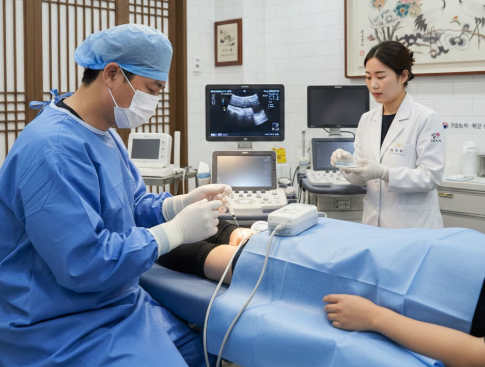
Treatment Overview
Testicular viability assessment surgery is a critical urological procedure used to determine whether a testicle affected by torsion, trauma, or compromised blood flow can be salvaged. In Korea, this assessment is performed using advanced imaging, microvascular evaluation, and intraoperative techniques to ensure the highest accuracy. Early diagnosis and precision-guided surgery significantly increase the chances of testicular preservation, preventing future complications such as infertility, hormonal imbalance, and chronic pain.
Purpose & Benefits
Purpose
- To evaluate blood flow and tissue integrity of the affected testicle
- To determine whether the testicle can be preserved or requires removal
- To avoid long-term complications such as testicular atrophy
Benefits
- Higher salvage rate due to advanced Korean surgical techniques
- Prevention of unnecessary orchiectomy (testicle removal)
- Reduced risk of infertility and testosterone deficiency
- Faster postoperative recovery with minimally invasive methods
Ideal Candidates
Who Should Consider This Surgery
- Patients with suspected testicular torsion
- Individuals experiencing acute, severe scrotal pain
- Men with testicular trauma or compromised circulation
- Cases with delayed torsion presentation where viability is uncertain
Possible Risks & Complications
Potential Risks
- Infection or hematoma
- Testicular atrophy if blood flow does not return
- Scarring or adhesions inside the scrotum
- Rare need for follow-up surgery
Techniques & Technology Used
Modern Evaluation Methods in Korea
- Intraoperative Doppler ultrasonography to assess blood perfusion
- Near-infrared fluorescence imaging for microvascular evaluation
- Scrotal exploration under microscopy
- Detorsion assessment when torsion is present
- Perfusion scoring techniques widely used in Korean urology centers
Korea’s combination of imaging and surgical precision allows surgeons to make highly accurate decisions regarding testicular salvage.
Treatment Process in Korea
Step-by-Step
- Consultation & Emergency Evaluation – Immediate physical exam and color Doppler ultrasound
- Pre-Surgery Assessment – Blood tests, imaging, and torsion confirmation
- Surgery Under General or Local Anesthesia – Scrotal exploration performed
- Viability Testing – Blood flow restoration attempts, vascular imaging, and tissue assessment
- Decision on Preservation or Removal – If viable, orchiopexy (fixation) is performed; if non-viable, orchiectomy may be required
- Postoperative Care & Monitoring – Pain control, swelling management, and follow-up imaging
Recovery & After-Care
Post-Surgery Guidelines
- Mild swelling and discomfort for 3–7 days
- Avoid heavy activities and sexual activity for 2–3 weeks
- Follow-up ultrasound to check testicular function
- Hormonal evaluation if only one testicle remains
Most patients recover fully and resume normal life within a week.
Results & Longevity
Expected Outcome
- High salvage success when treated within 6 hours
- Long-term preservation of fertility and hormonal function
- Prevented complications such as chronic pain and atrophy
Why Korea Is a Top Destination
Key Advantages
- Emergency-friendly medical system with fast surgical response
- Ultra-advanced Doppler, MRI, and microvascular equipment
- Urologists highly experienced in torsion and testicular salvage cases
- English-friendly hospitals and coordinators for international patients
- Affordable costs compared to the US, Japan, and Europe
Cost Range in Korea
Estimated Price
- ₩1,200,000 – ₩3,500,000 (USD $900 – $2,700) depending on:
- Hospital grade
- Required imaging
- Complexity of torsion or trauma
- Whether orchiopexy or partial removal is needed
Popular Clinics in Korea
- Seoul National University Hospital (SNUH) – Urology Dept.
- Asan Medical Center – Emergency Urological Care
- Samsung Medical Center – Microvascular Urology Unit
- Korea University Anam Hospital – Testicular Salvage Program
- Wooridul Urology / Seoul Urology Clinics – Foreign-patient friendly


