
Treatment Overview
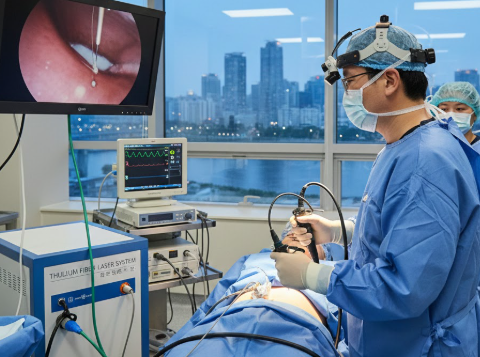
Ureteral stent placement is a minimally invasive procedure used to insert a small tube (stent) into the ureter to ensure proper urine flow from the kidney to the bladder. It is often recommended for patients with ureteral obstruction caused by stones, strictures, tumors, or after certain surgeries. In Korea, hospitals use advanced endoscopic techniques to place stents safely and accurately, minimizing discomfort and complications for both local and international patients.
Purpose & Benefits
The main purpose of ureteral stent placement is to relieve obstruction, prevent kidney damage, and maintain proper urinary function. Key benefits of undergoing the procedure in Korea include:
- Restores urine flow in obstructed ureters
- Prevents kidney swelling (hydronephrosis) and potential damage
- Can be performed under minimally invasive endoscopic techniques
- Reduces post-operative pain and discomfort
- Often combined with other procedures like stone removal for optimal outcomes
Ideal Candidates
Ureteral stent placement is suitable for patients who:
- Have ureteral obstruction due to stones, strictures, or tumors
- Require temporary stenting after ureteral surgery
- Experience recurrent urinary blockages
- Are undergoing procedures like ureteroscopy or lithotripsy and need post-operative stenting
- Seek advanced medical treatment abroad
This procedure is suitable for adults and older children, depending on the underlying condition.
Possible Risks & Complications
While generally safe, ureteral stent placement may carry some risks:
- Mild discomfort or urgency while urinating
- Temporary hematuria (blood in urine)
- Infection, usually preventable with antibiotics
- Stent migration or displacement (rare)
- Irritative bladder symptoms such as frequency or urgency
Korean hospitals follow strict safety standards and employ experienced urologists to minimize complications.
Techniques & Technology Used
Korea is known for its advanced techniques in ureteral stent placement:
- Flexible and rigid ureteroscopes for accurate stent insertion
- High-definition imaging systems for real-time guidance
- Biocompatible stents designed for comfort and long-term use
- Minimally invasive endoscopic techniques to reduce patient discomfort
- Optional laser-assisted procedures if combined with stone removal
These technologies ensure safe, effective, and comfortable stent placement.
Treatment Process in Korea
The ureteral stent placement procedure generally involves:
- Preoperative evaluation: Imaging studies like ultrasound, CT, or X-rays assess ureter condition and obstruction site.
- Anesthesia: Local, spinal, or general anesthesia depending on patient and procedure type.
- Endoscopic insertion: A ureteroscope is inserted through the urethra and bladder to place the stent into the ureter.
- Confirmation: Imaging ensures proper stent placement and urine flow.
- Post-procedure care: Patients are monitored briefly and discharged with instructions for hydration and follow-up.
International patients benefit from full medical tourism services including airport transfer, translation, and accommodation.
Recovery & After-Care
Recovery from ureteral stent placement is generally quick:
- Most patients are discharged on the same day or after an overnight stay
- Mild urinary discomfort is managed with oral medications
- Avoid strenuous activity for a few days
- Follow-up imaging ensures proper stent function and timing for removal
- Adequate hydration is recommended to maintain urine flow and prevent infection
Korean hospitals provide detailed post-procedure instructions and 24/7 support for international patients.
Results & Longevity
Ureteral stent placement effectively restores urine flow and prevents kidney damage. Temporary stents are usually removed after a few weeks to months, depending on the underlying condition. Long-term outcomes are excellent when combined with monitoring and preventive care.
Why Korea Is a Top Destination
Korea is a leading destination for ureteral stent placement due to:
- Advanced endoscopic technology for precise and safe stent placement
- Experienced urologists skilled in complex ureteral cases
- State-of-the-art hospitals following global medical standards
- High patient satisfaction with minimal recovery time
- Competitive costs compared to Western countries
- Comprehensive medical tourism services including translation, accommodation, and follow-up
Cost Range
The cost of ureteral stent placement in Korea typically ranges from $1,000 to $3,000 USD, depending on:
- Complexity of the procedure
- Type of stent used
- Hospital and surgeon reputation
- Combination with other procedures like lithotripsy
This cost is affordable compared to many Western countries while ensuring top-quality care.
Popular Clinics in Korea
Top hospitals for ureteral stent placement for international patients include:
- Seoul National University Hospital – leading urology department with advanced stenting techniques
- Asan Medical Center – high success rates in ureteral procedures
- Samsung Medical Center – state-of-the-art imaging and endoscopic technology
- Yonsei Severance Hospital – expertise in minimally invasive ureteral treatments
- CMC Bundang Hospital – comprehensive care with international patient support
These hospitals provide complete medical tourism packages, including translation services, accommodation, and follow-up care.


