
Treatment Overview
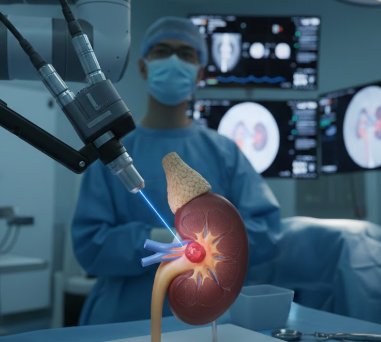
Precision kidney tumor excision is a specialized surgical procedure designed to remove kidney tumors while preserving as much healthy kidney tissue as possible. This approach is especially important for patients who require long-term kidney function preservation or have a single functioning kidney. In Korea, hospitals utilize advanced minimally invasive techniques, including laparoscopic and robotic-assisted surgeries, allowing surgeons to target tumors accurately and reduce the risk of damage to surrounding tissue.
Purpose & Benefits
The primary purpose of precision kidney tumor excision is to treat kidney tumors effectively while maintaining overall kidney health. Key benefits include:
- Preserving maximum healthy kidney tissue to maintain renal function.
- Minimally invasive procedures reduce postoperative pain and hospital stay.
- Lower risk of chronic kidney disease compared to complete kidney removal.
- Relief from symptoms caused by tumors, such as pain or urinary obstruction.
- High precision reduces the likelihood of tumor recurrence and complications.
Ideal Candidates
Ideal candidates include:
- Patients with small or localized kidney tumors.
- Individuals with partial kidney impairment or a single kidney.
- Patients seeking minimally invasive surgical options for tumor removal.
- Those in good overall health who can undergo general anesthesia.
- Patients who wish to preserve kidney function for long-term health.
Possible Risks & Complications
Although precision kidney tumor excision is generally safe, potential risks may include:
- Bleeding during or after surgery.
- Infection at the surgical site or urinary tract.
- Injury to surrounding organs, including the ureter or liver.
- Urine leakage or fistula formation.
- Temporary decrease in kidney function post-surgery.
- Rarely, conversion to total nephrectomy if complications occur.
Techniques & Technology Used
Korean medical centers employ advanced technology to achieve precise tumor removal:
- Laparoscopic Surgery: Minimally invasive approach with small incisions for targeted tumor excision.
- Robotic-Assisted Surgery: Provides enhanced precision, 3D visualization, and reduced blood loss.
- 3D Imaging & Navigation: Preoperative imaging guides surgeons to accurately remove tumors while preserving healthy tissue.
- Energy Devices and Lasers: Enable precise dissection and effective bleeding control during surgery.
Treatment Process in Korea
The surgical process typically involves:
- Preoperative Evaluation: Comprehensive kidney function tests, imaging (CT/MRI), and consultation with urologists.
- Surgical Planning: Personalized approach based on tumor size, location, and complexity.
- Hospital Admission & Surgery: Performed under general anesthesia; surgical duration varies by tumor size and complexity.
- Immediate Recovery: Monitoring in hospital for 2–5 days to ensure stability and absence of complications.
- Follow-Up Care: Postoperative imaging and kidney function tests ensure tumor removal success and long-term kidney health.
Recovery & After-Care
Recovery is supported by advanced medical care in Korea:
- Short hospital stay due to minimally invasive techniques.
- Avoidance of heavy lifting or strenuous activity for several weeks.
- Pain management and anti-inflammatory medications provided as needed.
- Monitoring urine output and maintaining hydration.
- Dietary guidance may be provided to support kidney function.
- Most patients resume normal daily activities within 3–6 weeks depending on individual recovery.
Results & Longevity
Outcomes of precision kidney tumor excision in Korea are highly favorable:
- Preservation of kidney function even after tumor removal.
- Minimal scarring due to laparoscopic and robotic techniques.
- Low recurrence rates when tumors are detected and excised early.
- Relief from tumor-related symptoms, improving quality of life.
- Long-term kidney performance comparable to healthy individuals.
Why Korea Is a Top Destination
Korea is a leading destination for precision kidney tumor excision because:
- Highly experienced urologists specializing in minimally invasive and robotic surgery.
- Advanced technology for precision tumor removal.
- High standards of patient safety and internationally accredited hospitals.
- Affordable treatment costs compared to Western countries.
- Comprehensive international patient services, including language support, accommodation, and follow-up care.
- Proven track record of successful kidney tumor surgeries for medical tourists.
Cost Range
Estimated costs in Korea:
- Laparoscopic Tumor Excision: $6,000–$10,000 USD
- Robotic-Assisted Tumor Excision: $10,000–$15,000 USD
- Preoperative tests, hospital stay, and follow-ups: $1,000–$2,000 USD
- Many hospitals provide international patient packages including surgery, consultation, accommodation, and transportation.
Popular Clinics in Korea
Top hospitals offering precision kidney tumor excision include:
- Samsung Medical Center, Seoul – Leading in robotic-assisted tumor surgeries.
- Severance Hospital, Yonsei University, Seoul – Expertise in kidney preservation and tumor excision.
- Asan Medical Center, Seoul – Advanced laparoscopic and minimally invasive procedures.
- Seoul National University Hospital, Seoul – Cutting-edge imaging and precise surgical planning.
- Gangnam Severance Hospital, Seoul – Specialized international patient care and rapid recovery protocols.


